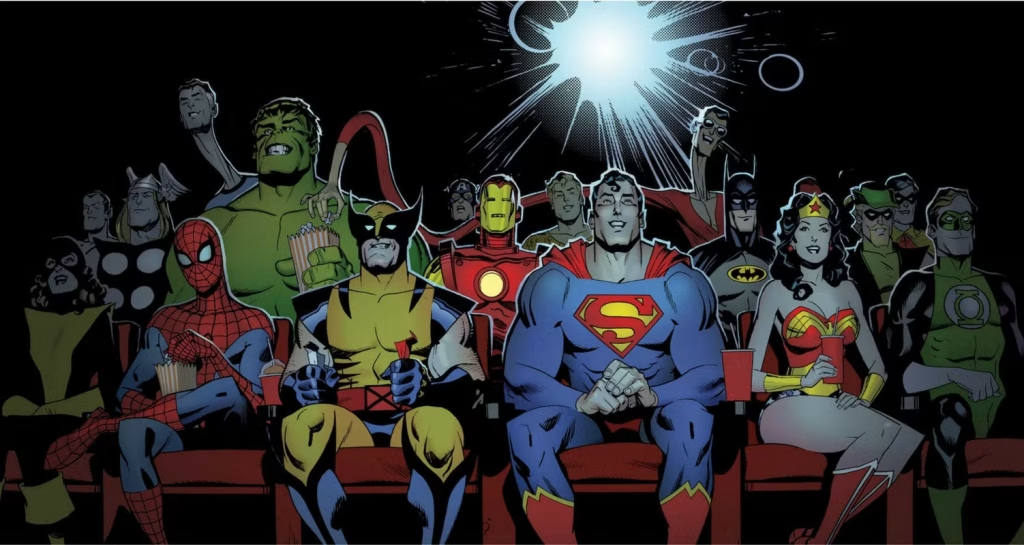
I’ve spent the last few years watching the Marvel Cinematic Universe do something it had never really done before: hesitate in public. After the cultural earthquake of Endgame, Marvel didn’t collapse, but it did wobble. The post-Infinity Saga era has felt fragmented, experimental, sometimes brilliant, sometimes bloated. And that’s why Avengers: Doomsday matters so much. Not just as a movie, but as a signal.
Doomsday isn’t just another Avengers sequel. It’s Marvel admitting that the Multiverse Saga needs a gravitational center again. It’s the studio trying to reclaim a sense of inevitability, consequence, and mythic scale. From where I sit, that makes this film one of the most important pop-culture releases of the decade.
What We Know for Sure
Let’s start with what’s actually confirmed, because the internet has a bad habit of turning speculation into “fact” overnight.
Avengers: Doomsday is officially slated for release in 2026 as part of Marvel Phase Six. It will be followed by Avengers: Secret Wars in 2027, making Doomsday the first half of Marvel’s next major two-part event.
Marvel also confirmed that the film will be directed by Anthony Russo and Joe Russo, the same duo responsible for Avengers: Infinity War and Avengers: Endgame. That alone tells me Marvel understands the stakes. You don’t bring the Russos back unless you’re trying to restore a certain kind of narrative discipline and emotional weight.
Then there’s the biggest headline: **Robert Downey Jr. returning to the MCU — not as Iron Man, but as Doctor Doom. That move is equal parts daring and desperate, and I mean that in the best way. Marvel is betting that legacy, performance gravitas, and shock value can be fused into something genuinely new.
Why Doctor Doom Changes Everything
Doctor Doom isn’t just another villain. He’s not Thanos-lite. He’s not a quippy antagonist designed to be defeated in one movie and merchandised into oblivion.
Doom represents control, ego, order, and resentment toward gods and systems alike. He’s a character who believes the universe would be better if it simply obeyed him. In the context of the Multiverse Saga, that philosophy hits differently.
If Thanos was about balance through annihilation, Doom is about dominance through intelligence and will. That’s a more uncomfortable threat. It doesn’t just challenge the Avengers physically. It challenges them ideologically.
And casting Robert Downey Jr. in that role is fascinating. The MCU spent over a decade associating his face with heroism, sacrifice, and technological optimism. Reintroducing him as a tyrant reframes that entire emotional history. Marvel isn’t just asking us to fear Doom. It’s asking us to unlearn Iron Man.
The Multiverse, Finally Focused
One of my biggest frustrations with the MCU’s recent phase has been how casually it treated the multiverse. Infinite realities were introduced, name-dropped, and then ignored. Stakes blurred. Consequences softened.
Doomsday feels like Marvel saying, “Enough.”
This movie is expected to consolidate the multiverse chaos into a single narrative thrust. Not just “variants exist,” but someone is exploiting that fact deliberately. Doom, in the comics, is obsessed with rewriting reality to validate his superiority. The multiverse isn’t a backdrop for him. It’s a weapon.
That’s why Doomsday matters structurally. It’s likely where Marvel stops expanding outward and starts collapsing inward, setting the stage for Secret Wars to do what Endgame did: reset the board.
Who Shows Up and Why It Matters
Marvel hasn’t released a full cast list, but we can safely expect a convergence of:
• The current Avengers lineup
• Characters introduced in Phases Four and Five
• Multiverse-adjacent figures whose stories have been dangling unresolved
This isn’t just about fan service. It’s about re-establishing narrative hierarchy. One of the MCU’s problems lately has been that everyone feels equally important, which paradoxically makes nothing feel important.
Doomsday has to choose its emotional leads carefully. Not everyone can be a protagonist. Some characters will exist to demonstrate scale. Others will exist to be broken.
And yes, some will likely die.
The Tone Shift Marvel Needs
If this movie leans too far into jokes, it fails. If it tries to replicate Endgame beat-for-beat, it fails. What Doomsday needs is a tone closer to inevitability than nostalgia.
The Russos excel at portraying systems collapsing. Governments fracture. Alliances strain. Heroes disagree not because of ego, but because there are no clean options left. That’s the energy this film needs.
Because culturally, that’s where we are. Audiences are tired of endless escalation without consequence. We’re craving stories that admit power has costs and leadership requires sacrifice.
Why This Movie Is About More Than Superheroes
From a Merged Insight perspective, Avengers: Doomsday is a mirror. It reflects how modern culture grapples with control, technology, and authority.
Doctor Doom is the fantasy of the hyper-competent authoritarian. He believes chaos exists because people are flawed. Fix the people, enforce order, and reality improves. That mindset isn’t confined to comic books. It shows up in politics, tech culture, and even AI discourse.
The Avengers, by contrast, represent messy pluralism. They disagree. They fail. They argue. And they still believe shared power is preferable to absolute control.
That ideological clash is why this story matters now.
The Risk Marvel Is Taking
Let’s be honest: Marvel needs this movie to work.
The studio is fighting fatigue, oversaturation, and audience skepticism. Doomsday isn’t just a creative gamble. It’s a reputational one. If this film feels hollow, rushed, or cynical, it confirms the narrative that the MCU’s best days are behind it.
But if it lands? If it reintroduces discipline, weight, and mythic confidence?
Then Marvel doesn’t just survive. It resets.
My Final Take
I don’t need Avengers: Doomsday to be perfect. I need it to be intentional.
I need it to respect the audience’s intelligence. I need it to stop treating the multiverse like a toy and start treating it like a moral problem. I need Doctor Doom to feel inevitable, not flashy.
This movie is Marvel looking at itself in the mirror and asking whether it still knows what it’s doing.
If it answers honestly, Doomsday won’t just be a blockbuster. It’ll be a course correction. And honestly, the MCU has earned the right to try.