

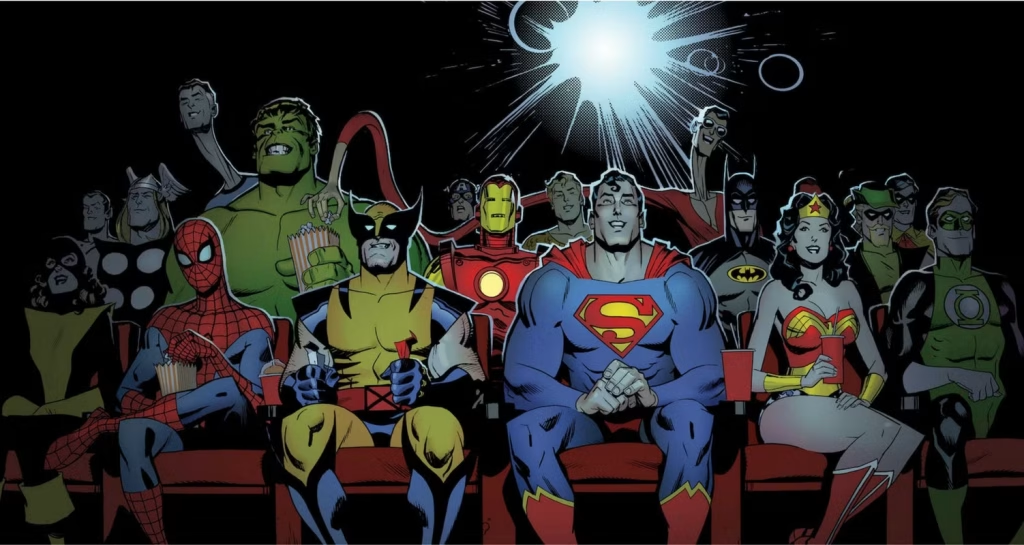
For more than a decade, superhero movies dominated popular culture with near-total authority. They were not simply entertainment. They were shared rituals, collective myths, and cultural reference points that shaped how we talked about power, morality, trauma, and responsibility. Entire phases of life were marked by midnight premieres, post-credit scenes, and online theories dissected frame by frame. Yet today, something fundamental has shifted. The crowds are thinner. The excitement feels muted. The conversations are less passionate and more cynical. Superhero movie fatigue is real, but it is not just about too many capes or repetitive storylines. It reflects something deeper and far more revealing about the cultural moment we are living in.
This fatigue mirrors a broader exhaustion that runs through modern society. It is the weariness of constant stimulation, endless crises, and narratives that promise salvation while quietly reinforcing the same structures that leave people feeling powerless. Superhero movies did not create this exhaustion, but they have become one of its most visible symptoms.
The Golden Age That Became a Routine
When superhero films first rose to dominance, they felt fresh and necessary. They offered moral clarity in a world that increasingly lacked it. Heroes stood for something uncomplicated. Villains were clearly defined. Sacrifice mattered. For audiences navigating economic instability, political polarization, and rapid technological change, these films offered reassurance that goodness could still prevail through courage and unity.
Over time, however, the extraordinary became routine. What once felt like a cultural event became an obligation. New releases arrived not because a story demanded to be told, but because a release calendar required filling. The language of cinema quietly shifted from creativity to content. Stories were no longer singular expressions but components in a larger machine designed to sustain engagement metrics and franchise longevity.
Audiences felt this shift even if they could not immediately articulate it. Emotional beats began to feel pre-programmed. Stakes were raised artificially, then reset. Death lost its meaning because resurrection was always possible. The sense of consequence eroded, and with it, emotional investment. What remained was spectacle without substance and familiarity without wonder.
Endless Battles in an Already Exhausted World
Modern life is defined by a constant sense of crisis. Economic anxiety, climate fear, political instability, social fragmentation, and digital overload form the backdrop of everyday existence. People are already tired before they sit down in a theater. In this context, stories centered on endless battles, world-ending threats, and perpetual emergencies begin to feel less like escapism and more like a reflection of the stress people are trying to escape.
Superhero films once functioned as a release valve. They allowed audiences to project their fears onto fictional conflicts and watch them resolved through decisive action. But as real-world problems have grown more complex and less resolvable, the fantasy of a single powerful figure saving the day has started to ring hollow. Viewers are no longer comforted by destruction followed by a triumphant reset. Instead, they feel the weight of repetition.
Cultural exhaustion is not just physical or mental. It is narrative exhaustion. It comes from being told the same story over and over while living in a world that clearly demands new solutions.
The Burden of Infinite Universes
One of the defining features of modern superhero cinema is the shared universe. What once felt ambitious now feels burdensome. Viewers are expected to keep up with dozens of interconnected storylines, characters, and timelines spread across films and streaming series. Enjoyment increasingly requires homework.
This structure mirrors the way modern life demands constant attention and cognitive labor. People are already tracking multiple apps, platforms, responsibilities, and identities. When entertainment begins to feel like another system to manage rather than a space to rest, disengagement becomes inevitable.
Cultural exhaustion thrives in environments where nothing ever truly ends. Shared universes rarely offer closure. Stories continue indefinitely, not because they need to, but because stopping would disrupt the business model. The result is a form of narrative burnout where audiences crave endings, meaning, and finality but are offered perpetual continuation instead.
Heroes Without Humanity
Another source of fatigue lies in the gradual erosion of humanity within superhero storytelling. Early entries often focused on personal struggle. Characters wrestled with fear, guilt, responsibility, and identity. Powers were metaphors for difference, trauma, or moral burden.
As franchises expanded, those intimate elements were increasingly overshadowed by spectacle. Characters became less like people and more like intellectual property. Emotional arcs were compressed or sidelined to make room for action sequences designed to impress rather than resonate.
This shift parallels a broader cultural phenomenon where individuals feel reduced to data points, profiles, and productivity metrics. When heroes stop feeling human, audiences struggle to see themselves reflected on screen. Without that reflection, the genre loses its emotional anchor.
Escapism That No Longer Escapes
Escapism only works when it provides relief. In an age of infinite scrolling and constant stimulation, even escape has become exhausting. Superhero films often demand sustained attention, emotional investment across multiple entries, and familiarity with an ever-expanding lore. Instead of offering rest, they can feel like another obligation in an already crowded mental landscape.
Cultural exhaustion is deeply tied to overstimulation. People are bombarded with content that competes for attention every waking hour. In this environment, bigger explosions and higher stakes do not create excitement. They create numbness.
The irony is that the genre designed to help people escape reality has become too similar to it. Loud, relentless, interconnected, and never truly finished.
A Crisis of Meaning, Not Just Movies
Superhero fatigue also reflects a deeper crisis of meaning. Traditional hero narratives rely on the idea that individual action can overcome systemic problems. While this concept is emotionally satisfying, it increasingly clashes with lived experience. Climate change, economic inequality, and political dysfunction cannot be punched into submission.
Audiences are more aware of structural forces than ever before. They understand that real change requires collective effort, compromise, and long-term commitment. When superhero films continue to present simplified solutions to complex problems, the disconnect becomes harder to ignore.
This does not mean people no longer want heroes. It means they want stories that acknowledge complexity without surrendering hope. They want narratives that feel honest rather than comforting illusions.
The Weight of Nostalgia and Recycling
Another layer of exhaustion comes from the constant recycling of familiar characters and storylines. Reboots, remakes, and multiverse variations promise novelty while delivering familiarity. Nostalgia is a powerful tool, but overuse turns it into a crutch.
Cultural exhaustion thrives when the future feels uncertain, and the past is endlessly revisited. Superhero cinema has increasingly leaned backward instead of forward, revisiting iconic moments rather than creating new ones. This reinforces the feeling that culture is stuck, looping through the same symbols while avoiding the risk of reinvention.
Audiences sense this stagnation. Fatigue sets in not because people dislike heroes, but because they are hungry for evolution.
What the Fatigue Is Really Saying
Superhero movie fatigue is not a rejection of imagination, fantasy, or myth. It is a signal. It tells us that audiences are overwhelmed, overstimulated, and yearning for stories that respect their emotional reality. It reflects a society grappling with burnout, skepticism, and a loss of trust in grand narratives that promise easy answers.
People are tired of being told that everything will be fine if they just believe in the right figure or the next big event. They want stories that acknowledge uncertainty without exploiting it.
Where the Genre Goes From Here
The future of superhero storytelling depends on whether creators are willing to listen to this fatigue rather than fight it. Smaller stories, clearer endings, and deeper character exploration may offer a path forward. So, might stepping away from constant universe building in favor of self-contained narratives that allow audiences to enter and exit without commitment.
To revitalize superhero storytelling, creators must acknowledge audience fatigue instead of resisting it. A promising direction involves prioritizing smaller narratives, definitive conclusions, and in-depth character development. Furthermore, moving away from continuous universe expansion to favor self-contained stories allows for audience engagement without the pressure of a long-term commitment.
Cultural exhaustion does not mean people want less meaning. It means they want more honesty. Superhero stories can still matter if they evolve from symbols of dominance and spectacle into reflections of resilience, vulnerability, and shared responsibility.
A Mirror Held Too Long
Superhero movies once reflected society’s hopes and fears in ways that felt empowering. Now, they reflect their exhaustion. They show us what happens when spectacle replaces substance, when continuity replaces closure, and when escapism becomes another form of labor.
The fatigue audiences feel is not a failure of imagination. It is a demand for renewal. It is culture asking for stories that help us make sense of our moment rather than distract us from it.
If superhero cinema can meet that demand, it may yet find a second life. Not as a machine of endless output, but as a form of modern myth capable of evolving alongside the people who once believed in it so deeply.

