
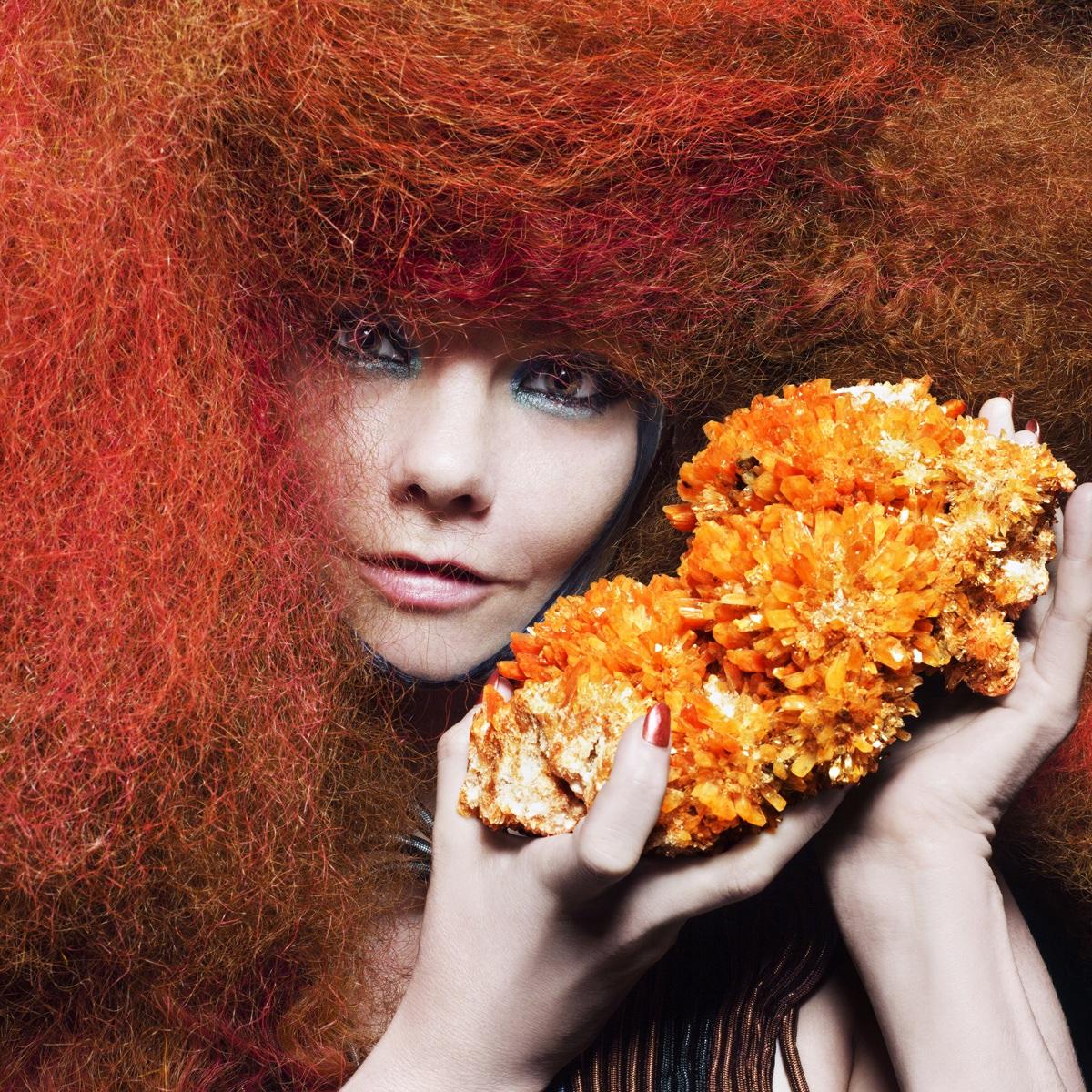
There are musicians, there are pop stars, and then there is Björk.
To call Björk Guðmundsdóttir a singer-songwriter feels like a profound understatement; it is akin to calling the ocean “wet.” For over four decades, the Icelandic visionary has operated not merely as a musician but as a sonic architect, a visual pioneer, and an unrelenting force of nature. She is an ecosystem unto herself. In the pantheon of modern art, Björk occupies a pedestal entirely of her own design—one built from glacial ice, subterranean volcanic rock, and microscopic digital code.
From her punk-infused beginnings to her current reign as the avant-garde matriarch of multimedia art, exploring the essence of Björk requires mapping a territory where human emotion and cutting-edge technology are inextricably entwined. As we look back at her genesis, examine her towering middle era, and step into the immersive future of her 2026 projects, one truth becomes blindingly clear: Björk is one of the greatest artists our world has ever produced.
The Old: Tectonic Pop and the Birth of a Visionary
Before the world knew her as a mononym, Björk was a child prodigy in Reykjavík, releasing her first eponymous album at the age of 11. But it was in the late 1980s, as the ferocious, howling frontwoman of the post-punk band The Sugarcubes, that her distinctive voice—a primal, elastic instrument capable of whispering intimacy and shattering glass in the same breath—caught the globe’s attention.
When she struck out on her own with 1993’s Debut, she did not just pivot genres; she terraformed the pop landscape. Moving to London, she immersed herself in the city’s burgeoning electronic and dance club scenes. Debut and its kinetic 1995 follow-up, Post, married the avant-garde with the accessible. Tracks like “Human Behaviour” and “Army of Me” introduced underground electronic beats, trip-hop, and orchestral sweeps to mainstream radio.

“She transformed her stockpile of weird and bewitching pop songs into masterpieces. Neither strictly dance nor rock, it was the beginning of establishing the most recognizable persona of the 90s.”
But it was 1997’s Homogenic that truly solidified her genius. Retreating to a studio in Spain, Björk set out to create a sound that sounded like Iceland itself: “volcanic beats” colliding with lush, sweeping string arrangements. Homogenic was a staggering masterclass in contradiction, proving that electronic music could be deeply, painfully human.
The Late: Microbeats, Swans, and Heartbreak
As the new millennium dawned, Björk’s artistic output became increasingly conceptual, shifting from external, extroverted dance floors to the quiet, microscopic interiors of the human heart and the natural world.
In 2001, she released Vespertine, an album constructed from “microbeats”—the sounds of stepping on snow, shuffling cards, and breaking ice—woven underneath celestial choirs and a music box. It was intimately domestic and aggressively beautiful. That same year, she arrived at the Academy Awards wearing her infamous Swan Dress. While mocked by conservative fashion critics at the time, the dress has since been recognized for what it was: a brilliant, unabashedly playful subversion of Hollywood glamour that perfectly encapsulated her fearless originality.
Björk’s “late” or middle era is defined by her absolute refusal to repeat herself. She continually dismantled the concept of a standard pop album:
- Medúlla (2004): An album constructed almost entirely from the human voice, featuring throat singers, beatboxers, and Icelandic choirs, exploring the primal, pre-instrumental roots of humanity.
- Biophilia (2011): A sprawling, interdisciplinary exploration of the universe, from DNA to black holes. It was released not just as an album, but as a suite of interactive tablet apps—the first app album ever inducted into the Museum of Modern Art’s permanent collection.
- Vulnicura (2015): A devastatingly raw documentation of her split from artist Matthew Barney. Over sweeping strings and fractured electronic beats co-produced by Arca, Björk dissected the timeline of her heartbreak with clinical, agonizing precision.
The Electronic Breakthrough
1993 – 1997
Releases Debut, Post, and Homogenic, blending underground club culture with cinematic string arrangements and redefining 90s pop.
The Microscopic & Vocal Eras
2001 – 2004
Pivots to intimate, domestic microbeats with Vespertine, followed by the entirely a cappella, primal choral experiment Medúlla.
The Technological Marvel
2011
Releases Biophilia as the world’s first interactive app album, merging musicology, astrophysics, and app development.
The Grief Cycle
2015
Releases Vulnicura, a chronological documentation of her romantic dissolution, introducing a deeply collaborative relationship with producer Arca.
The New: Fossora, Echolalia, and the 2026 Horizon
If Vulnicura was an album of the broken heart, and her 2017 follow-up, U topia, was an album of airy, flute-driven healing, then 2022’s Fossora brought her crashing firmly back down into the earth.
Dubbed her “mushroom album,” Fossora is a heavy, grounded masterpiece driven by the thudding pulse of gabba-techno and a sextet of bass clarinets. But beneath its aggressive sonics lies a tender core. The album served as a profound tribute to her mother, Hildur Rúna Hauksdóttir, who passed away in 2018. Tracks like “Ancestress” and “Sorrowful Soil” act as eulogies, exploring themes of ancestral roots, matriarchy, and the resilience of the natural world.
And yet, Björk’s metamorphosis continues. In 2026, she is proving once again that when she releases music, it is never just an album—it is a world-building event.
Opening in May 2026 at the National Gallery of Iceland is Echolalia, a massive, immersive multimedia exhibition co-created with her longtime visual collaborator, James Merry. Taking over the entire gallery during the Reykjavík Art Festival, the exhibition focuses on Björk as the creative force behind multimedia community projects. It promises a rare opportunity to engage with works of phenomenal visual and aural depth.
The exhibition is structured around three immersive installations. Two are dedicated to the elegiac Fossora tracks “Ancestress” and “Sorrowful Soil.” The third, however, offers a glimpse into her highly anticipated next era, featuring a new, developing work and an early version of a song from her forthcoming studio album (slated for final release in 2027).
In an era where pop music often chases algorithmic trends and fleeting virality, Björk is demanding patience, space, and deep listening. “I seem to spend longer every time in the world-building,” she recently noted, “and it is extremely satisfying to align all the different elements.”
The Eternal Architect
To place Björk on a pedestal as one of the world’s greatest artists is simply to acknowledge the undeniable reality of her catalog. She has never compromised. She has never stagnated. She has treated pop music not as a disposable commodity, but as a boundless, elastic canvas capable of holding the weight of grief, the geometry of nature, and the vanguard of digital innovation.
From the volcanic strings of Homogenic to the subterranean gabba of Fossora, and onward to the immersive art-spaces of Echolalia, Björk remains one of pop’s best, if not best. She doesn’t just write songs; she creates universes for us to inhabit. And decades into her career, the world is still eagerly waiting to see where she will take us next.
A Merged Insight Exclusive.



Leave a Reply