
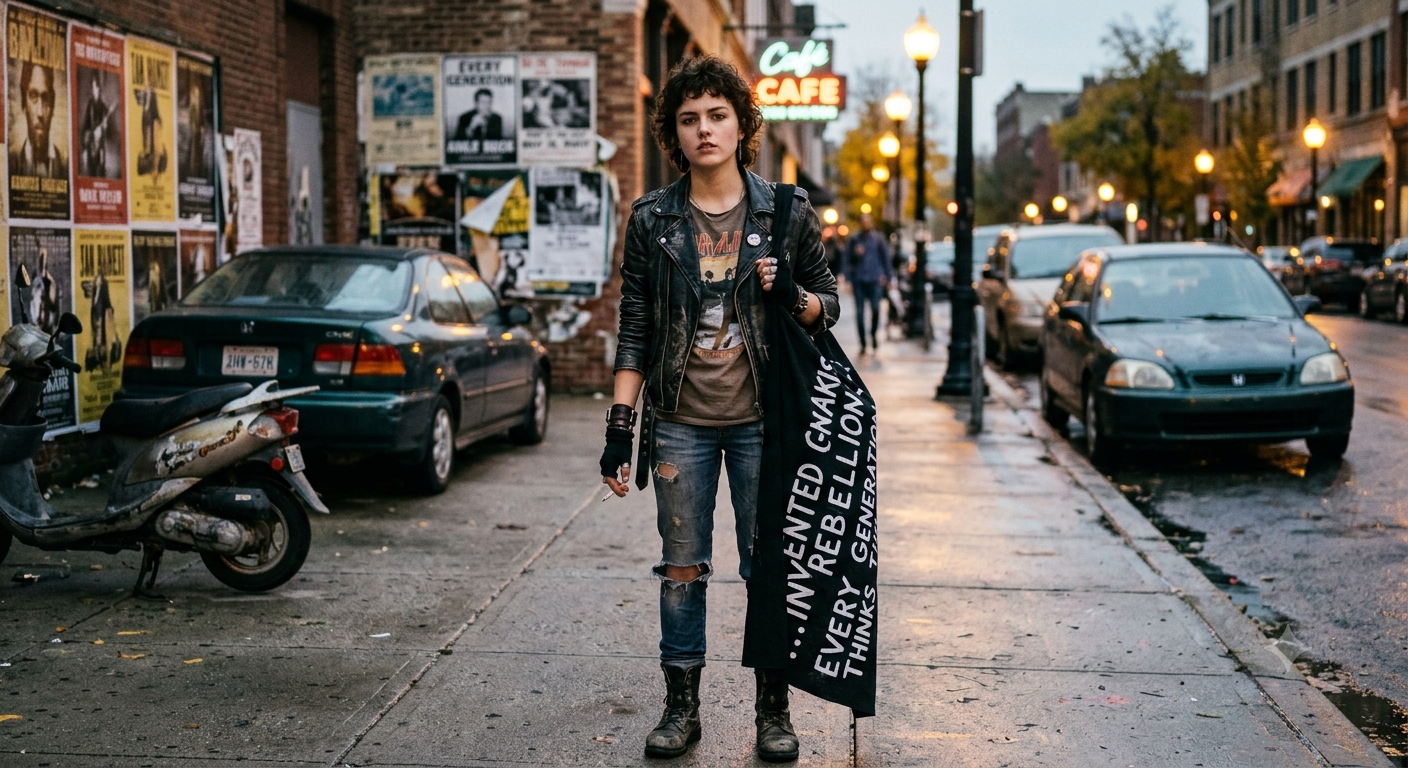
In the 1920s, parents were horrified by flappers — young women cutting their hair short, dancing to jazz, and abandoning corsets in favor of freedom of movement. In the 1950s, it was rock and roll and leather jackets. In the 1970s, punk. In the 1990s, grunge and internet chatrooms. Today, it’s whatever trend is currently alarming someone’s parents on social media. The costumes change, but the pattern never does.
The Same Story, Different Decade
Every generation of young people goes through a strikingly similar sequence: they adopt a style, sound, or set of values that distances them from their parents, older generations react with concern, and decades later, those same “rebellious” symbols get remembered fondly as a defining cultural moment rather than a threat. The flapper becomes a nostalgic icon. The punk becomes a fashion reference. The pattern repeats so reliably that it says less about any single generation and more about how identity formation actually works.
The Psychology Behind the Pattern
Developmental psychologists have long pointed to adolescence and early adulthood as the period when people are most actively constructing their sense of self, separate from their family of origin. This process, often called individuation, requires some degree of distinction from the previous generation; it is a way of saying “I am not simply a smaller version of my parents.”
Rebellion, in this light, isn’t primarily about the specific music, clothing, or platform involved. It’s a psychological mechanism for establishing identity. The content is almost incidental; the function is what matters. This is why the specific object of “rebellion” can look wildly different across decades and still serve the same developmental purpose each time.
Why Older Generations Always React the Same Way
There’s a mirroring psychological effect on the other side of this dynamic. As people age, they tend to hold onto the cultural touchstones of their own formative years as a stable reference point for what’s “normal.” New youth trends, by definition, don’t fit that reference point, so they’re often read as decline rather than simply difference.
This isn’t unique to any particular era or culture. It appears repeatedly throughout recorded history; even ancient philosophers wrote about “the youth of today” with a tone strikingly similar to modern generational anxiety. The discomfort isn’t really evidence that a generation is uniquely reckless. It’s evidence that generational distance itself produces this reaction, almost automatically.
What This Means for How We See Youth Culture Today
Understanding this cycle doesn’t mean every trend is harmless or that generational concerns are always misplaced; some genuinely do warrant scrutiny. But it does offer a useful filter: before assuming a current youth trend signals cultural collapse, it’s worth asking whether it might simply be this generation’s version of a pattern that has played out, in some form, in nearly every generation before it.
The Long View
The teenagers dancing to unfamiliar music today, dressing in ways that puzzle their parents, or building entirely new online subcultures are not doing something unprecedented. They are doing something remarkably human — the same identity-defining work that flappers, punks, and every “shocking” generation before them once did.
In another few decades, today’s most eyebrow-raising trend will likely be remembered fondly, referenced in nostalgic retrospectives, and viewed with the same warm, bemused affection currently reserved for bell-bottoms and mixtapes. Rebellion, it turns out, is one of the most reliably inherited traditions we have.
A Merged Insight Exclusive.



Leave a Reply