
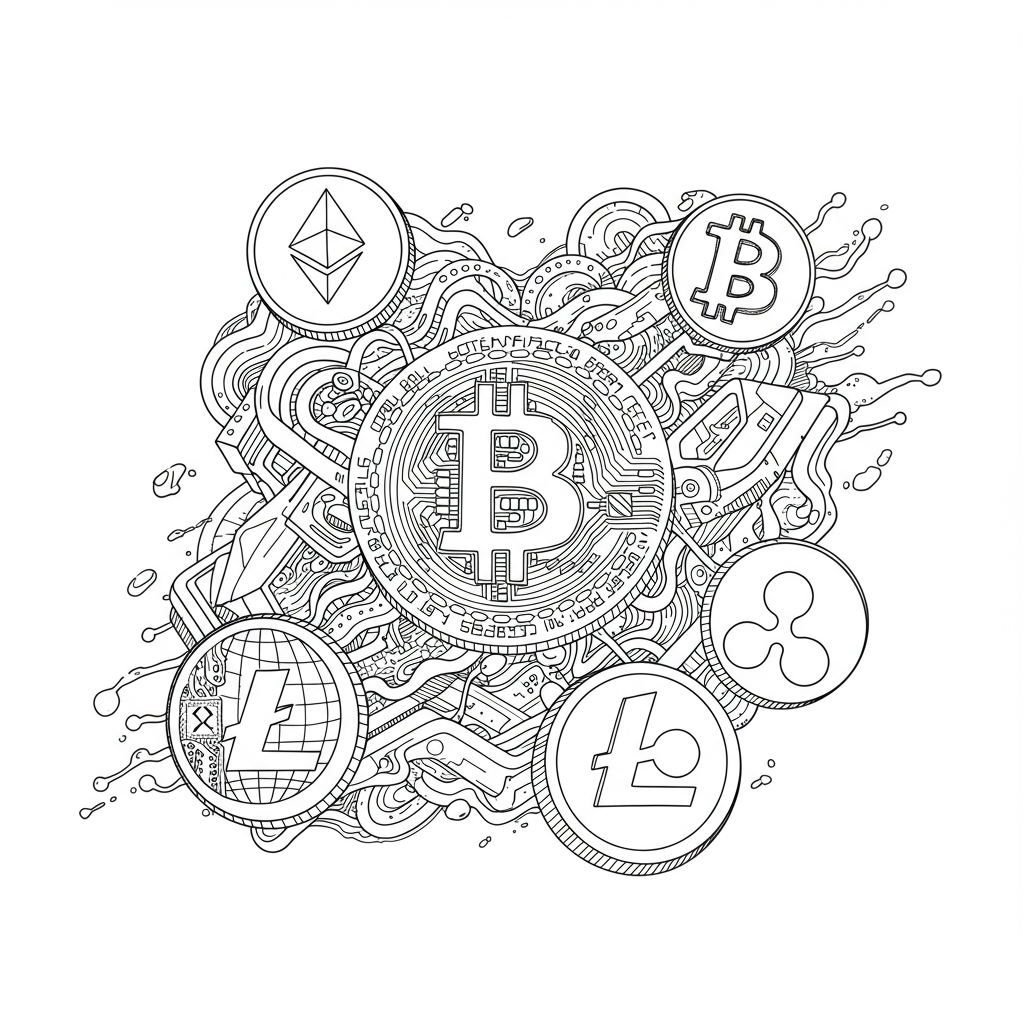
Crypto is no longer a fringe curiosity whispered about in online forums or dismissed as a speculative fad. It has become a serious cultural, financial, and technological force that challenges how value is created, stored, and transferred in a digital world. At Merged Insight, we look at crypto not just as an asset class, but as a reflection of how society is responding to distrust in institutions, rapid technological change, and a desire for decentralization in an era defined by data and networks.
To understand crypto, it is important to move beyond price charts and headlines. Crypto is a broad ecosystem with multiple categories, each serving different purposes. From digital money to programmable finance and decentralized communities, crypto represents an experiment in reimagining economic systems from the ground up.
The Core Idea Behind Crypto
At its foundation, crypto is built on blockchain technology. A blockchain is a distributed ledger maintained by a network of participants rather than a central authority. Transactions are recorded transparently, verified through consensus mechanisms, and designed to be resistant to tampering. This architecture removes the need for intermediaries like banks or payment processors, replacing trust in institutions with trust in code and cryptography.
This shift is not just technical. It is philosophical. Crypto reflects a growing skepticism toward centralized power and a belief that networks can self-govern more fairly than hierarchies. Whether that belief holds in practice is still being tested, but the motivation behind it explains why crypto continues to attract builders, investors, and critics alike.
Cryptocurrencies as Digital Money
The most familiar type of crypto is cryptocurrency used as digital money. These assets are designed to function as a medium of exchange, a store of value, or both. They allow users to send value directly to one another across borders without relying on traditional financial infrastructure.
Some cryptocurrencies prioritize speed and low transaction costs, aiming to be practical for everyday payments. Others prioritize security and scarcity, positioning themselves more as digital stores of value. This diversity reflects the fact that money itself serves multiple functions, and no single crypto design perfectly fulfills them all.
Smart Contract Platforms
Another major category includes platforms that allow developers to build applications directly on a blockchain. These networks go beyond simple transactions by enabling smart contracts, which are self-executing agreements written in code. Smart contracts make it possible to create decentralized applications for finance, gaming, identity, and governance without centralized control.
This category has fueled the rise of decentralized finance, often referred to as DeFi. DeFi applications aim to recreate traditional financial services like lending, borrowing, and trading using code instead of institutions. While powerful, this space also exposes users to new risks, including bugs, exploits, and volatile market dynamics.
Stablecoins and the Bridge to Traditional Finance
Stablecoins are crypto assets designed to maintain a relatively stable value, often pegged to a fiat currency like the US dollar. They play a critical role in the crypto ecosystem by providing a unit of account that is less volatile than most cryptocurrencies.
Stablecoins act as a bridge between traditional finance and crypto markets. Traders use them to move quickly between positions without exiting the crypto ecosystem, while users in countries with unstable currencies use them as a hedge against inflation. At the same time, stablecoins raise important questions about regulation, reserves, and the balance between decentralization and oversight.
Utility Tokens and Governance Tokens
Many crypto projects issue tokens that grant access to specific services or allow holders to participate in governance decisions. These tokens are often tied to decentralized applications and communities rather than functioning as money.
Governance tokens, in particular, represent an attempt to distribute decision-making power among users instead of concentrating it in corporate leadership. Token holders may vote on protocol upgrades, funding decisions, or rule changes. In practice, governance often remains influenced by large holders, but the experiment itself signals a broader interest in participatory digital systems.
Non-Fungible Tokens and Digital Ownership
Non-fungible tokens, or NFTs, introduced the idea of unique digital ownership on the blockchain. Unlike cryptocurrencies, which are interchangeable, NFTs represent distinct assets such as artwork, collectibles, or access rights.
While NFTs are often associated with speculative bubbles and hype, the underlying concept of provable digital ownership has long-term implications. It challenges how creators are compensated, how digital goods are valued, and how identity and culture manifest online.
The Dominance and Growth of Bitcoin
No discussion of crypto is complete without addressing Bitcoin. Bitcoin was the first successful cryptocurrency and remains the most dominant by market capitalization, recognition, and cultural influence. Its importance extends beyond its price or technical features. Bitcoin set the template for what crypto could be and established the narrative of digital scarcity.
Bitcoin was designed with a fixed supply, capped at twenty-one million coins. This scarcity is enforced by code, not policy, making it fundamentally different from fiat currencies that can be expanded by central banks. For many supporters, this makes Bitcoin a hedge against inflation and monetary mismanagement.
Bitcoin’s growth has been driven by several factors. Early adopters were drawn to its cypherpunk roots and promise of financial sovereignty. As awareness grew, institutional investors began to view it as a potential store of value similar to digital gold. More recently, broader cultural conversations about money, trust, and technology have pushed Bitcoin into mainstream discourse.
Despite its dominance, Bitcoin is not without criticism. It is often described as slow, energy-intensive, and limited in functionality compared to newer platforms. Yet its simplicity is also its strength. By focusing narrowly on being secure, decentralized money, Bitcoin has maintained a level of resilience and trust that many newer projects struggle to achieve.
Bitcoin’s dominance also acts as a gravitational center for the entire crypto market. When Bitcoin rises, attention and capital often flow into other crypto assets. When it falls, the entire ecosystem feels the impact. This dynamic reinforces Bitcoin’s role not just as an asset but as a psychological anchor for the crypto space.
Cultural and Economic Implications of Crypto
Crypto is as much a cultural phenomenon as it is a technological one. It has created new online communities, new forms of labor, and new narratives about wealth and opportunity. For some, crypto represents financial freedom and early access to transformative technology. For others, it represents speculation, inequality, and environmental cost.
Economically, crypto challenges traditional assumptions about intermediaries and trust. It asks whether financial systems need centralized gatekeepers or whether open networks can provide similar services more efficiently. While crypto has not replaced traditional finance, it has forced banks, regulators, and policymakers to confront uncomfortable questions about relevance and innovation.
At the same time, crypto exposes the limits of purely technical solutions to social problems. Code cannot fully account for human behavior, power dynamics, or ethical considerations. Hacks, scams, and market manipulation reveal that decentralization does not automatically produce fairness or safety.
The Future of All Things Crypto
The future of crypto will not be defined by a single outcome. It will likely be shaped by a combination of technological maturation, regulatory clarity, and cultural adaptation.
From a technological perspective, scalability and usability remain key challenges. For crypto to move beyond niche adoption, it must become easier to use without sacrificing security. Advances in infrastructure, wallets, and user experience will play a major role in determining how accessible crypto becomes to everyday users.
Regulation will also be decisive. Governments around the world are grappling with how to classify and oversee crypto assets. Thoughtful regulation could provide legitimacy and consumer protection, while overly restrictive approaches could stifle innovation or push activity underground. The balance struck will influence where and how crypto evolves.
Culturally, crypto is entering a more sober phase. The era of unchecked hype is giving way to a period of evaluation and integration. Projects that provide real utility are more likely to survive, while those built purely on speculation may fade. This shift aligns with a broader trend in technology where initial excitement eventually gives way to practical application.
At Merged Insight, we see crypto not as a replacement for existing systems, but as a mirror held up to them. It reflects dissatisfaction with centralized control, fascination with automation, and a desire for alternative futures. Whether crypto fulfills its most ambitious promises or settles into a more modest role, its influence on how we think about value and trust is already undeniable.
Crypto is still being written in real time. Its story is one of experimentation, conflict, and possibility. As with any powerful idea, its ultimate impact will depend less on the technology itself and more on how humans choose to use it.




Leave a Reply