
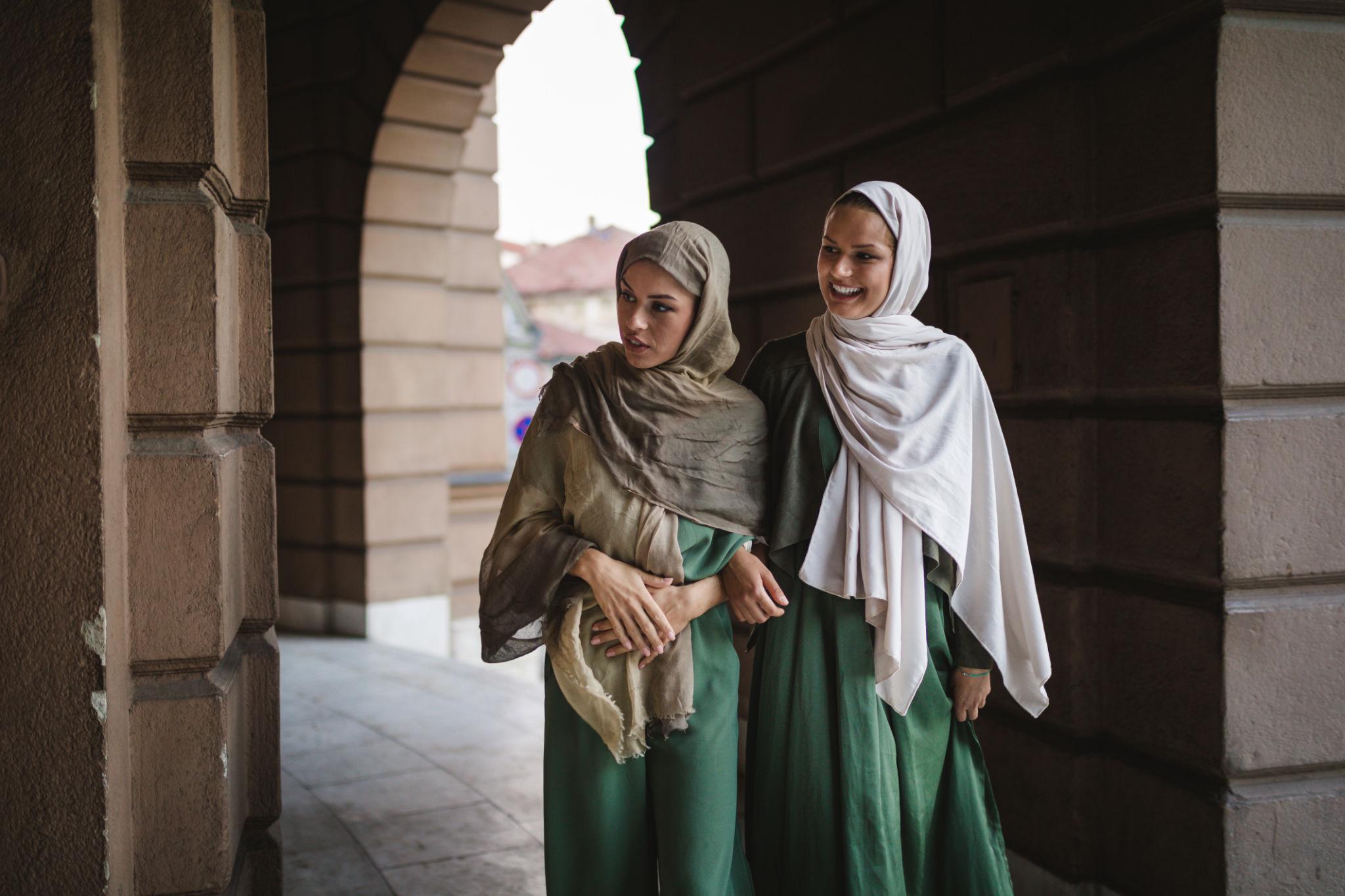
When the world looks at Islam through the lens of modern geopolitics or fractured headlines, it often sees a monolithic structure of rules, boundaries, and historical conflicts. But to step inside the theological and lived reality of the faith is to encounter a vastly different landscape. At the very core of Islamic philosophy, pulsing through its texts, its history, and the daily lives of nearly two billion adherents, are two inextricably linked forces: a profound, all-encompassing love (Hubb) and an unyielding, spiritually rooted courage (Shuja’ah).
These are not merely passive emotions or occasional acts of bravery. In the Islamic worldview, love and courage are active, dynamic forces. Love is the reason for creation, and courage is the necessary armor required to protect that love in a flawed world. To understand Islam is to understand how these two pillars hold up the sky of a believer’s existence.
I. The Divine Architecture of Love: Rahmah and Hubb
To speak of love in Islam, one must begin with the vocabulary of the Divine. The Quran does not present a distant, clockmaker God, but rather a Creator intimately involved with His creation. Every chapter of the Quran (save one) begins with the invocation: Bismillah ir-Rahman ir-Rahim—”In the name of God, the Most Compassionate, the Most Merciful.”
The root of both Rahman and Rahim is rahm, the Arabic word for a mother’s womb. Islamic theology, therefore, frames God’s relationship with humanity through the metaphor of a mother’s unconditional, nurturing, and fiercely protective love for her unborn child.
But the concept goes deeper into specific types of love:
- Al-Wadud (The Most Loving): One of the 99 Names of Allah is Al-Wadud. Unlike general love, Wudd is love expressed through continuous, active giving. It is not a passive sentiment but an outpouring of affection.
- Hubb (Conscious Love): Classical Islamic scholarship views Al-Hubb as the cornerstone of faith. The Quran explicitly states that the believers are “profound in their love for Allah” (2:165). This is not a blind infatuation; it is a conscious, chosen devotion that motivates every righteous action a person takes.
The 11th-century philosopher and theologian Al-Ghazali argued that love is the natural inclination of the soul toward beauty and perfection, both of which are found absolutely in God. Therefore, the highest spiritual achievement for a Muslim is not mere obedience driven by fear of hell or desire for paradise, but an existence driven by an intoxicating, pure love for the Divine.
The Litmus Test of Action
Love in the Islamic tradition is rigorously practical. The Quran provides a “spiritual litmus test” for claims of love. It redirects abstract feelings into concrete methodology: “Say, [O Muhammad], ‘If you should love Allah, then follow me, [so] Allah will love you and forgive you your sins.’” (Quran 3:31).
Love is verified through emulation. Loving God means adopting the prophetic model—caring for the orphan, feeding the hungry, visiting the sick, and speaking gently to one’s neighbors. Love that does not manifest in the uplifting of human dignity is considered incomplete.
II. Mawaddah wa Rahmah: Love in the Microcosm
This divine architecture scales down perfectly to human relationships, most notably in the institution of marriage. Modern romantic ideals often hinge on fluctuating passions—a fleeting emotional high that Hollywood has commodified. Islam offers a dramatically different, far more resilient framework.
“And of His signs is that He created for you from yourselves mates that you may find tranquility in them; and He placed between you affection (Mawaddah) and mercy (Rahmah)…” — Quran 30:21
Notice the deliberate choice of words. The Quran does not use the word Hubb (which can fluctuate like an infatuation) for the foundation of marriage. It uses Mawaddah, which translates to deep, visible, affectionate action. It is the effort of brewing tea for a tired spouse, the holding of a hand, the deliberate acts of service.
When the honeymoon phase fades and the physical or emotional trials of life arise, Rahmah (mercy and compassion) takes over. It is the grace to forgive a partner’s shortcomings, the tenderness to care for them in sickness, and the empathy to shield them from the world’s harshness. A society built on homes anchored in Mawaddah and Rahmah naturally radiates peace outward, creating a civilization grounded in mutual care rather than selfish extraction.
III. The Anatomy of Courage (Shuja’ah)
If love is the lifeblood of the believer, courage (Shuja’ah) is the skeletal structure that allows them to stand upright. In Islam, courage is heavily distinguished from recklessness, aggression, or a lack of fear. True courage is the mastery of fear through a higher conviction.
Classical scholars define Shuja’ah as the moderate path between two destructive extremes: cowardice (the paralyzing fear of worldly consequences) and recklessness (acting without wisdom or disregard for life).
The source code for Islamic courage is two-fold:
- Yaqeen (Absolute Certainty): The unshakeable belief that God is in ultimate control. If a believer knows that no harm or benefit can reach them without divine permission, the fear of men, poverty, or tyrants evaporates.
- Tawakkul (Active Trust): Tying one’s camel, but leaving the outcome to God. It is doing the absolute maximum within human capacity, and finding peace in whatever result follows.
The Highest Jihad
While history often focuses on military courage, the Prophet Muhammad categorized the supreme form of bravery differently. When asked what the highest form of Jihad (struggle) was, he replied: “A word of truth spoken before an unjust ruler.”
Moral courage is demanded daily. It is the courage to be honest when a lie is profitable. It is the courage to defend the marginalized when society mocks them. The early Muslims who were tortured in the scorching deserts of Mecca—people like Bilal ibn Rabah, an enslaved Black man who refused to renounce his belief in the oneness of God despite having massive stones placed on his chest—demonstrated a fortitude that defied human physiology. His courage was not born of physical strength, but of a love for the truth that eclipsed the pain of his broken ribs.
IV. The Prophetic Model: Where Love Meets the Battlefield
One cannot understand Islamic courage without examining the life of the Prophet Muhammad himself. He embodied a seamless fusion of extreme gentleness and unbreakable fortitude.
During the Battle of Uhud, when confusion struck the Muslim ranks, and many fled in panic,c believing the Prophet had been killed, Muhammad did not retreat. He stood firm on the battlefield, calling his companions back, putting his own life on the line.
Yet, this physical courage was never decoupled from profound mercy. When he finally returned to conquer Mecca—the city whose elite had persecuted him, starved his family, and murdered his closest companions—he rode in with his head bowed so low in humility that his beard brushed his camel’s saddle. With his former tormentors standing before him, I’m anticipating a bloodbath. He possessed the absolute power to exact revenge.
Instead, he asked them: “What do you think I will do with you?”
They replied, “You are a noble brother, the son of a noble brother.”
He delivered a verdict that echoed through history: “Go, for you are free.”
That is the pinnacle of Shuja’ah. It takes courage to fight a war; it takes an infinitely higher, more disciplined courage to conquer one’s own ego and grant total amnesty to one’s abusers out of a love for peace.
The Shield of the Prophet: Nusaybah bint Ka’b
The history of Islam is replete with figures who modeled this dynamic, men and women alike. Consider Nusaybah bint Ka’b, the first female warrior of Islam.
During that same chaotic Battle of Uhud, as enemy forces surged toward the Prophet, Nusaybah abandoned her role of nursing the wounded. Armed with a sword and a bow, she physically threw herself into the fray, forming a human shield around Muhammad. She sustained over a dozen deep wounds, fighting with a ferocity that stunned the enemy. Her courage was not born of bloodlust, but of a desperate, fiercely protective love for the man who had brought light to her world.
Centuries later, Salahuddin Al-Ayyubi (Saladin) would demonstrate this same ethos. When he reclaimed Jerusalem in 1187, he did not mimic the Crusaders, who, nearly a century prior, had slaughtered the city’s Muslim and Jewish populations until the streets ran with blood. Instead, Saladin secured safe passage for the defeated Christians, paid the ransoms for their poor from his own pocket, and ensured the sanctity of their churches. His military courage was entirely subservient to his Islamic mandate of Rahmah.
V. The Synthesis: Love and Courage in the Modern Age
Today, the intersection of Hubb and Shuja’ah is lived out quietly by millions. It is not always found on historical battlefields; it is found in the grit of modern existence.
It is the courage of the Muslim woman who wears her hijab with pride in a society that actively discriminates against her, driven by a love for her Creator that supersedes the desire to “fit in.” It is the courage of Muslim doctors who travel to war zones to operate under bombardment, compelled by the Prophetic mandate that saving one life is akin to saving all of humanity.
It takes immense courage to remain soft in a world that incentivizes cruelty. Islam demands exactly this: to be a fiercely loving entity. A believer must have a heart soft enough to weep at the sight of an orphan, yet a spine made of steel when standing against the oppressor who made the child an orphan.
Ultimately, Islam does not ask its followers to choose between being lovers or being warriors. It demands that they be both. It teaches that love without courage is mere sentimentality, destined to collapse under pressure. And courage without love is mere brutality, destined to destroy the very humanity it claims to defend. To be a complete believer is to hold the sword of justice in one hand, and the salve of mercy in the other, moving through the world with a heart entirely anchored in the Divine.
A Merged Insight Exclusive




Leave a Reply