
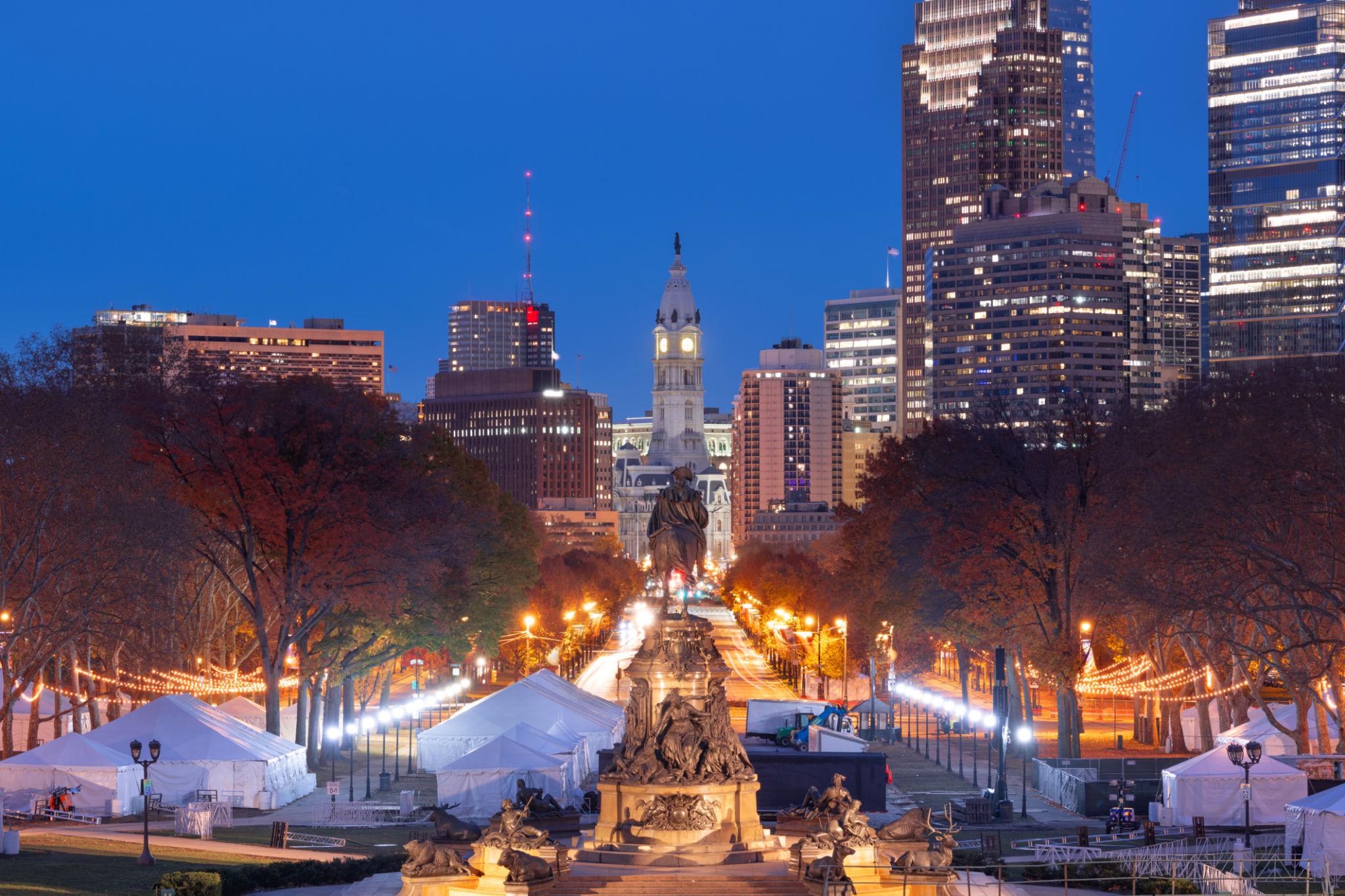
In the realm of municipal governance, budgets are not merely spreadsheets; they are moral documents. They articulate exactly what a society values and exactly who it is willing to leave behind. Recently, a single-page document circulated by local advocates titled “MAKE PHILLY AFFORDABLE” laid out a precise, surgical list of demands for Philadelphia and its political leadership. It paired specific cash injections with desperately needed systemic overhauls across housing, transit, food security, and education. It was a cry for baseline survival in a city that frequently feels as though it is suffocating under bureaucratic inertia.
But what happens when we stop talking about municipal survival and start talking about unprecedented, staggering civic dominance?
Philadelphia’s current annual operating budget hovers around the $6 billion mark—a figure that forces city planners into an endless, agonizing game of triage. Potholes versus after-school programs; library hours versus emergency services. To truly realize the systemic transformations demanded by grassroots organizers, we must shift the paradigm entirely. We must envision a Philadelphia operating on a massive, $14 Billion annual budget.
Moving from a $6 billion reality to a $14 billion metropolis means more than simply throwing cash at old problems. It demands a fundamental restructuring of civic machinery. It requires transforming our city from a reactive entity into a hyper-invested, revenue-generating, progressive mega-city. Here is the Merged Insight deep-dive into how this capital would fundamentally rewrite the DNA of Philadelphia.
The Administrative Overhaul: Automating the $4.0 Billion Core Baseline
Before a single dollar can be effectively deployed toward progressive social programs, the systemic bottlenecks choking city hall must be eradicated. The grassroots flyer acutely identified one of Philadelphia’s most fatal flaws: a hiring process so archaic and convoluted that citizens wait in line for jobs while essential recreation centers and libraries remain closed due to short-staffing.
In our $14 billion budget, $4 billion is allocated to the Core Municipal Baseline—police, fire, sanitation, and administration. However, this is not business as usual. We must implement a radical, algorithmic overhaul of the municipal human resources and administrative backbone. By integrating advanced synthetic media frameworks and automated credentialing systems, the city can bypass the red tape that currently stalls hiring for months. Background checks, initial interview screenings, and departmental matching would be executed with absolute precision, shifting the city’s operational drag into immediate kinetic action.
This lean, technologically advanced core ensures that the physical city remains safe and perfectly maintained, while simultaneously stripping out hundreds of millions of dollars in middle-management bloat. Those saved funds are what power the true renaissance of the city’s public-facing infrastructure. We cannot build a futuristic, equitable city on an administrative foundation stuck in the 1990s.
The Education & Civic Human Capital Trust: A $3.5 Billion Mandate
The grassroots demands called for $25 million to retain substitute teachers and halt the disruptive practice of transferring educators across the city. In a $14 billion budget, we scale this profound understanding of human relationships into a $3.5 Billion Education and Civic Human Capital Trust.
Education is fundamentally an ecosystem of trust. When teachers are treated as interchangeable assets driven by district mandates, the psychological continuity required for childhood development is shattered. By deploying $3.5 billion, Philadelphia effectively insulates its public school district from the volatile, often hostile funding battles at the state level. This capital guarantees a highly competitive, premium living wage for all educators, effectively eliminating the turnover rates that plague urban districts. Teachers would be incentivized to plant roots in the neighborhoods they serve, transforming schools from transient waystations into permanent community anchors.
Furthermore, this budget absorbs the fly for $170 mildemand lion to fully fund libraries and recreation centers. Under this new financial reality, the concept of “library hours” becomes obsolete. These spaces transform into 24/7, fully staffed civic hubs. They become sophisticated centers for digital literacy, vocational training, and safe havens for youth, complete with state-of-the-art technology and dedicated mental health professionals. By viewing public spaces as incubators for human capital rather than sunk operational costs, the city actively drives down downstream expenditures related to public safety and criminal justice.
Sovereign Housing and Urban Restoration: The $2.5 Billion Fortress
Perhaps the most visceral crisis in our city is the rapid displacement of legacy residents due to unchecked gentrification. The original policy document bravely demanded $20 million to preserve deeply affordable housing like the Neighborhood Restoration units. It also demanded that the Mayor sit at the table with citizens to negotiate their survival.
With a $2.5 billion housing allocation, the city stops negotiating with private developers entirely. Instead, Philadelphia becomes the largest, most aggressive real estate developer in the Mid-Atlantic region.
This is the transition to a Sovereign Housing Portfolio. The city utilizes its massive capital leverage to mass-acquire vacant lots, derelict properties, and highly contested development zones. Rather than offering tax abatements to luxury developers in hopes of securing a fraction of “affordable” units, the city directly constructs high-density, architecturally stunning residential towers. Because the municipal government operates these properties at cost—without the need to extract a profit margin for private shareholders—rent remains permanently pegged to working-class wages.
This $2.5 billion fortress neutralizes gentrification by sheer capital force. It permanently shields vulnerable Philadelphians from the predatory whims of the private rental market, ensuring that the people whose culture and labor built the city are never priced out of its future.
Public Transit as a Fundamental Utility: A $1.5 Billion Lifeline
Public transportation is the economic circulatory system of the urban environment. The grassroots organizers correctly identified that mobility equals opportunity, requesting $30 million for the Zero Fare Program and demanding its enshrinement in the city charter via a Transit Access Fund.
In a $14 billion metropolis, public transit transitions entirely from a consumer service to a fundamental public utility. We allocate $1.5 billion to directly nationalize the operational deficits of SEPTA within the city limits. This permanently and universally eliminates fares for every single rider.
The economic multiplier effects of this single policy are staggering. First, it instantly abolishes the massive administrative and physical overhead required for fare collection—no more broken turnstiles, no more ticketing enforcement, no more key card infrastructure. Second, and more importantly, it acts as an immediate, massive tax cut for the working class. The hundreds of dollars a family saves annually on bus and subway fares are immediately injected back into the local economy. Those dollars are spent at neighborhood grocery stores, local restaurants, and small businesses, rapidly accelerating the city’s street-level economic velocity.
The Green Energy Export and Municipal Grid: $1.5 Billion
As we look toward the future, civic survival hinges on climate resilience. The original document called for $50 million for the Philadelphia Energy Authority to fund the “Built to Last” and “Solarize Philly” programs.
Scaling this to a $1.5 billion powerhouse transforms Philadelphia into a global leader in urban climate tech. This massive financial engine is deployed to aggressively solarize every municipal building, public school, and state-owned facility within the city limits. It funds the total replacement of the city’s automotive and transit fleets with zero-emission electric vehicles.
More critically, it supercharges the block-by-block home energy retrofitting of low-income neighborhoods. By replacing failing roofs, updating archaic heating systems, and installing residential solar panels, the city achieves three monumental goals simultaneously. It slashes the carbon footprint of the residential sector, creates thousands of highly-paid, localized, blue-collar union jobs that cannot be outsourced, and dramatically reduces the monthly utility burden on impoverished families. The city essentially begins manufacturing its own power, insulating itself from the volatile global energy market.
Universal Food Security and The Civic Baseline: $1.0 Billion
It is a profound moral failure when a major American city allows its citizens to go hungry. The grassroots organizers highlighted this tragedy, asking for $20 million to restore food security for 50,000 residents through the “One Philly Food Assistance Program.”
Our $14 billion budget allocates a full $1.0 billion to permanently eradicate severe food insecurity from the city. This goes far beyond supplemental assistance. This capital funds the establishment of a robust network of city-owned, subsidized grocery cooperatives strategically placed in every identified food desert. It ensures that fresh, high-quality, culturally appropriate food is available within walking distance of every resident, regardless of their zip code.
Furthermore, this billion-dollar baseline provides direct, targeted cash assistance to the most economically vulnerable citizens. It bypasses the humiliating, means-tested bureaucracies of traditional welfare, trusting citizens with the liquidity they need to manage their own survival. When residents are no longer paralyzed by the biological panic of starvation, they are free to engage with their communities, pursue education, and participate in the city’s economic and cultural life.
The Courage to Build
Drafting a $14 billion municipal blueprint is an exercise in radical imagination, but it is deeply grounded in the economic potential of our era. The demands laid out in the “Make Philly Affordable” flyer were not pipe dreams; they were an acute diagnosis of a sick system.
Funding this vision—whether through heavily scaling local wealth taxes, seizing untapped federal grant lines, or commercializing the city’s green energy output—requires a political ruthlessness that local leadership rarely exhibits. It demands breaking the fragile alliances with real estate monopolies and challenging the austerity narratives that have defined urban politics for half a century.
This budget plan illustrates a fundamental truth: Philadelphia does not lack the potential for greatness; it lacks the capital conviction to execute it. By pairing immense, targeted spending with systemic, algorithmic overhauls of our administrative pipelines, we can move beyond simply making the city “affordable.” We can make it a global beacon of human-centric urban design. We can build a city that truly reflects the resilience, brilliance, and enduring spirit of the people who call it home.
A Merged Insight Exclusive Editorial.




Leave a Reply