
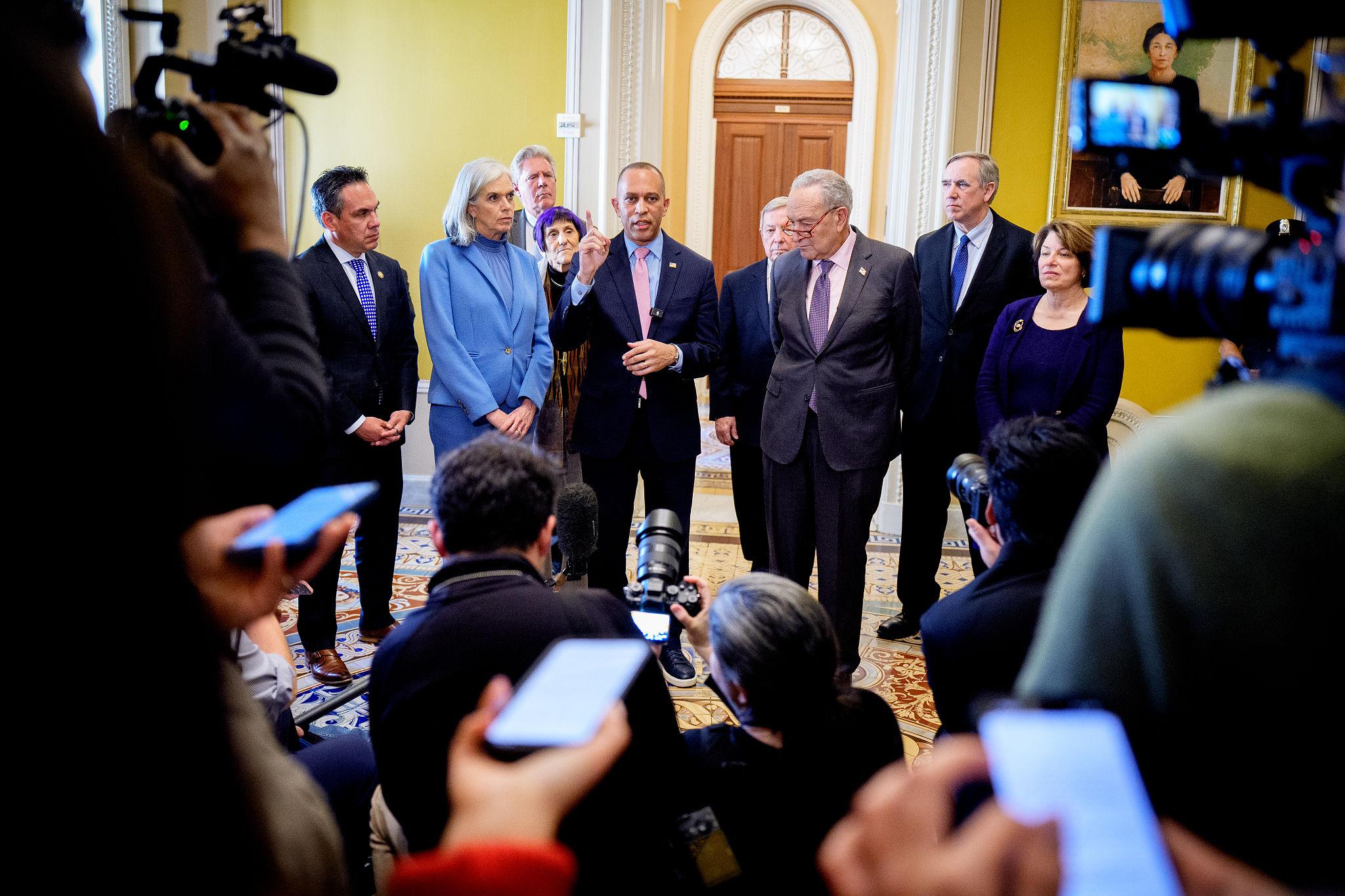
A Merged Insight Exclusive: The Democratic Roadmap for the Post-Trump Era
The American political landscape is standing on the precipice of a generational shift. As the 2026 midterm elections approach, the national conversation is already being pulled toward the realities of 2028—a year that will constitutionally mark the end of Donald Trump’s final term in the White House. For the Democratic Party, the road ahead through the midterms and into the next general election is undoubtedly tumultuous, fraught with polarization, economic anxiety, and intense institutional battles. Yet, within this volatility lies a profound opportunity. To seize it, Democrats must evolve their strategy from mere opposition to offering a compelling, affirmative vision for the country’s future.
As the republic prepares for a post-Trump era, the Democratic Party faces the dual task of contesting fiercely competitive midterm races while simultaneously defining its next generation of leadership. Amplifying the Democratic message requires a clear-eyed assessment of what voters are demanding: tangible economic relief, institutional integrity, and a departure from the exhaustion of perpetual partisan warfare. By focusing on kitchen-table issues, rebuilding trust with the working class, and organizing effectively at the state level, the party can construct a durable coalition that outlasts any single election cycle.
The 2026 Midterm Battleground: Reclaiming the Narrative
Midterm elections historically pose significant challenges for parties seeking to regain or hold congressional majorities. In 2026, the battle lines are drawn across dozens of highly competitive House districts and a challenging Senate map. To navigate this terrain successfully, the Democratic message must be exceptionally disciplined and relentlessly focused on the material realities of American voters.
Recent electoral data and campaign strategies highlight that relying solely on an “anti-Trump” message is insufficient. While concerns over democratic backsliding animate the party’s base, swing voters and disenfranchised independents require affirmative reasons to vote for a Democratic candidate, rather than simply against a Republican one. The core of this midterm strategy relies on demonstrating competent governance and a commitment to systemic reform.
By launching robust, highly visible anti-corruption initiatives, Democrats can draw a sharp contrast with the current administration while appealing to voters’ desire for a cleaner, more accountable Washington. This message must be paired with an unrelenting focus on local concerns. Nationalizing every race often backfires in polarized environments; instead, successful candidates in 2026 will be those who tailor their platforms to the specific economic and social realities of their districts, framing national issues through a local lens.
Economic Populism and the Working Class
If the Democratic Party is to secure both the 2026 midterms and the 2028 general election, its most urgent task is rebuilding its relationship with working-class Americans across racial and geographic lines. Over the past several election cycles, economic realignments have seen a notable segment of the working-class electorate drift away from the party, driven by inflation, the rising cost of living, and a perception of cultural elitism.
The path forward requires a return to the party’s roots as the champion of the working American. This means discarding what strategists term “elite speak” and communicating in clear, tangible terms about affordability. The Democratic platform must aggressively address:
- Housing Affordability: Proposing concrete federal and state interventions to increase housing supply, curb corporate landlord speculation, and make homeownership accessible to younger generations.
- Healthcare and Prescription Costs: Building upon previous legislative victories to further cap drug prices and expand access to affordable care, particularly in rural areas facing hospital closures.
- Labor and Wage Protections: Strengthening the power of unions and advocating for wage policies that keep pace with the real cost of living, not just abstract economic indicators.
When Democrats speak to the economy, they must acknowledge the pain of inflation without defensiveness. A winning message validates the struggles of families living paycheck to paycheck and offers specific, legislative remedies aimed at corporate consolidation and price gouging.
Strategic Pillars for the Next Era
To operationalize this messaging, the party’s roadmap relies on three distinct pillars that address different segments of the electorate.
| Strategic Pillar | Core Messaging Focus | Target Electorate |
| Economic Populism | Housing, healthcare, corporate accountability, and inflation relief | Working-class, rural, and middle-income voters |
| Institutional Integrity | Anti-corruption, protecting democratic norms, and voting rights | College-educated suburbanites and high-engagement voters |
| State-Level Power | Breaking legislative supermajorities, protecting reproductive rights | Swing-state voters, Gen Z, and suburban women |
The 50-State Strategy: Building Power from the Ground Up
While the presidency and Congress consume the bulk of media oxygen, the actual mechanics of American democracy operate at the state level. The Democratic roadmap through 2026 requires an aggressive investment in state legislative races. Countering right-wing legislative pushes requires building power in state capitals across the nation.
This means contesting races in traditional battlegrounds like Pennsylvania, Michigan, and Arizona, but it also requires going on the offensive to break Republican supermajorities in states like Florida, Ohio, and North Carolina. When one party holds a supermajority, it can override vetoes and pass ideological legislation unchecked. By breaking these supermajorities, Democrats can restore legislative balance and protect vital rights—most notably, reproductive freedom, which remains a massive mobilizing force for young voters and suburban women.
A renewed 50-state strategy also acts as a farm system for future national talent. By supporting candidates in challenging districts, the party incubates the leaders who will eventually run for statewide and federal office, ensuring a deep bench for the coming decades.
Defining the 2028 Horizon: A Generational Shift
As the 2026 midterms unfold, the “invisible primary” for 2028 is already well underway. Behind the scenes, potential candidates are courting donors, building grassroots networks, and testing the messages that will define the post-Trump era. With the incumbent term-limited, the 2028 election represents a true open contest and an opportunity for a generational passing of the torch.
The successful Democratic nominee in 2028 will likely be the candidate who can most effectively synthesize the party’s progressive ambitions with the pragmatic realities of a deeply divided nation. This requires an optimistic, forward-looking vision. Rather than dwelling exclusively on the battles of the past decade, the message must pivot to the future: leading the global clean energy transition, modernizing American infrastructure, reforming a broken immigration system with both compassion and order, and ensuring the United States remains a beacon of stable, liberal democracy on the world stage.
The voters who will decide the 2028 election—including millions of Gen Z Americans casting their first presidential ballots—are looking for authenticity. They are highly attuned to political maneuvering and deeply skeptical of institutional gridlock. To win them over, the party must prioritize candidates capable of breaking through the fragmented media landscape with sincerity, moral clarity, and an unrelenting focus on public service.
The Path Forward
The road from the 2026 midterms to the 2028 general election will test the resilience and adaptability of the Democratic Party. As the shadow of the current administration begins to recede due to the constitutional limits of the presidency, the party cannot simply rely on the momentum of opposition. It must stand for something unmistakable.
By embracing an unapologetic economic populism that directly addresses the cost of living, committing to the defense of institutional integrity, and investing heavily in state-level infrastructure, the Democrats can reinvigorate their base and persuade skeptical swing voters. It requires discipline, a rejection of insular messaging, and a genuine connection with the working-class Americans who form the bedrock of the country. The post-Trump republic will require a steady hand and a clear vision. If the Democratic Party can successfully articulate and deliver that vision, it will not only navigate the tumultuous road ahead but also emerge as the defining political force of the next American era.
A Merged Insight Exclusive.




Leave a Reply