

Imagine trying to squeeze two billion more people around the global dinner table by 2050. That is the reality we face as the world’s population sprints toward 10 billion. If you think this is just a daunting math problem, you are wrong. Because it is the ultimate test of food supply and demand.
With that in mind, we all need to ask ourselves one question. Can technology solve the looming 2050 food crisis?
Explore how agtech, AI, and biotechnology can reshape global food security for a population of 10 billion.
1. Maximizing Yields Through Precision Agtech
To feed 10 billion people, farmers can no longer rely on guesswork. That is where precision agriculture benefits come into play. Think of it as upgrading from a blunt instrument to a scalpel.
By using smart tech, farmers can treat every single square foot of a field according to its exact needs, reducing costs and maximizing crop yield.
Here is how AI in farming and agricultural technology is changing the game.
- Smart Sensors. Tiny underground devices track soil moisture and nutrient levels in real-time, telling farmers exactly when to water or fertilize.
- Drones and Satellites. High-flying cameras spot crop diseases from the air weeks before they are visible to the naked eye, preventing widespread crop loss.
- Autonomous Machinery. GPS-guided tractors plant seeds with millimeter accuracy, saving fuel and eliminating wasted space.
From an economic perspective, this is a massive win. It drives down production costs while keeping our soil healthy for the long haul.
2. Cellular Agriculture and Biotech
When we talk about shifting the food supply curve to meet the needs of 10 billion people, we have to look beyond traditional fields. This is where biotechnology in food security changes everything by decoupling what we eat from how much land we possess.
Here is how science is reshaping our food supply.
- CRISPR Crops. Scientists are tailoring plant genetics to withstand intense droughts and thrive in poor soils, giving crops the toolkit to survive a changing climate.
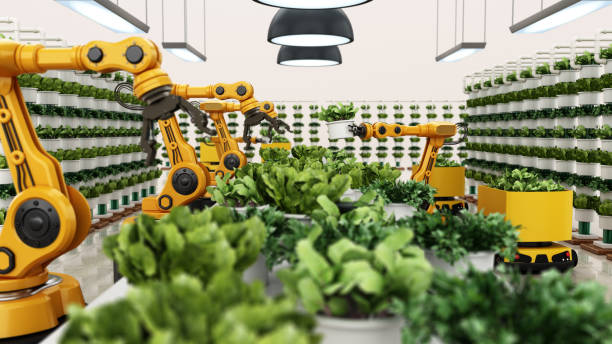
- Vertical Farming Economics. Growing micro-greens and produce in stacked, urban facilities drastically cuts down on the physical land and water required for traditional agriculture.
- The Alternative Protein Market. Cultured proteins and plant-based options are booming, reducing the massive environmental and financial strains of traditional livestock farming.
The above biotech innovations create highly predictable, weather-independent food supplies. This, in turn, protects global markets from sudden climate shocks.
3. Eliminating Waste From Farm to Fork
Here is a hard economic truth: we actually produce enough food right now to feed billions. The sad reality is that nearly one-third of it is lost or ruined before anyone can take a bite.
Solving global food insecurity isn’t just about growing more. It is about reducing food supply chain waste.
By upgrading to smart supply chains, we can secure the global food distribution network using two key innovations.
- Blockchain in Agriculture. This creates a digital ledger to track shipments transparently, cutting out bureaucratic delays and pinpointing exactly where food spoilage occurs.
- Smart Cold Storage. Deploying IoT(Internet of Things)-driven refrigeration protects perishable crops in transit, especially in developing regions lacking strong infrastructure.
Plugging these leaks keeps food affordable for consumers and preserves profits for small farmers.
The Policy Matrix for a Tech-Driven Harvest
Technology can theoretically feed 10 billion people, but market forces alone won’t distribute it equitably. To secure a tech-driven harvest, global governments must deploy a smart policy matrix.
This means offering financial incentives for small farmers to adopt sustainable agriculture technology, funding public agtech research, and building infrastructure in developing nations. Without the right policies, the best technology remains useless.
Can technology feed 10 billion people?
Yes, with the right policies and practices in place. The future of food security depends less on whether the technology exists and more on how we incentivize its global deployment.
A Merged Insight Exclusive.




Leave a Reply