
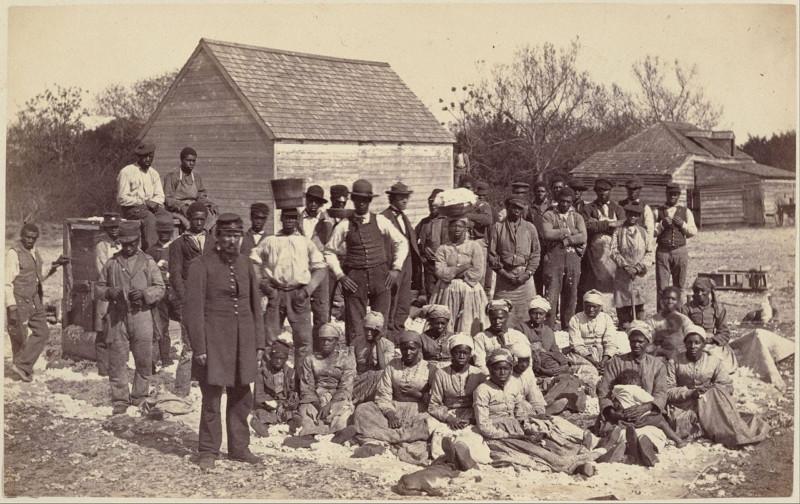
For over four centuries, the United States has operated on a profound and deliberate economic contradiction: it built the very foundations of its unparalleled global wealth on the stolen labor, lives, and liberty of enslaved Africans, yet it continues to frame the systemic, generational poverty of their descendants as a failure of individual responsibility. The time for symbolic apologies, commissions to study the obvious, and piecemeal social programs has passed. What is required now is not charity, nor a newly branded corporate initiative for “diversity and inclusion,” but the immediate settlement of a mathematically quantifiable, historically documented debt. Reparations.
We are talking about reparations. We are talking about comprehensive economic restitution. We are demanding a financial settlement ranging from $14 trillion to $28 trillion, to be distributed directly to the eligible descendants of enslaved Africans in the United States.
This is not a radical proposition; it is standard accounting. When a corporation steals wages, it is compelled by law to pay them back with interest. When a foreign nation seizes assets, international courts demand immediate restitution. The United States government, which legally sanctioned, militarily enforced, and economically profited from chattel slavery, owes its Black citizens a debt that has been compounding since 1619.
The Mathematics of the Debt: Why $14 to $28 Trillion?
How do we arrive at the staggering figure of $14 to $28 trillion? It is not an arbitrary number pulled from the ether to shock the conscience; it is a meticulous calculation rooted in the stark realities of the racial wealth gap.
Leading economists—most notably Dr. William “Sandy” Darity Jr. and A. Kirsten Mullen, authors of From Here to Equality—have laid the unassailable mathematical groundwork. The baseline calculation of $14 trillion is fundamentally designed to achieve one vital economic goal: the complete and total elimination of the Black-white racial wealth gap in the United States.
Currently, Black Americans make up approximately 13% of the U.S. population but hold barely 4% of the nation’s total wealth. The Federal Reserve’s data paints a bleak picture: the average white family possesses roughly ten times the net worth of the average Black family—a gap exceeding $300,000 per household. If we multiply that disparity by the approximately 40 million Black descendants of American slavery, the minimum baseline cost to level the economic playing field sits firmly at $14 trillion.
However, the upper threshold of $28 trillion accounts for broader historical and economic variables. This figure calculates not just the unpaid wages of millions of enslaved laborers between the nation’s founding in 1776 and abolition in 1865, but the compounding interest of that stolen labor over multiple generations. Furthermore, it factors in the quantified damages of subsequent state-sanctioned atrocities: the theft of Black-owned land during the terror of the Jim Crow era, the exclusion of Black veterans from wealth-building engines like the GI Bill, and the systematic devaluation of Black property through government-mandated redlining. The $28 trillion figure is a comprehensive accounting of both active theft and passive, systemic exclusion.
The Compounding Interest of Injustice
To understand the absolute necessity of this massive payout, we must dispel the uniquely American myth that slavery ended in 1865 and all races were subsequently placed on an equal starting line.
The emancipation of enslaved Africans was accompanied by the promise of “40 acres and a mule”—a meager but critical foundation for agrarian wealth in the 19th century. That promise was swiftly broken. The land was confiscated by the federal government and returned to former Confederate enslavers. Consequently, four million emancipated Black people were released into a violently hostile economy with absolute zero capital.
While the government denied restitution to Black Americans, it heavily subsidized the wealth creation of white Americans. The Homestead Act of 1862 gave away roughly 270 million acres of largely Indigenous land almost exclusively to white families. Today, roughly 46 million living white Americans reap the generational wealth of those land grants.
When Black Americans did manage to build wealth against impossible odds—in thriving communities like Tulsa, Oklahoma; Rosewood, Florida; or Wilmington, North Carolina—that wealth was frequently destroyed by white mob violence, with local governments either complicit, turning a blind eye, or actively participating in the destruction. Following this era of racial terror, the New Deal and the GI Bill—the primary architects of the modern American middle class—were structurally designed, at the behest of Southern segregationists in Congress, to exclude the vast majority of Black workers and veterans.
The $14 to $28 trillion debt is not solely for the brutality of slavery; it is the bill for the unbroken chain of state-sponsored economic sabotage that followed it.
The Blueprint: Distributing the $14 – $28 Trillion
A financial settlement of this magnitude requires a multi-faceted, heavily structured distribution strategy to ensure that the wealth is retained, protected from predatory corporate extraction, and allowed to generate future prosperity. The payment should not be solely locked in slow-moving trusts, nor should it be entirely liquidated overnight. A hybrid model is essential.
1. Direct Cash Transfers (The Anchor)
The absolute core of the reparations plan must be direct, liquid capital distributed to eligible individuals. If the total package is calculated at the baseline of $14 trillion, the direct payment equates to roughly $350,000 per eligible individual.
- The Mechanism: Payments should be dispersed over a defined period—ideally within 10 years—to mitigate sudden economic shocks and allow for thorough financial planning.
- The Purpose: This provides immediate, unencumbered capital to eliminate predatory debt, secure homeownership, or invest in equity markets. Autonomy is paramount; the government must not dictate or restrict how individuals spend their restitution.
2. The Homestead and Property Restoration Act
A significant portion of the total restitution must address the specific theft of Black land and the modern housing crisis.
- Zero-Interest Mortgages: The creation of federally backed, zero-interest mortgages exclusively for descendants of slavery.
- Property Tax Exemptions: A localized mandate for prolonged property tax exemptions for Black homeowners in historically redlined or gentrifying districts to prevent displacement.
- Land Grants: Federal and state governments possess millions of acres of surplus land. A modern “40 acres” program should transfer commercial and residential land directly to Black trusts, cooperatives, and individuals.
3. The Generational Education Endowment
The historical exclusion from higher education and the current crippling burden of student loan debt require a systemic, permanent remedy.
- Total Debt Cancellation: The immediate and total cancellation of all federal and private student loan debt for eligible descendants.
- Tuition-Free Access: Perpetual, fully funded endowments guaranteeing free tuition, room, and board at any public university, trade school, or Historically Black College and University (HBCU) for descendants of slavery.
4. The Health and Healing Trust
Generational trauma, environmental racism, and systemic medical bias have severely impacted Black life expectancy, maternal mortality, and mental health.
- Lifelong Healthcare: A dedicated, fully funded healthcare apparatus providing free, top-tier medical, dental, and psychological care to eligible recipients outside the traditional, profit-driven insurance model.
- Infrastructure Investment: Billions directed to building and staffing state-of-the-art hospitals and clinics in predominantly Black communities that have been historically subjected to medical deserts.
Eligibility: Who Receives Restitution?
A frequent, bad-faith roadblock in reparations discourse is the question of eligibility. The criteria must be strict, historically accurate, and focused specifically on the unique lineage of American chattel slavery. The most sound proposal, advocated by leading economists, requires individuals to meet two specific conditions:
- Lineage: The individual must be able to prove descent from at least one person enslaved in the United States prior to the end of the Civil War in 1865.
- Identity: The individual must have consistently self-identified as Black, African American, or Negro on official documents (such as the census or birth records) for a minimum of ten years before the passage of the reparations legislation.
This standard ensures that the compensation is directed squarely at the descendants who inherited the specific socio-economic deficits created by American slavery and Jim Crow. It clearly separates this specific national debt from broader global claims related to general immigration or the impacts of colonialism in other nations.
Funding the Restitution: How America Pays
The inevitable, cynical question arises: How can the United States possibly afford $14 to $28 trillion?
The answer lies in understanding macroeconomics and the unyielding power of a sovereign fiat currency. The U.S. government routinely finds trillions of dollars overnight to fund endless foreign wars, bail out failing Wall Street banks, and enact massive corporate tax cuts. The money is never a physical constraint; it is purely a matter of political will and prioritization.
However, to fund this without triggering catastrophic hyperinflation, the strategy must be structural and redistributive:
- Monetary Expansion and Staged Rollout: The Federal Reserve has the capacity to finance these payments, provided they are phased in over a decade to allow the economy to absorb the new capital without supply chain collapse.
- Taxes on Extreme Wealth: The implementation of a progressive wealth tax on ultra-billionaires and monopolistic corporations. A fraction of a percent tax on Wall Street speculation and high-frequency trading could generate trillions over a decade.
- Closing Tax Havens: Aggressively penalizing and seizing assets hidden in offshore tax havens by wealthy American citizens and corporations.
- Reallocation of Punitive Budgets: Redirecting funds from the hyper-militarization of local police forces and the sprawling prison-industrial complex—systems historically designed and used to aggressively over-police and incarcerate Black Americans—directly into the reparations fund.
Addressing the Counterarguments
The pushback against reparations generally falls into two predictable categories: historical amnesia and economic panic.
“I didn’t own slaves, and no one alive today was a slave.”
This argument fundamentally misunderstands the nature of government liability and civic duty. Citizens do not pay taxes solely for things they personally endorse, nor do they only pay for damages they personally caused. We pay for the debts, obligations, and liabilities of the nation as a continuous entity. The United States government sanctioned slavery. The state committed the crime. Therefore, the state is responsible for the restitution, regardless of an individual citizen’s personal ancestral history. When a government violates human rights on a mass scale, the bill comes due, even if the current taxpayers were not the original perpetrators.
“It will cause hyperinflation and destroy the economy.”
As previously noted, distributing the funds strategically over 10 years mitigates inflationary pressure. Furthermore, closing the racial wealth gap would massively stimulate the American economy from the bottom up. Equipping 40 million Black Americans with capital means an explosion in business creation, a surge in home construction, increased consumer spending, and the creation of a vastly more robust tax base. Economists estimate that true equity and the elimination of racial disparities would ultimately expand the American GDP by trillions of dollars over the coming decades.
Conclusion: The Price of True Reconciliation
The United States is deeply in love with the rhetoric of racial healing, but it violently recoils at the cost of the medicine. We have built grand monuments to civil rights leaders, designated federal holidays to celebrate emancipation, and painted slogans on city streets, but symbolism pays no mortgages. Apologies build no generational wealth.
A $14 to $28 trillion reparations package is not a handout; it is the ultimate expression of justice. It is the long-overdue settlement of a brutal, bloody invoice. The staggering wealth of America, its gleaming cities, and its dominant global economy are fundamentally stained with the blood, sweat, and stolen futures of enslaved Africans. Until that debt is settled in full, the United States will remain a fractured, hypocritical nation, haunted by its past and paralyzed by a profoundly unequal present.
The plan is clear. The mathematics are sound. The moral imperative is undeniable. It is time for America to open its ledger, acknowledge the deficit, and finally pay what is owed.




Leave a Reply