
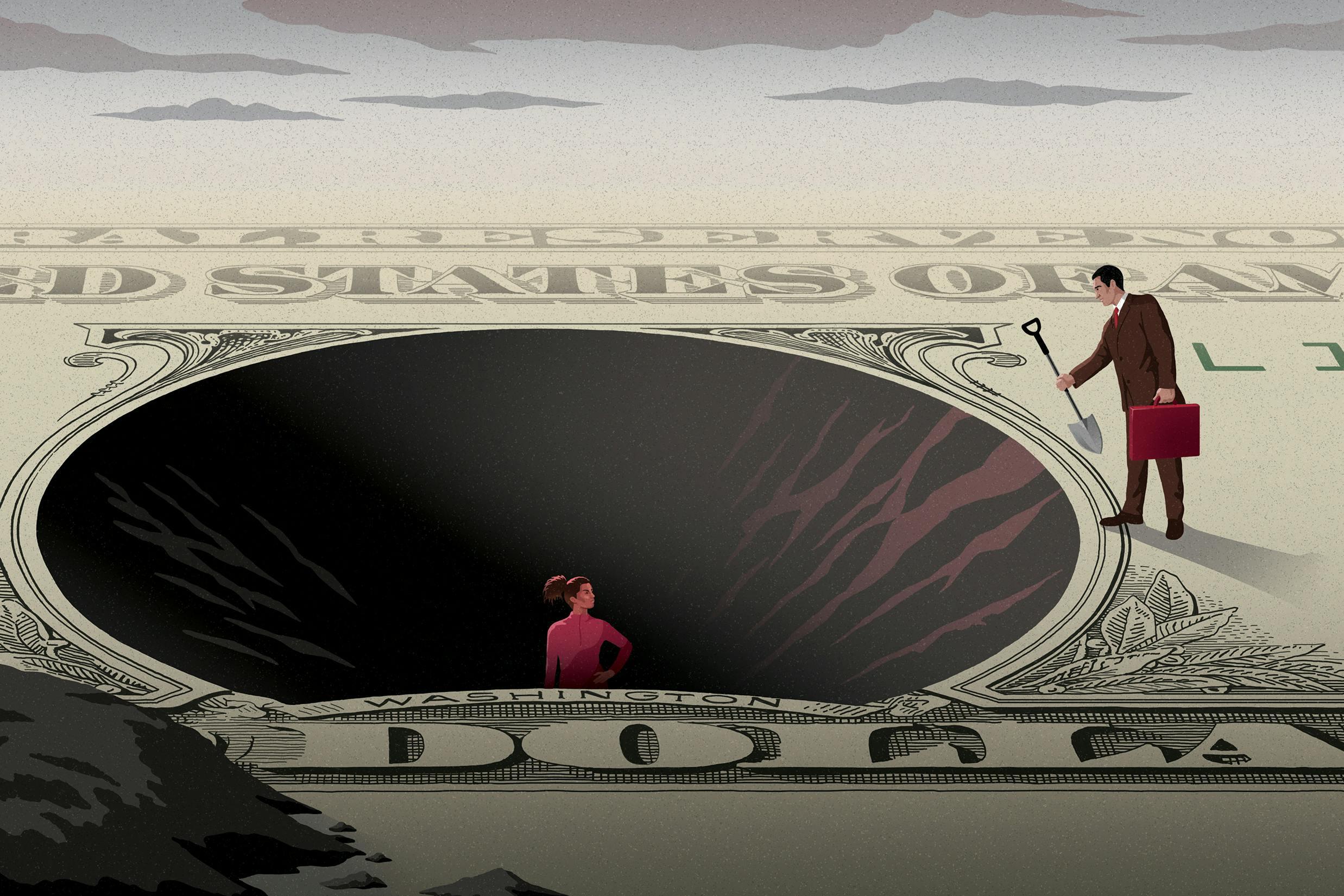
In the United States, a three-digit credit score acts as a modern-day passport to financial stability. It is the invisible gatekeeper that dictates whether you can buy a home to build generational wealth, secure a reliable car to commute to work, obtain a loan to start a small business, or even rent a safe apartment. In many states, this same number influences how much you pay for auto insurance or whether a potential employer decides to hire you. Yet, this system—often heralded by the financial industry as a perfectly objective, mathematically sound measure of personal responsibility—is far from neutral.
The American credit system is notoriously difficult to enter, operating on a frustrating paradox: to prove you are worthy of credit, you must already have a history of managing credit. For millions of Americans, this paradox creates a towering barrier to entry. But a closer examination of the data reveals that this barrier is not distributed equally. The difficulty of establishing credit disproportionately impacts Black Americans, serving as a quiet but devastating mechanism that continues their systemic disenfranchisement. To understand how to dismantle this inequity, we must first examine how the system was built, how it operates today, and the tangible steps required to reform it.
The Catch-22 of Establishing Credit in America
To understand the racial disparities in the credit system, one must first grasp the inherent friction in establishing a credit profile in the United States. Credit scores, primarily generated by algorithms like FICO and VantageScore, rely exclusively on data reported by lenders to the three major credit bureaus: Experian, Equifax, and TransUnion.
If you have never taken out a loan or owned a credit card, you simply do not exist in the eyes of these algorithms. You are what the industry terms “credit invisible.” If your file is too new or lacks recent activity, you are deemed “unscorable.”
Breaking out of this invisibility loop is profoundly difficult for those without preexisting financial resources. The standard avenues for establishing credit include:
- Becoming an Authorized User: This involves being added to the credit card account of a parent or family member who already has a strong credit history. It is a highly effective shortcut to a good score.
- Opening a Secured Credit Card: This requires the applicant to put down a cash deposit (often $200 to $500) that serves as their credit limit.
- Taking out a Credit-Builder Loan: A specialized loan where the borrowed money is held in a bank account while the borrower makes fixed monthly payments to build a history.
For middle-class and wealthy Americans, the first option is a rite of passage. Young adults routinely inherit the benefit of their parents’ decades of flawless credit history before they even graduate high school. However, for those born into families that have been historically excluded from the banking system, the authorized user route is closed. They are left with secured cards and credit-builder loans, which demand liquid cash—a luxury that many low-income households simply do not have.
A Stark Reality: The Data on Credit Invisibility
The structural barriers of the credit system reflect a massive racial divide. According to data from the Consumer Financial Protection Bureau (CFPB) and research from the Urban Institute, the statistics paint a bleak picture of access to financial tools in America.
Currently, around 26 million Americans are entirely credit invisible, and an additional 19 million are unscorable. However, these figures skew heavily along racial lines:
| Demographic | Credit Invisible or Unscorable Rate |
| Black Consumers | 28% |
| Hispanic Consumers | 26% |
| White Consumers | 16% |
| Asian Consumers | 16% |
Furthermore, when Black Americans do manage to establish a credit score, they are statistically likely to score much lower than their white peers. In 2021, the median VantageScore for white consumers was 730, firmly in the “good” range, while the median score for Black consumers was 639, a subprime score that triggers higher interest rates and frequent loan denials. Opportunity Insights data reveals that by age 25, the average credit score for Black individuals is roughly 100 points lower than for white individuals, a gap that remains stubbornly consistent through age 65.
Baking in Bias: How the System Perpetuates Disenfranchisement
Proponents of the current credit reporting system frequently argue that algorithms are colorblind. Credit scoring models are legally prohibited by the Equal Credit Opportunity Act of 1974 from using race, gender, religion, or marital status as variables. Therefore, the argument goes, if disparities exist, they are merely reflecting differences in individual financial behavior.
This perspective ignores the profound reality of American history and the function of algorithms. Algorithms may not see race, but they are exceptionally good at measuring the financial legacy of racism. The credit system does not exist in a vacuum; it is layered on top of centuries of discriminatory policies that have systematically stripped wealth from Black communities.
1. The Legacy of Redlining and the Wealth Gap
For decades in the 20th century, the federal government and private banks engaged in “redlining,” a practice that explicitly denied mortgages to Black Americans or confined them to artificially devalued neighborhoods. Because homeownership is the primary engine of generational wealth in the United States, white families were able to build equity and pass it down, while Black families were heavily excluded.
Today, the typical white family holds nearly eight times the wealth of the typical Black family. When a white family faces a medical emergency, a job loss, or a broken down car, they are far more likely to have savings, home equity, or family members to borrow from. When a Black family faces the exact same crisis, the lack of a wealth cushion often leaves them with no choice but to miss a bill payment or take out high-interest debt. The credit algorithm does not record the historical wealth gap; it only records the missed payment, penalizing the Black consumer for lacking a systemic safety net.
2. Predatory Lending and the Subprime Trap
Because mainstream banks have historically underserved Black neighborhoods, alternative financial services like payday lenders, title loan companies, and check-cashing storefronts have aggressively filled the void. These services offer immediate cash but charge exorbitant, predatory interest rates. Crucially, payday loans do not typically report on-time payments to the credit bureaus. They only report when an account goes into default and is sent to collections. Black consumers are thus disproportionately trapped in a subprime financial ecosystem that actively damages credit scores while offering no mechanism to improve them.
3. The Collateral Damage of the Justice System
Black Americans are disproportionately targeted by the criminal justice system, which increasingly relies on fines, fees, and court costs to fund municipal budgets. Unpaid legal debts quickly wind up on credit reports or lead to license suspensions, making it harder to maintain employment and pay other bills. This creates a vicious cycle where a minor interaction with the legal system can permanently kneecap a person’s credit score.
4. Non-Financial Weaponization of Credit Scores
Perhaps the most damaging aspect of the credit system is its expansion beyond lending. Landlords use credit scores to screen tenants, pushing Black applicants with lower scores into substandard housing or higher-crime neighborhoods. Employers use credit checks to screen job applicants, meaning a poor credit score can actively prevent a person from securing the income needed to pay off the very debt dragging their score down. This weaponization transforms a supposedly objective financial metric into a sprawling, inescapable caste system.
Moving Forward: Solutions for a More Equitable System
The disenfranchisement perpetuated by the credit system is not an unbreakable law of nature; it is a policy choice. Addressing this crisis requires a multi-faceted approach that reforms how credit is calculated, restricts how it is used, and attacks the root causes of the racial wealth gap.
Expanding the Definition of Creditworthiness
The most immediate solution involves incorporating “alternative data” into credit scoring models. Millions of Black Americans who are credit invisible pay their rent, electricity, water, and cell phone bills perfectly on time every month. Traditional credit models have historically ignored these payments because landlords and utility companies do not reliably report them to the bureaus.
Innovations like Experian Boost and VantageScore 4.0 are beginning to factor in these routine payments, but this must become the industry standard rather than an opt-in gimmick. Lenders and government-backed mortgage entities like Fannie Mae and Freddie Mac must mandate the use of inclusive underwriting algorithms that recognize steady rent and utility payments as legitimate indicators of financial responsibility.
Reforming Algorithmic Reliance
While alternative data is helpful, we must be careful not to simply feed new data into flawed models. If alternative data relies on metrics tied to heavily segregated geographies, it may inadvertently reproduce the same racial biases. The Consumer Financial Protection Bureau must strictly enforce the “disparate impact” standard of the Equal Credit Opportunity Act, aggressively auditing credit scoring algorithms to ensure they do not indirectly discriminate against minority communities.
Restricting the Use of Credit Scores
We must decouple basic human needs from three-digit financial scores. Legislation should be passed at the federal level to ban the use of credit scores in employment decisions. A person’s ability to manage consumer debt has no bearing on their ability to perform the duties of a job, and denying employment based on credit is a cruel, self-defeating practice. Similarly, states must prohibit auto and homeowner’s insurance companies from using credit scores to set premiums, a practice that forces low-income Black drivers to subsidize the insurance rates of wealthier white drivers.
Tackling the Root Cause: The Wealth Gap
Finally, tweaking credit algorithms is merely treating a symptom. The ultimate solution to racial disparities in credit access is closing the racial wealth gap. This requires bold, systemic economic policies:
- First-Generation Down Payment Assistance: Federal grants to help individuals whose parents did not own homes to overcome the barrier of a down payment.
- Baby Bonds: Publicly funded trust accounts established for every child at birth, weighted by family income, ensuring every young adult enters the economy with baseline capital.
- Stricter Enforcement of Fair Lending Laws: Aggressively penalizing banks that continue modern forms of redlining or targeted subprime marketing.
Conclusion
The American credit system, as it operates today, is a reflection of the nation’s deeply unequal past. By requiring consumers to navigate an exclusionary maze to establish creditworthiness, and by blindly punishing populations that lack historical wealth, the system ensures that those who have been historically disenfranchised remain so.
We cannot accept a reality where a Black American is statistically destined to face higher interest rates, fewer job opportunities, and restricted housing options simply because an algorithm interprets systemic historical disadvantage as individual risk. Redefining creditworthiness is not just a matter of financial innovation; it is an urgent matter of civil rights. The path to economic justice demands that we dismantle these invisible gates and construct a financial system that evaluates potential rather than punishing legacy.
This discussion explores recent data revealing how Black applicants are disproportionately denied mortgages, directly illustrating the real-world consequences of credit access disparities. We at Merged Insight support a system where credit worthiness is not the only measure of a man or woman, and we vehemently believe that while credit is essential, change is necessary.




Leave a Reply