
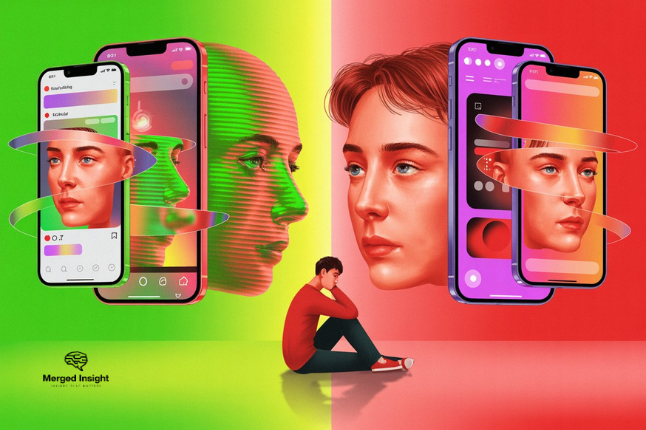
We are in a time when we meet through a screen and put our best face on for the world. We make profiles, brag about our photos, and create stories we can talk about and boast about our best moments, while omitting the rest. This has led to an intriguing conflict within the current cultural landscape, one in which people are seeking digital identity and online authenticity. We want to be seen, liked, and validated online, and we want to be connected and real. This paradox is the way that millions of Americans live in a hyper-connected society.
There’s more pressure than ever to keep up a polished profile online. Platforms don’t pay for just life. The platform does not pay for the common everyday life. Many feel increasingly disconnected from themselves, as well as from others, due to this. This article discusses the nature and origins of the paradox of digital identity and online authenticity, its psychological and social impact, and what implications it holds for American human relations in the future.
The Rise of Curated Digital Identity
In the last decade, social media has evolved from a means of communication into an important space for identity performance. Americans spend hours per day “curating” feeds of their lives that they aspire to. This virtual self can be more of a presence than our actual selves, particularly for the younger generations.
In today’s digital age, people have several online identities on different platforms. Career networking sites require skill and achievement, and Instagram and TikTok are all about beauty, adventure, and perfection in lifestyle. Each platform presents us in a particular manner, which results in a disjointed sense of self, and it can feel tiring to maintain.
This is not all bad. It enables people to express creativity, create personal brands, and meet other communities of like-minded people. But when the simulated version takes over from the real thing, there are issues.
Understanding Online Authenticity in a Filtered World
Online authenticity is the urge to be honest and transparent online. However, authenticity is hard to achieve in an environment where algorithms value engagement over honesty. Algorithms and platforms give far less attention to posts that reveal vulnerability or mundane daily life compared to perfectly staged content.
Numerous Americans say they’re torn between two competing desires. They would like to tell the truth and share their experiences, but they also fear being judged, being less engaged, or having a professional impact. This internal conflict adds to the general digital fatigue and anxiety.
A study conducted at several American universities has repeatedly found that people who spend more time on social media tend to have poor self-esteem and a tendency to compare themselves with others. As our digital persona turns into a performance, our true identity and the image we project start to diverge, resulting in psychological tension.
The Psychological Cost of Maintaining Digital Personas
This paradox is a burden on mental health! “Impression management” is one of the greatest sources of stress in the digital age, psychologists have discovered. Frequently checking out our public online image takes mental resources and leaves us less able to be present in our real lives.
A lot of people undergo identity dissociation. They are most “themselves” when they are alone, but also spend considerable time putting into making versions of themselves that seem increasingly alien. Even romantic relationships started online can cause this disconnection, resulting in imposter syndrome.
Certain challenges are faced by the younger generation, especially Gen Z and the Millennials. Living in a world where smartphones are the norm has meant that they have had a public coming-of-age narrative, which has been documented and judged. Consistency from year to year is part of the challenge in developing a stable sense of self, because of the pressure to maintain consistency in years of posts.
How Social Media Platforms Shape Our Digital Identity
Platform design plays a crucial role in this paradox. Algorithms prioritize content that evokes deep emotions and engagement. Most of the time, authentic but quiet moments are not going to win against the dramatic, polished, or controversial posts.
Elements such as Stories, Reels, and live video streams further de-mystify the difference between spontaneous sharing and performance. As soon as we’re thinking about someone watching us, our behavior alters. It is because of this “audience effect” that making an online presence authentic may be hard.
Furthermore, there are economic motivations. Those content creators and influencers who can get a balance between being relatable and aspirational in their creation often have successful careers. However, for people who use social media regularly, the same dynamics set up unrealistic standards that affect their self-worth and life satisfaction.
The Generational Divide in Digital Identity and Online Authenticity
This paradox is solved in various ways by different generations. Adults who started using the social media platform as older adults tend to have more distinct online/offline boundaries. Many simply use platforms to connect, rather than promote themselves.
Digital natives, however, have never lived in a world without extensive documentation of their lives. Digital identity and online authenticity are an essential part of identity formation for them, not an option. Such transitions present opportunities for self-expression and major issues of privacy and mental well-being.
Parents and educators are more concerned about the impact of curated content on children’s sense of self. Talking about authenticity, privacy, and healthy boundaries online is now part of the conversation in American schools.
Strategies for Reclaiming Balance
Yet, Americans are striving to put right the balance of their digital identity and their own authenticity amidst these difficulties. Some practical solutions are:
– Designating specific times to use social media
– Selective sharing instead of continual documentation.
– Developing relationships and experiences offline, which form the basis for identity
– The new approach of sharing struggles and imperfections on posts is a change that we are glad to see. I am glad to see that it is more transparent to post about struggles and imperfections.
Some users have taken on a “digital minimalist” stance and cut down on their online activity. Others take a different approach: they make use of the platforms more purposefully as tools, as means to performance rather than as performance platforms.
The only key is conscious choice. Digital spaces are not a no-go zone to be avoided at all, but spaces of thoughtful engagement that can maintain authenticity while offering connection and opportunity.
The Future of Identity in an Increasingly Digital Society
The struggle between digital identity and online authenticity will likely increase with the advancement of technology. New platforms, virtual reality, and AI content will give rise to even more complex forms of presentation.
The American society question is whether it is possible for norms of digital self-presentation to become healthier. What is more important, polished performance or true connection in the future? Will the pressure towards curation only increase?
The discussion of mental health, authenticity, and tech is increasing. Prominent calls for more transparency from users and platforms. The rising consciousness is a hopeful sign for how we can solve the present paradox as a community.
Final Thoughts
The paradox of digital identity and online authenticity is a deeper question regarding what being 21st-century humans entails. We wish to be known and loved for our true selves, but engage in systems that require us to perform carefully constructed versions of ourselves.
Reaching balance involves constant self-examination and making decisions. It’s about understanding that our value is not just in likes, comments, or well-curated photos. Digital space provides unprecedented opportunities for connection and expression, but should not supersede our real life and interpersonal relationships.
Americans can reshape the concept of healthy digital identity, one person at a time, and as a people. As we all strive to create a tomorrow that prioritizes “substance over show” and “connection over performance,” we can find a way to make that happen.
How are you working to be authentic online? Being authentic about this subject could be a minor but significant change in the culture.



Leave a Reply