
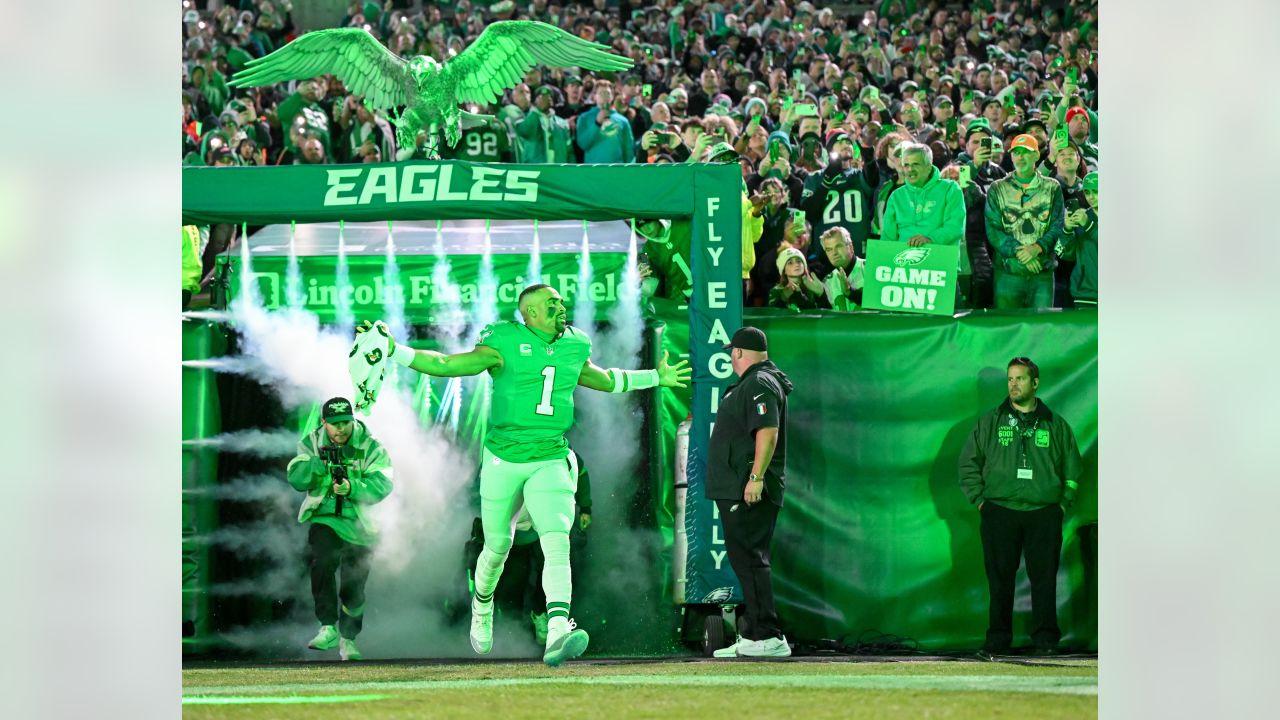
There was a time when the Philadelphia Eagles were the punchline of professional football. A proud franchise, yes. A historic franchise, absolutely. But for decades, the city of Philadelphia carried the burden of heartbreak like a permanent scar across Broad Street. Generations of fans lived through near misses, controversial losses, quarterback controversies, and the national ridicule that followed every postseason collapse. The Eagles were respected, but never fully feared. Loved in Philadelphia, doubted everywhere else.
Not anymore.
The Philadelphia Eagles are now five-time world champions, and whether the NFL establishment, Dallas Cowboys fans, or the national media likes it or not, the Birds have entered a different stratosphere in professional football. This is no longer merely a successful franchise. This is now a football institution. A cultural machine. A hardened football empire forged through grit, intelligence, toughness, and the kind of relentless spirit that only Philadelphia can produce.
The Lombardi Trophies tell one story. The consistency tells another. But perhaps the most important thing the Eagles have accomplished is this: they have transformed the identity of Philadelphia sports forever.
For decades, the city was defined by frustration. Today, it is defined by expectation.
And that changes everything.
The Legacy Begins With Grit
The Eagles were never built like Hollywood’s favorite teams. They were not America’s darling franchise. They did not receive the endless media worship often reserved for teams like the Dallas Cowboys, Kansas City Chiefs, or San Francisco 49ers. Philadelphia earned its victories the hard way.
The Eagles’ championship tradition began long before the modern NFL became the billion-dollar entertainment machine it is today. Championships in 1948, 1949, and 1960 established the organization as one of football’s original powers. The 1960 title remains especially legendary because Philadelphia handed the great Vince Lombardi his only postseason loss as a head coach.
That matters.
In the mythology of football, that matters immensely.
Then came decades of pain. The franchise wandered through eras of hope and collapse. Fans endured heartbreaking defeats under coaches and quarterbacks who could never quite get over the hump. The Eagles became synonymous with “almost.”
Yet Philadelphia fans never abandoned the team.
That loyalty created something rare in professional sports: a relationship between city and franchise that transcended wins and losses. Eagles football became religion in Philadelphia. Sundays became sacred gatherings of collective emotion. Grandfathers passed fandom down to sons. Mothers raised daughters in midnight green. Entire neighborhoods shut down emotionally after losses and exploded into celebration after victories.
No fanbase in America lives football the way Philadelphia does.
The Andy Reid Era Changed the Standard
When Andy Reid arrived in 1999, the Eagles transformed from an inconsistent organization into a perennial contender. Reid brought structure, professionalism, and offensive innovation. Under his leadership, Philadelphia became one of the most stable franchises in the NFL.
The Eagles reached four consecutive NFC Championship Games.
That alone was historic.
But despite the brilliance of Donovan McNabb and a ferocious defense led by legends like Brian Dawkins, the Eagles repeatedly fell short of a championship.
Those losses hurt Philadelphia deeply because the city knew the team was good enough.
Yet even in failure, the Reid era laid the foundation for the championship culture that exists today. The Eagles learned how to compete at the highest level consistently. The organization stopped thinking small. Expectations changed permanently.
Philadelphia was no longer hoping to matter.
Philadelphia is expected to contend.
The First Lombardi Changed the City Forever
Everything changed in February 2018.
When the Eagles defeated the New England Patriots in Super Bowl LII, something spiritual happened in Philadelphia. Decades of frustration evaporated in one unforgettable night.
Backup quarterback Nick Foles delivered one of the greatest underdog performances in sports history. The “Philly Special” became immortal. Fans wept openly in bars, homes, and on crowded city streets.
It was not merely a football game.
It was catharsis.
For older Eagles fans, it validated a lifetime of loyalty. For younger fans, it established a new reality: the Eagles could actually win it all.
The emotional release from that championship cannot be overstated. Philadelphia carried itself differently afterward. The inferiority complex disappeared. The jokes stopped mattering. The city finally possessed modern football glory.
And remarkably, that championship was not the end.
It was the beginning.
Jalen Hurts Became the Face of Modern Philadelphia
Every great sports era requires a defining leader.
For this generation of Eagles football, that man is Jalen Hurts.

Hurts embodies Philadelphia in a way that feels almost supernatural. Tough. Calm. Disrespected. Relentless. Focused. Unshakeable under pressure.
Critics doubted him, constantly coming out of college. Analysts questioned his throwing mechanics, ceiling, and long-term viability. Yet Hurts answered every criticism the same way: through leadership and production.
Philadelphia respects workers.
Philadelphia respects resilience.
That is why Hurts became beloved almost instantly.
He does not carry himself like a celebrity quarterback. He carries himself like a man on a mission. There is a blue-collar mentality to his game that mirrors the city itself.
When Hurts speaks, Philadelphia listens.
When Hurts fights through pain, Philadelphia admires him.
When Hurts wins, Philadelphia sees itself reflected.
The Eagles’ modern championship success is inseparable from Hurts’ leadership. He stabilized the franchise, elevated the locker room, and helped establish the Eagles as one of football’s elite organizations once again.
Howie Roseman Built a Football Empire
Dynasties are not accidents.
The Eagles became champions repeatedly because the organization embraced intelligence, long-term planning, and ruthless roster construction. Much of that credit belongs to Howie Roseman.
Roseman evolved into arguably the NFL’s best executive because he learned from failure. Early criticism sharpened him. He adapted aggressively. He embraced analytics without abandoning toughness. He valued the trenches while understanding the importance of explosive playmakers.
The result?
A roster consistently loaded with talent.
Philadelphia dominates where championships are truly won: the offensive and defensive lines. The Eagles bully opponents physically. They overwhelm teams with depth, rotation, and conditioning.
That philosophy travels in January.
Cold-weather football still matters. Physicality still matters. And the Eagles never abandoned those principles while the rest of the league chased finesse.
The organization found the perfect balance between old-school football and modern innovation.
Philadelphia Fans Are the Soul of the NFL
No discussion about the Eagles is complete without discussing the fans.
Philadelphia fans are frequently portrayed as hostile, outrageous, and unforgiving. Sometimes that reputation is deserved. But national observers often miss the deeper truth.
Eagles fans care more deeply than almost anyone.
That intensity comes from love.
The city invests emotionally in sports at a level many other markets simply cannot comprehend. Eagles fans defend their team like family because, in many ways, the franchise is family.
Children grow up wearing Eagles jerseys before they can speak clearly. Entire neighborhoods organize around game days. Victories become civic celebrations. Losses become communal mourning rituals.
Philadelphia is one of the few cities where football genuinely shapes the emotional climate of the region.
And when the Eagles win championships, the city transforms into pure electricity.
There is no parade atmosphere in America quite like Philadelphia after an Eagles title.
Nothing compares.
The Eagles Versus the Cowboys Rivalry Defines America’s Football Culture
No rivalry captures the emotional intensity of NFL football like the Eagles versus the Cowboys.
Philadelphia and Dallas represent opposite football identities.
The Cowboys market glamour, legacy branding, and national visibility. The Eagles market toughness, authenticity, and raw emotion. Cowboys fans often embrace nostalgia. Eagles fans embrace survival.
For years, Dallas supporters mocked Philadelphia’s championship drought. Eagles fans heard every joke imaginable.
But times have changed.
Philadelphia now stands shoulder to shoulder with the NFL’s elite franchises, while Dallas continues searching for postseason relevance. The balance of power has shifted dramatically in recent years, and Eagles fans know it.
That reality makes victories over Dallas even sweeter.
In many ways, modern Eagles’ dominance represents the triumph of substance over spectacle.
The NFL’s New Power Structure Runs Through Philadelphia
The Eagles are not merely successful.
They are sustainable.
That distinction matters enormously in today’s NFL.
Many teams rise briefly before collapsing under salary cap pressure, coaching turnover, or roster erosion. Philadelphia continues to find ways to reload because the organization operates with a long-term vision.
Ownership remains stable. Front office leadership remains elite. Coaching infrastructure remains strong. Talent evaluation remains exceptional.
That consistency creates something dangerous for the rest of the league.
A championship window that stays open.
The Eagles are now one of the NFL’s premier destinations for players who want to compete for titles. Veterans understand the culture. Young stars understand the opportunity. Coaches understand the expectations.
Philadelphia is no longer chasing greatness.
Philadelphia has become great.
Why Five Championships Matter Historically
Some fans only count Super Bowls. That argument ignores football history.
NFL championships before the Super Bowl era absolutely matter because they determined the best team in professional football. The Eagles earned those titles against the strongest competition of their respective eras.
Five championships place Philadelphia among the NFL’s truly historic franchises.
That matters for legacy.
It matters for respect.
And it matters for younger fans who may not fully understand how deep the organization’s roots truly go.
The Eagles are not a trendy modern success story. They are one of professional football’s foundational franchises.
The banners prove it.
Philadelphia’s Identity and the Eagles Are Now Intertwined Forever
The Eagles represent more than football in Philadelphia.
They represent resilience.
Philadelphia is a city that often feels overlooked nationally despite its enormous historical importance. It is blue-collar yet sophisticated. Aggressive yet loyal. Hardened yet deeply emotional.
The Eagles reflect all of that.
When the team succeeds, the city feels validated. When the team fights through adversity, fans see their own lives reflected in that struggle.
That emotional connection is why Eagles football matters differently here.
This is not entertainment alone.
This is identity.
Final Thoughts: The Eagles Have Earned Their Place Among Football Royalty
Five-time world champions.
Say it again slowly.
Five-time world champions.
The Philadelphia Eagles earned every ounce of that legacy through decades of perseverance, brilliant leadership, generational talent, and one of the fiercest fanbases in professional sports.
This franchise is no longer defined by heartbreak.
It is defined by excellence.
The rest of the NFL should understand something clearly moving forward: the Eagles are not going away anytime soon. The culture is too strong. The leadership is too sharp. The city is too passionate.
Philadelphia waited generations for sustained football greatness.
Now that it has arrived, the city has no intention of giving it back.
And somewhere across Philadelphia tonight, amid the echoes of Broad Street celebrations and generations of midnight green pride, one message continues ringing louder than ever:
#GoBirds
A Merged Insight Exclusive.


Leave a Reply