

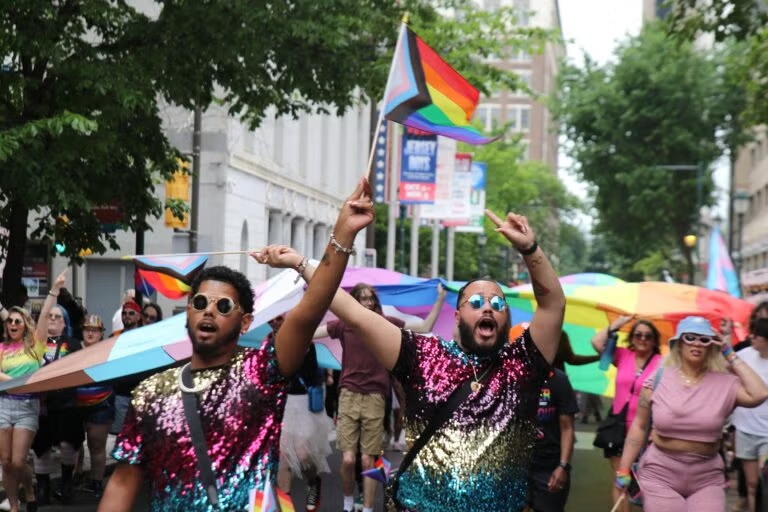
Every June, cities across the United States burst into a kaleidoscope of color. Corporate logos adopt the rainbow, streets are closed for massive parades, and millions gather in a vibrant display of joy and solidarity. But beneath the glitter and the festive atmosphere lies a history forged in profound struggle, resilience, and unapologetic defiance.
Pride Month is not merely a celebration of identity; it is an annual commemoration of a civil rights movement that demanded a space for LGBTQ+ Americans to exist authentically. To understand Pride today, we must look back at the crucible in which it was formed, tracing the arc from quiet, localized resistance to a nationwide cultural revolution.
The Spark: Stonewall and the Demand for Visibility
Before 1969, the LGBTQ+ rights movement in the United States—often referred to as the “homophile” movement—was largely defined by a strategy of assimilation. Organizations like the Mattachine Society and the Daughters of Bilitis favored quiet, polite pickets, urging members to dress conservatively to prove to straight society that gay men and lesbians were just like everyone else.
But on the sweltering night of June 28, 1969, the strategy of quiet assimilation was violently discarded.
When police raided the Stonewall Inn, a Mafia-run gay bar in New York City’s Greenwich Village, the patrons did not quietly disperse as they had during countless previous raids. Fed up with constant harassment, extortion, and brutality, the crowd fought back. Led largely by the most marginalized members of the community—working-class butch lesbians, drag queens, street youth, and transgender women of color like Marsha P. Johnson and Sylvia Rivera—the patrons hurled coins, bottles, and bricks at the police.
The resulting uprising lasted for six days. Stonewall was not the first time LGBTQ+ people had fought back against police harassment (the Cooper Donuts Riot in Los Angeles and the Compton’s Cafeteria Riot in San Francisco preceded it by years), but it became the catalyst that galvanized a fragmented population into a cohesive, radicalized movement. Within months, the Gay Liberation Front was formed, demanding not just tolerance, but complete systemic change.
Defining the Movement: Key Milestones
Stonewall Uprising
June 1969
Patrons at the Stonewall Inn clash with police, sparking six days of protests and birthing the modern gay liberation movement.
The First Pride March
June 1970
The “Christopher Street Liberation Day” march is held in New York City alongside simultaneous marches in Chicago and Los Angeles, marking the first anniversary of Stonewall.
Declassification
December 1973
The American Psychiatric Association removes homosexuality from its official manual of mental disorders, a massive victory against institutional pathologization.
The Rainbow Flag
June 1978
Artist Gilbert Baker creates the first Rainbow Flag for the San Francisco Gay Freedom Day parade, replacing the pink triangle (reclaimed from the Holocaust) as the symbol of the movement.
Marriage Equality
June 2015
In Obergefell v. Hodges, the US Supreme Court ruled that the fundamental right to marry is guaranteed to same-sex couples nationwide.
Employment Protections
June 2020
The Supreme Court ruled in Bostock v. Clayton County that the Civil Rights Act of 1964 protects employees against discrimination based on sexual orientation or gender identity.
The 1980s and 90s: Organizing Through the Plague
If the 1970s were defined by sudden, explosive visibility and the heady rush of liberation, the 1980s brought a devastating reckoning. The HIV/AIDS epidemic ravaged the LGBTQ+ community, exposing the deep, systemic homophobia of the American government and medical establishment. As thousands of gay men died, the federal government largely ignored the crisis.
Pride events transformed from celebrations of liberation into marches of mourning and furious protest. Out of this crucible of grief emerged fiercely effective activist groups, most notably ACT UP (AIDS Coalition to Unleash Power). Founded in 1987, ACT UP utilized dramatic, confrontational direct-action tactics—staging “die-ins” at the FDA, shutting down Wall Street, and covering the country in their iconic “Silence = Death” posters.
The tragedy of the AIDS epidemic inadvertently accelerated the LGBTQ+ rights movement. It forced a generation out of the closet; people could no longer hide their identities when their partners, friends, and roommates were dying. It also forged deep alliances within the community. Lesbians, who had previously organized largely in separate feminist spheres, stepped in to care for dying gay men, creating a unified political bloc that would drive the massive legislative battles of the coming decades.
The 21st Century: Legal Victories and Shifting Culture
As the new millennium dawned, the focus of the movement expanded aggressively into the halls of legislation and the courts. The 1990s and 2000s were defined by bitter fights over military service (“Don’t Ask, Don’t Tell”) and the legal recognition of relationships (the Defense of Marriage Act).
The push for marriage equality became the focal point of the mainstream movement. Activists argued that without the legal protections of marriage, same-sex couples were structurally vulnerable—unable to visit partners in the hospital, secure parental rights, or inherit property. The turning point arrived in June 2015 with the Supreme Court’s landmark ruling, which legalized same-sex marriage across all fifty states.
Alongside legal victories came a massive cultural shift. Media representation exploded, bringing nuanced, openly LGBTQ+ characters into living rooms across the country. Openly gay, lesbian, and transgender politicians were elected to local, state, and federal offices. Pride parades swelled into massive civic events, embraced by mayors, governors, and major corporations.
The Unfinished Work: Pride as an Ongoing Protest
Today, it is easy to view Pride Month solely as a victory lap—a reflection of how far the United States has come since the dark, oppressive days of the mid-20th century. Yet, for many within the community, Pride remains an urgent, ongoing protest.
While landmark Supreme Court rulings have secured marriage and employment rights, new battlegrounds have emerged. The transgender community, in particular, faces unprecedented legislative assaults. Across the country, states have introduced and passed record numbers of bills targeting gender-affirming healthcare, transgender participation in sports, and the inclusion of LGBTQ+ topics in public school curricula. Furthermore, the intersection of queer identity with race and class continues to dictate the reality of safety; transgender women of color still face epidemic levels of violence and housing insecurity.
These modern struggles are a stark reminder of the origins of Pride. The pioneers of Stonewall did not riot for corporate sponsorships; they fought for the fundamental right to exist safely in public spaces.
As we celebrate Pride Month, we honor the drag queens who threw the first bricks, the activists who chained themselves to government buildings, and the quiet courage of millions who simply chose to live openly. Pride is a tribute to a community that looked at a hostile world and decided to change it—a powerful, joyous, and defiant reminder that the march toward true equality is still underway.
A Merged Insight Exclusive.


Leave a Reply