
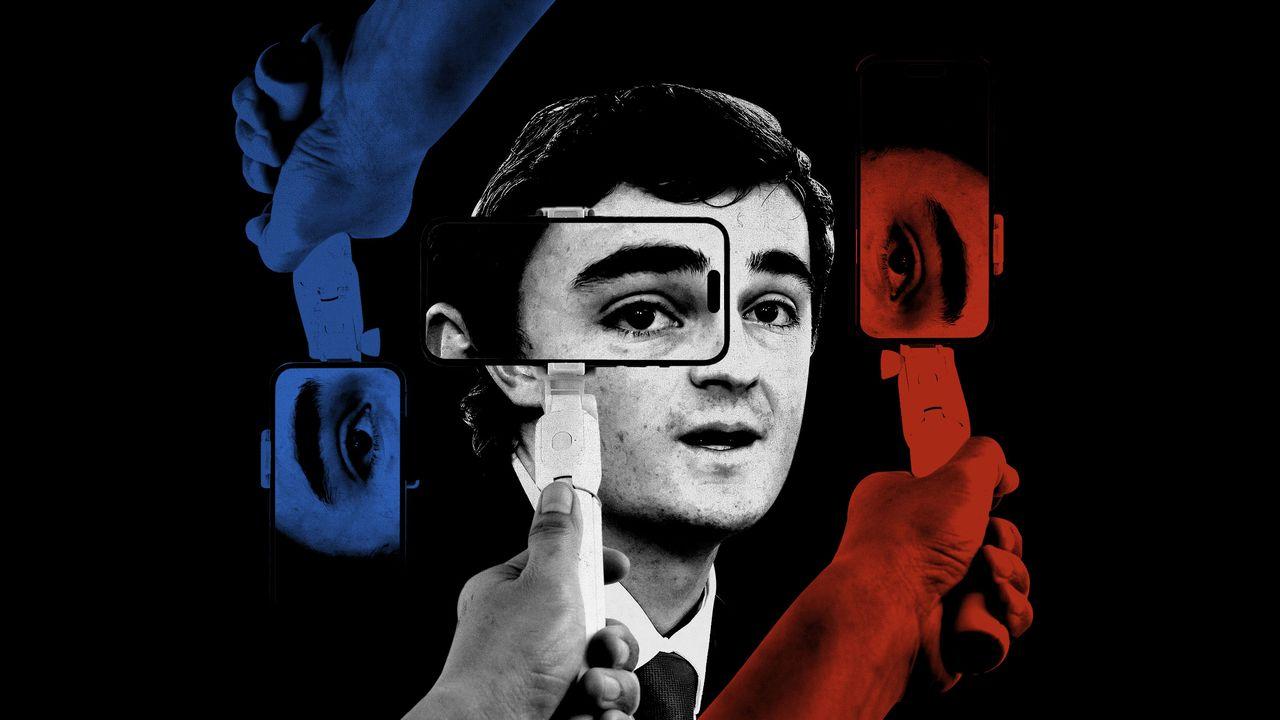
We are living through a profound, unmanaged mutation of the human experience. The concept of privacy—once a fundamental, unquestioned pillar of free societies—is undergoing a radical transformation, not necessarily at the hands of shadowy government agencies or monolithic corporate conglomerates, but by our own doing. The technological apparatus for mass data collection has been decentralized, democratized, and placed into the pockets of billions of individuals. The modern smartphone is no longer merely a communication device; it is a high-powered, ubiquitous sensory node. Equipped with high-definition cameras, ultra-sensitive microphones, and constant, unyielding connectivity, it has fundamentally altered the geometry of public and private life.
When this technology is coupled with the ubiquitous single Bluetooth earpiece, the casual smartphone user is transformed, often inadvertently, into a node in a vast, informal surveillance network. This is not the orchestrated espionage of the Cold War, nor is it the dystopian vision of Big Brother. Instead, it is an ambient, accidental surveillance state in which every citizen is simultaneously an observer and the observed, a society in which human consciousness is constantly being digitized, deciphered, and decoded by the people standing right next to us.
The Omnipresent Sensor and the Modern Cyborg
Consider the landscape of a typical walk down a city street, a ride on public transit, or a wait in line at a local café. The people surrounding you are physically present, yet cognitively immersed in their digital ecosystems. However, their devices are not isolated; they are actively and aggressively engaging with the physical environment. A person taking a seemingly innocuous selfie captures the faces, locations, and associations of dozens of strangers in the background. A voice note recorded on the fly hoovers up snippets of intimate conversations happening nearby.
The individual wearing a single Bluetooth earpiece—seemingly lost in a podcast, a phone call, or an audio stream—operates essentially as a walking, breathing microphone. This visual has become increasingly common: the solitary flashing light in the ear, the user gazing into the middle distance, tethered to an invisible network. They appear as modern cyborgs, straddling two realms. But while they are plugged in, their devices are constantly listening. They are scanning for wake words, processing ambient audio for targeted advertising algorithms, and tracking location data that maps the movements of everyone in their immediate vicinity.
This phenomenon breeds a unique, insidious kind of modern paranoia. The persistent, nagging feeling that the people around you are constantly monitoring you is no longer a fringe conspiracy theory; it is a technical reality. The technology they wield is designed precisely for that purpose: to collect data, process it, categorize it, and transmit it. While the individual user may not be acting as a “rogue agent” with conscious, malicious intent, the aggregate effect of millions of such devices operating in tandem creates a society where anonymity in public spaces is practically extinct.
The Racialized Lens of Peer-to-Peer Surveillance
This reality does not distribute its anxieties equally. It disproportionately affects communities that already bear the historical and psychological weight of being marginalized, heavily policed, and overly scrutinized. Within the Black American community, this technological phenomenon takes on a specific and heavy resonance. There is a long, documented history of surveillance weaponized against Black bodies and Black spaces—from the infiltration of civil rights groups to the modern deployment of facial recognition software that frequently misidentifies people of color.
When the apparatus of surveillance shifts from the state to the citizen, it introduces a new layer of friction and suspicion within the community itself. Seeing another person, particularly of one’s own ethnicity, utilizing a smartphone and a Bluetooth earpiece in a way that feels extractive or intrusive triggers a deep-seated, justifiable wariness. Are they recording this interaction? Are they broadcasting this moment? Is this safe space no longer safe?
The awareness that any mundane interaction could be recorded, analyzed, stripped of its original context, and broadcast to the world creates a profound chilling effect on public behavior, cultural expression, and communal trust. It disrupts the natural flow of human connection and forces individuals into a state of hyper-vigilance, fundamentally altering how they move through the world and interact with their peers.
The Surgeon General’s Alarm: Protecting the Developing Mind
The gravity of this situation is beginning to breach the highest levels of public health awareness. The recent warnings from the newly appointed Surgeon General regarding the negative developmental impacts of screen time and device ubiquity on minors are a crucial, if belated, acknowledgment of the crisis. The call for smartphone safety training and digital literacy for the youth is not merely about preventing cyberbullying or limiting exposure to inappropriate content; it is fundamentally about preserving cognitive resilience.
Minors today are the first generation to have their entire developmental trajectory mapped, recorded, and monetized by the devices in their hands and the devices of their peers. If we do not implement rigorous smartphone safety training, we are actively failing to protect their psychological sovereignty. They are growing up in an environment where every mistake, every awkward phase, and every private exploration is subject to immortalization on the digital ledger.
This environment fractures the development of a healthy human consciousness. True creative synthesis—the ability to form original thoughts, to dream, to experiment, and to fail safely—requires spaces free from observation and judgment. When the ambient surveillance state permeates the schoolyard, the classroom, and the living room, it stifles the very essence of human creativity and psychological growth. The Surgeon General’s warning must be viewed not as a suggestion for better parenting, but as a dire public health imperative for the future of our nation’s youth.
The First Amendment in a Networked Reality
This pervasive new reality presents profound, existential challenges to our traditional understanding of civil liberties, particularly freedom of speech and the First Amendment. The First Amendment was designed to protect the citizenry’s right to express themselves without fear of government retribution. But what happens to freedom of speech when the primary threat of censorship and retaliation comes not from the state, but from a crowd of our fellow citizens armed with high-definition recording devices?
Historically, the “public square” was a physical place where one could speak their mind, debate ideas, and engage in discourse, knowing that their words would only reach those within immediate earshot. Mistakes could be made, controversial ideas could be tested, apologies could be offered, and conversations could eventually be forgotten by the passage of time.
Today, the public square has been digitized, and its memory is permanent and unforgiving. A poorly phrased comment, a moment of anger, a lack of grace, or a nuanced opinion expressed in a semi-public setting can be recorded by a bystander, uploaded to the global network, and amplified to millions within minutes.
This creates a terrifying paradox for a free society. While the internet and smartphone technology have ostensibly democratized the ability to publish and share information, the pervasive, omnipresent threat of being recorded and subsequently “canceled” or ruined has led to a massive chilling of free speech. People are self-censoring at unprecedented rates, terrified that an out-of-context audio clip or a background video will be permanently etched into their digital record and weaponized against them.
Furthermore, the First Amendment traditionally protects the right to record in public spaces—a crucial, necessary tool for citizen journalism and for holding authority and law enforcement accountable. However, when everyone is recording everything, all the time, the delicate balance between transparency and privacy completely collapses. How do we fiercely protect the right to document police misconduct or political protests without inadvertently endorsing the right to secretly broadcast a private, intimate conversation happening at an adjacent table in a restaurant? The current legal framework is entirely unequipped to parse these nuances.
Architecting a Constitutional Upgrade for the Digital Age
The United States Constitution, a brilliant document drafted in the 18th century, could not have possibly anticipated the complexities, speeds, and invasive capabilities of the 21st-century digital landscape. While the judicial system has attempted to stretch existing amendments—particularly the Fourth Amendment’s protection against unreasonable searches and seizures—to cover digital privacy, these interpretations are often inadequate, piecemeal, and dangerously reliant on the technological literacy of aging judges.
If we wish to remain a sturdy, cognitive, and resilient nation in the future, we must accept a hard truth: our foundational document requires a fundamental upgrade. The implementation of a new Constitutional Amendment—a Digital Bill of Rights—is no longer a theoretical academic exercise; it is an urgent, existential necessity for the survival of the republic.
To truly secure our liberties, this new Amendment must boldly address several critical frontiers:
1. The Fundamental Right to Digital Sovereignty and Privacy: We must explicitly extend Fourth Amendment protections to our digital lives, ensuring that our biometric data, our ambient audio, our location history, and our digital footprints are fiercely protected from both unwarranted government intrusion and the unchecked, predatory harvesting of private corporations and peer devices.
2. The Right to Anonymity in the Physical World: We must legally recognize that the ability to exist, move, and breathe in public spaces without being constantly identified, logged, and tracked is a fundamental human liberty. This requires placing strict federal limits on the deployment of facial recognition technology in public areas and establishing definitive, hard boundaries for the ambient data collection permitted by consumer devices like smartphones and wearables.
3. Absolute Data Ownership and Portability: The Constitution must establish that individuals maintain fundamental, irrevocable ownership rights over the data their bodies and behaviors generate. We must be empowered to control precisely how our data is used, shared, and monetized, with the right to revoke access instantly and permanently.
4. Algorithmic Transparency and The Right to Unmediated Consciousness: As algorithms increasingly dictate the flow of information, the structuring of our society, and the deciphering of our behaviors, they must be subject to strict oversight. We must protect the human mind from hidden psychological manipulation by requiring transparency in how our digital environments are curated.
Forging a Sturdy and Cognitive Nation
The transition into a society where everyone operates as a potential node in an unmanaged, decentralized surveillance network did not happen through a democratic vote. It happened quickly, quietly, and seductively, driven by the allure of convenience and relentless technological determinism.
We are at a tipping point. If we allow smartphones to continue operating as unregulated espionage devices in the pockets of every citizen, we risk fracturing the very foundation of trust that holds a society together. We risk raising a generation of youth whose cognitive development is permanently stunted by the anxiety of constant observation. We risk losing the raw, unfiltered human connections that drive creative synthesis and cultural advancement.
Reclaiming our privacy, protecting our psychological sovereignty, and safeguarding our civil liberties in this hyper-connected environment will require immense courage and collective will. It demands that we critically, unapologetically examine the technology we invite into our lives. It demands that we stop viewing these devices purely as harmless tools of convenience and recognize them for what they are: powerful instruments that can either elevate human consciousness or deeply subjugate it.
The path forward is clear. We must bridge the gap between human creativity and technology with robust legal frameworks. We must advocate for digital literacy that goes beyond mere operation, teaching our citizens the defensive maneuvers required to maintain their autonomy. And most importantly, we must do the hard, necessary work of amending our Constitution to reflect the realities of the digital age. The survival of a truly free, cognitive, and sturdy American nation depends entirely upon it.
A Merged Insight Exclusive.




Leave a Reply