
A MERGED INSIGHT EXCLUSIVE
Operation Epic Fury: The Geopolitics, The Economics, and the Shattering of the Middle East
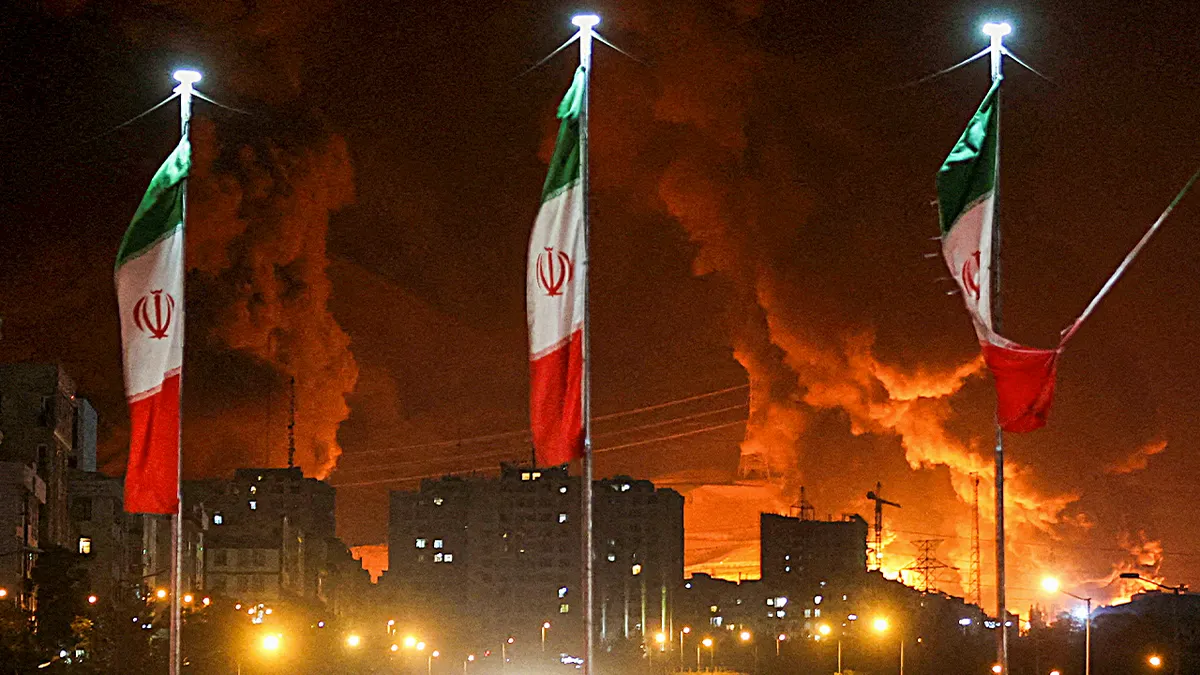
June 2026 — The Middle East has crossed the Rubicon. What began on February 28, 2026, as “Operation Epic Fury”—a massive, coordinated preemptive strike by the United States and Israel against the Islamic Republic of Iran—has metastasized into the most consequential interstate conflict of the 21st century.
Triggered by the collapse of the Islamabad nuclear negotiations and the perceived imminent threat of Iranian nuclear breakout, the war opened with a decapitation strike that assassinated Supreme Leader Ayatollah Ali Khamenei. Yet, the hope in Washington and Jerusalem for a swift collapse of the Iranian regime has dissolved into a grueling war of attrition.
As we assess the landscape in the summer of 2026, the global economy is teetering on the brink of stagflation, global supply chains are in disarray, and the Strait of Hormuz remains a hostile, heavily restricted maritime chokepoint. To understand the trajectory of this war, we must dissect the distinct, often conflicting strategic calculations of the primary actors involved: the existential imperative of Israel, the complex and divided calculus of the United States, the survival strategy of Iran, and the ensuing shockwaves devastating the global economy.
The Israeli Imperative: Dismantling the “Head of the Octopus”
To understand Israel’s perspective in the 2026 war is to understand a two-decade-long strategic obsession that views the Islamic Republic not merely as a geopolitical rival, but as an acute existential threat that must be fundamentally dismantled.
For years, Israel’s defense establishment has operated on the doctrine that Iran is the “head of the octopus,” the central nervous system funding, equipping, and directing proxy armies—Hamas in Gaza, Hezbollah in Lebanon, the Houthis in Yemen, and various militias in Iraq and Syria—that choke Israel’s borders.
The Intolerability of Nuclear Parity
The primary structural force driving Israel’s military posture is the absolute refusal to accept nuclear parity in the Middle East. As the region’s sole, albeit undeclared, nuclear power, Israel views an Iranian nuclear weapon as a paradigm-shifting event that would render conventional deterrence obsolete.
Israel’s 2026 strategy is a hyper-escalation of the Begin Doctrine—the principle that Israel will take preemptive military action to deny weapons of mass destruction to its sworn enemies, as seen in Iraq (1981) and Syria (2007). Following the June 2025 “Twelve-Day War,” where Israeli strikes successfully but only temporarily damaged key Iranian nuclear facilities, Prime Minister Benjamin Netanyahu’s government concluded that “mowing the grass” was no longer sufficient.
The Strategy of Dismantlement
Israel’s goal in 2026 is unambiguous: the total dismantlement of Iran’s military-industrial complex and the collapse of its current governmental structure. Israel views the February 28 decapitation strike against Ali Khamenei and top Islamic Revolutionary Guard Corps (IRGC) commanders not as a punitive measure, but as the first step in collapsing the regime from within.
From the Israeli perspective, the war is highly justified and widely supported domestically. The Israeli public, deeply scarred by the regional conflicts of 2023 and 2024, views this war as a necessary, once-in-a-generation effort to remove a mortal threat. Israel’s leadership believes that a sustained, punishing aerial and naval campaign, coupled with the systemic targeting of Iranian energy and military infrastructure, will embolden the Iranian populace—who engaged in massive anti-government protests in early 2026—to finally overthrow the theocracy.
However, Israel’s strategy relies heavily on the United States acting as the tip of the spear. Israel lacks the conventional strategic depth and unrefueled bomber capacity to indefinitely suppress Iranian air defenses and deeply buried nuclear sites (such as Fordow) without total integration with the U.S. military apparatus.
The American Calculus: Maximum Pressure meets Maximum Force
The United States’ involvement in the 2026 Iran War represents a volatile intersection of geopolitical grand strategy, presidential red lines, and profound domestic political division.
The Road to Operation Epic Fury
President Donald Trump’s administration re-entered office in 2025, pursuing a renewed “maximum pressure” campaign, aiming to force Tehran into a comprehensive treaty that would indefinitely dismantle its nuclear and ballistic missile programs. By early 2026, the diplomatic off-ramps vanished. The failure of the Islamabad Talks—mediated by Pakistan and led by U.S. envoys including JD Vance, Steve Witkoff, and Jared Kushner—convinced the White House that diplomacy had hit a wall.
When the 60-day negotiation deadline expired in early 2026, amidst allegations of Iranian nuclear advancements and escalating proxy attacks, the Trump administration authorized Operation Epic Fury. The official White House rationale centered on forestalling Iranian retaliation, permanently degrading Iran’s missile capabilities, and preventing nuclear breakout.
The Domestic Divide and Strategic Overextension
While the tactical military execution of the initial 900+ U.S.-Israeli strikes was devastatingly effective, translating tactical wins into strategic victory has proven elusive. The U.S. now finds itself in exactly the scenario it spent decades trying to avoid: an open, asymmetric war in the Persian Gulf.
Domestically, the war is highly polarizing. Polling from PBS/NPR/Marist in early 2026 indicates that 56% of Americans oppose U.S. military action in Iran, while 44% support it. The conflict is deeply split along partisan lines; strong majorities of Republicans support the strikes as a long-overdue measure of deterrence, while Democrats overwhelmingly oppose the intervention, fearing an endless Middle Eastern entanglement.
Furthermore, Congress is pushing back. Bipartisan concerns are rising regarding the lack of clear Congressional authorization for a sustained war, with War Powers resolutions being hotly debated. The Pentagon has already estimated the initial cost of the war at $29 billion, requesting an additional $200 billion to sustain operations and replenish rapidly depleting munitions inventories.
The U.S. perspective is fundamentally trapped between a rock and a hard place: it cannot back down without handing Iran a perceived victory and abandoning Israel, yet it cannot push forward into an outright ground invasion without inciting a catastrophic regional war and losing the support of the American public, who are currently bearing the brunt of the war’s economic fallout at the gas pump.
The Iranian Strategy: Asymmetric Attrition and “Houthification”
Iran’s perspective is singularly focused on regime survival, state sovereignty, and exacting an unbearable cost on its attackers. Having survived the initial shock and awe of the U.S.-Israeli decapitation strikes, Tehran has pivoted to a strategy of asymmetric economic and military attrition.
The Strategy of Global Extortion
Iran knows it cannot defeat the United States and Israel in a conventional force-on-force war. Therefore, the Supreme National Security Council has widened the conflict beyond traditional battlefields into the global economic realm. By closing the Strait of Hormuz—a chokepoint through which 20% of the world’s traded oil and massive quantities of liquified natural gas (LNG) pass—Iran has essentially taken the global economy hostage.
Iran’s calculus is brutal but calculated: withstand the bombardment, suffer the civilian and military casualties, and inflict such profound economic pain on the global markets that international pressure forces Washington and Jerusalem to capitulate.
The Proxy Network and Regional Retaliation
Tehran has unleashed its “Axis of Resistance.” While Hezbollah has faced intense Israeli military operations in Lebanon, it continues to tie up Israeli resources. More broadly, Iran has launched direct ballistic and drone strikes against U.S. military installations and civilian infrastructure in Arab Gulf states, including Kuwait, Qatar, Saudi Arabia, and the United Arab Emirates.
By targeting the Gulf states, Iran is sending a clear message: If we cannot export our oil and enjoy security, neither will you. This has strained the U.S. security umbrella, forcing Arab nations to balance their reliance on U.S. defense with the very real threat of Iranian missiles decimating their energy infrastructure.
Domestically, the Iranian government is leveraging the conflict to consolidate power. While the country was rocked by anti-government protests in January 2026, the massive foreign bombardment has generated a temporary “rally around the flag” effect among some segments of the population. The state apparatus has branded the U.S. and Israel as terrorists conducting an “illegal war” and “ecocide,” utilizing the high civilian death toll to justify its uncompromising stance and refusal to unconditionally surrender.
The Global Shockwave: Supply Chains and Stagflation
The most profound and immediate impact of the 2026 Iran War has not been measured in territorial gains but in global economic destabilization. The war has precipitated a global supply chain shock that rivals the 1970s energy crisis and the COVID-19 pandemic.
The Energy Crisis and Commodity Shortages
Following the closure of the Strait of Hormuz, Brent Crude surged past $120 per barrel. The maritime blockade triggered a concurrent grocery supply emergency across Gulf Cooperation Council (GCC) states, which rely on the Strait for over 80% of their caloric intake, leading to massive food inflation.
The economic damage extends far beyond crude oil. World-scale industrial facilities in the Gulf have been caught in the crossfire. The disruption of Qatar’s Ras Laffan facility has strangled the global supply of LNG and helium (a critical component in semiconductor manufacturing, severely impacting tech hubs like Taiwan). The disruption of sea-borne trade in sulfur and aluminum out of Bahrain and the UAE has stalled automotive manufacturing worldwide, hitting giants like Toyota, BMW, and Hyundai.
The Macroeconomic Toll
The Organization for Economic Cooperation and Development (OECD) has issued dire warnings. In their “prolonged disruption” scenario—which increasingly appears to be the reality as ceasefires repeatedly break down—global economic growth is projected to plummet from 3.4% to a mere 2.1% in 2026, dropping further to 1.8% in 2027.
Europe is facing the brunt of the energy shock. With Qatari LNG suspended and winter storage reserves depleted, natural gas benchmarks have skyrocketed, forcing chemical and steel manufacturers to impose massive surcharges, sparking fears of permanent European deindustrialization. The European Central Bank and the IMF have both signaled that the prolonged conflict is likely to trigger severe stagflation—a toxic combination of low growth and high inflation that will inevitably lead to a global recession.
Conclusion: The Horizon of the 2026 Conflict
As of June 2026, the war remains locked in a devastating stalemate. Temporary ceasefires, such as the one brokered by Pakistan in April, have proven fragile, unraveling over the non-negotiable issue of the Strait of Hormuz and ongoing proxy engagements.
Israel remains committed to its existential goal of dismantling Iran’s capabilities, viewing the current destruction as a necessary price for long-term regional security. The United States, while possessing unmatched military superiority, finds itself economically bruised, domestically divided, and struggling to define a clear exit strategy that does not look like a strategic retreat. Iran, battered and bleeding, refuses to yield, effectively betting that its tolerance for suffering outlasts the West’s tolerance for $120 oil and global supply chain paralysis.
The 2026 U.S.-Israel-Iran war has proven that in an interconnected global economy, there are no localized conflicts. Whether the conflict ends in a brokered diplomatic settlement, the collapse of the Iranian regime, or a multi-year war of attrition, the geopolitical architecture of the Middle East—and the economic stability of the world—has been fundamentally and permanently altered.
A Merged Insight Exclusive.




Leave a Reply