
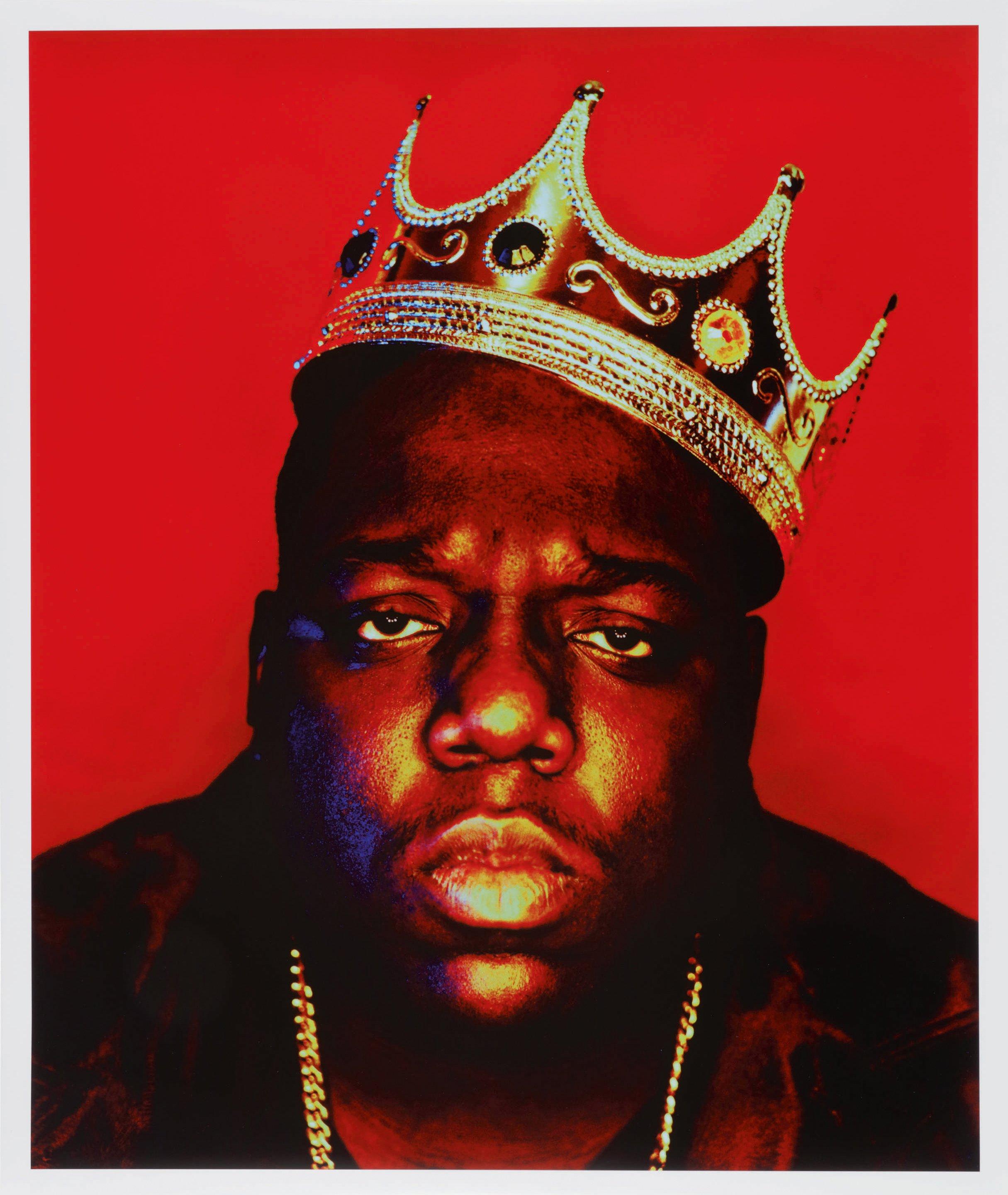
There is no honest conversation about modern Black American suffering without eventually confronting the entertainment industry’s role in glamorizing destruction. For decades, America has pointed fingers at politicians, policing, poverty, and public schools while conveniently ignoring the billion-dollar machine that transformed trauma into a profitable spectacle. Hip hop, one of the greatest artistic revolutions in modern history, became both a voice for the oppressed and, tragically, a marketing arm for self-destruction.
Few figures embody this contradiction more than The Notorious B.I.G. and Jay-Z. Two legendary rappers. Two lyrical giants. Two men whose artistry undeniably shaped global music forever. Yet both emerged from an era where crack cocaine dealing was not merely discussed, but mythologized, monetized, and elevated into aspirational mythology.
And Black America is still paying the bill.
The Crack Epidemic Was Not Entertainment
The crack epidemic was not a game. It was not cinematic. It was not stylish.
It destroyed neighborhoods.
It fractured families.
It filled prisons.
It buried fathers.
It traumatized mothers.
It left children raising children.
Entire blocks in cities like Philadelphia, Baltimore, Detroit, and Chicago became war zones masquerading as communities. Addiction hollowed out homes from the inside. Young Black men were simultaneously criminalized by the justice system and incentivized by economic hopelessness to enter the drug trade.
Then hip hop entered the mainstream.
Instead of collectively rebuking the poison that devastated our communities, portions of the music industry repackaged it as ambition.
That cultural pivot changed everything.
From Survival Stories to Luxury Branding
There is an important distinction between documenting pain and glorifying it.
Many early rappers spoke about the streets because the streets were real. Hip hop originally functioned as journalism for ignored communities. But somewhere along the line, survival stories evolved into luxury branding.
Drug dealing became synonymous with intelligence.
Violence became synonymous with masculinity.
Materialism became synonymous with success.
And crack cocaine, despite annihilating Black neighborhoods, became lyrical currency.
Songs like Ten Crack Commandments are often celebrated for storytelling brilliance and technical mastery. From a musical standpoint, the craftsmanship is undeniable. But cultural impact matters too. The song effectively transformed crack distribution into a strategic business philosophy for generations of listeners.
Young boys did not hear the caution.
They heard instructions.
That distinction matters enormously.
The Industry Knew Exactly What It Was Doing
Record executives are not naïve observers. The music industry understood long ago that controversy sells and dysfunction markets exceptionally well when attached to Black faces.
America has historically been fascinated with Black suffering as entertainment.
Executives discovered that suburban consumers would enthusiastically purchase hyper-violent depictions of inner-city life while remaining detached from the real consequences. Drug narratives became profitable because they offered danger without accountability.
The formula was perfected:
- Find traumatized talent.
- Amplify the most destructive aspects of their environment.
- Package the chaos as authenticity.
- Sell it globally.
Meanwhile, artists promoting discipline, education, marriage, spirituality, emotional intelligence, or community rebuilding rarely received the same machine-backed promotion.
Why?
Because healing does not generate the same commercial frenzy as dysfunction.
Jay-Z and the Capitalist Reinvention of the Drug Dealer
Jay-Z deserves particular scrutiny because his career represents the corporate evolution of street mythology.
Jay-Z is widely respected as a businessman, billionaire, and cultural icon. His rise from Brooklyn housing projects to elite boardrooms is objectively remarkable. Yet much of his early legend was built around the image of the sophisticated hustler, the intelligent drug dealer who outsmarted the system.
That archetype became deeply influential.
Instead of rejecting the drug game morally, portions of hip hop culture reframed it entrepreneurially. Selling narcotics became analogous to capitalism itself. Hustling became a philosophy. The dealer became a CEO figure.
This was psychologically catastrophic for many young listeners.
Why pursue education when the culture romanticizes shortcuts?
Why respect legality when criminality is marketed as genius?
Why value community when individual wealth is elevated above collective survival?
Hip hop did not create poverty or crime, but it undeniably helped aestheticize them.
The Psychological Damage on Black Youth
Perhaps the saddest consequence of this era is the psychological conditioning imposed upon Black youth.
Children absorb what cultures reward.
When generations repeatedly hear that the most respected men are drug dealers, emotionally detached womanizers, violent enforcers, or chemically dependent entertainers, that messaging shapes identity formation.
The consequences are visible everywhere:
- Hyper aggression normalized among young boys.
- Emotional instability is treated as a strength.
- Drug use is reframed as recreational sophistication.
- Intellectualism is mocked as weakness.
- Self-destruction disguised as authenticity.
Meanwhile, many Black children grow up without enough exposure to scientists, engineers, teachers, architects, philosophers, entrepreneurs, or emotionally healthy fathers.
The culture became imbalanced.
The loudest voices often represented the worst outcomes.
Marijuana Culture and the Endless Sedation of America
The conversation extends beyond crack cocaine.
Modern entertainment increasingly markets perpetual intoxication as lifestyle branding. Marijuana, while widely legalized and socially normalized, is also deeply embedded within contemporary music culture to a concerning degree.
Every generation deserves honest conversations about substance dependency.
A society constantly encouraged to remain chemically sedated becomes easier to distract, easier to manipulate, and less capable of sustained focus. While many defend marijuana as harmless recreation, the broader issue is cultural obsession with escapism.
Why are artists so heavily incentivized to promote intoxication?
Why are sobriety and mental clarity rarely marketed as aspirational?
Why does mainstream music so frequently celebrate numbing rather than healing?
These questions deserve serious examination.
Black America’s Pain Became Global Entertainment
One of the most uncomfortable truths is that the world consumed Black American dysfunction as spectacle.
International audiences who never experienced urban poverty memorized lyrics about crack sales, murders, addiction, and prison culture. Corporate America exported these narratives globally because they were commercially successful.
The result was devastatingly ironic.
The same communities suffering from drugs became the raw material for billion-dollar entertainment ecosystems.
Meanwhile, actual neighborhood recovery remained underfunded.
Schools deteriorated.
Mental health collapsed.
Violence escalated.
Families weakened.
But album sales soared.
The Double Standard in American Media
Imagine if another demographic group had its worst stereotypes endlessly commercialized for profit.
The backlash would be immediate.
Yet Black Americans were repeatedly told that criticism of destructive content amounted to censorship or hatred toward hip hop itself. That framing was dishonest.
One can love hip hop while condemning exploitative narratives.
One can appreciate lyrical skill while questioning moral consequences.
One can acknowledge systemic racism while also demanding cultural accountability.
These positions are not contradictory.
In fact, mature societies should be capable of holding multiple truths simultaneously.
Art Versus Responsibility
Artists often defend themselves by claiming they merely reflect reality.
Sometimes that is true.
But influential artists also shape reality.
Music affects language, fashion, behavior, emotional norms, and aspiration. The entertainment industry understands this perfectly, which is precisely why advertising exists.
No serious person believes culture is powerless.
If music can inspire political movements, motivate athletes, comfort grieving people, and unify millions emotionally, then it can also normalize harmful behavior. Cultural influence cuts both ways.
This does not mean rappers alone are responsible for America’s problems. That would be absurd. Government failures, economic inequality, predatory policing, housing discrimination, failing schools, and generational trauma all played enormous roles.
But culture matters too.
And the music industry escaped accountability for far too long.
The Myth of “Keeping It Real”
The phrase “keeping it real” became one of the most damaging slogans in modern Black culture because it often rewarded proximity to dysfunction.
Young artists learned quickly that pain sold.
Trauma sold.
Violence sold.
Drug references sold.
Meanwhile, positivity was often mocked as fake, corny, or soft.
That environment trapped many artists psychologically. Some felt pressured to maintain destructive personas long after escaping the environments that created them.
Authenticity became confused with self-sabotage.
What We Lost Along the Way
Black America possesses extraordinary cultural brilliance.
Our communities produced jazz, blues, gospel, soul, rock, funk, R&B, and hip hop itself. We created entire genres while enduring extraordinary hardship. The intellectual, artistic, and spiritual power within Black culture is immense.
Which makes the glorification of decay even more tragic.
Imagine if more industry power had gone toward amplifying:
- Financial literacy.
- Emotional healing.
- Family stability.
- Entrepreneurship without criminal mythology.
- Spiritual growth.
- Academic excellence.
- Community ownership.
- Mental health awareness.
Imagine how many young lives could have been redirected.
Instead, too often, destruction was easier to monetize.
The Industry Still Has Not Learned
Even today, the cycle continues.
Streaming algorithms frequently reward extremity. Violent lyrics trend faster than introspection. Outrage spreads faster than wisdom. Artists battling addiction are often publicly exploited until tragedy strikes.
Then the industry mourns performatively after profiting from the collapse.
The pattern is grotesque.
America watched numerous musicians spiral publicly through substance abuse while executives continued collecting revenue. The entertainment ecosystem rarely prioritizes wellness because instability often generates more engagement.
That should disturb everyone.
A Needed Cultural Reset
None of this requires erasing hip hop history or denying artistic genius.
The Notorious B.I.G. remains one of the most technically gifted rappers ever.
Jay-Z remains one of the most influential musicians and businessmen of his era.
Those truths can coexist with criticism.
But Black America deserves a more courageous conversation about what has been normalized culturally over the past several decades. We cannot endlessly complain about societal collapse while celebrating art that sometimes reinforces the very behaviors destroying vulnerable communities.
Accountability is not hatred.
It is maturity.
The Responsibility of the Next Generation
The next era of Black artistry should aim higher.
Young musicians should not feel pressured to cosplay trauma for validation. Labels should stop rewarding caricatures of destruction while ignoring multidimensional Black expression. Audiences should demand more emotionally intelligent content from the artists they elevate.
And perhaps most importantly, Black children deserve broader visions of success.
Not every influential Black man should be introduced to young boys as a hustler turned celebrity.
We need scientists.
Teachers.
Builders.
Writers.
Engineers.
Stable fathers.
Community leaders.
Disciplined entrepreneurs.
Spiritually grounded thinkers.
Black excellence is infinitely larger than survival through criminality.
Final Thoughts
The tragedy of the crack era extends far beyond addiction statistics or crime data. Its deepest wound may be cultural. A generation raised amid instability watched portions of that instability transformed into aspirational entertainment.
The scars remain visible today.
Broken homes.
Distrust.
Substance dependency.
Hyper materialism.
Emotional detachment.
Cultural confusion.
Hip hop did not invent these problems, but parts of the industry undeniably commercialized them at scale.
Black America deserves better than endless glorification of its lowest moments.
We deserve art that reflects our brilliance without monetizing our destruction.
We deserve music that challenges us to heal, not merely survive.
And we deserve the courage to criticize harmful cultural patterns, even when the artists involved are legendary.
A Merged Insight Exclusive.



Leave a Reply