
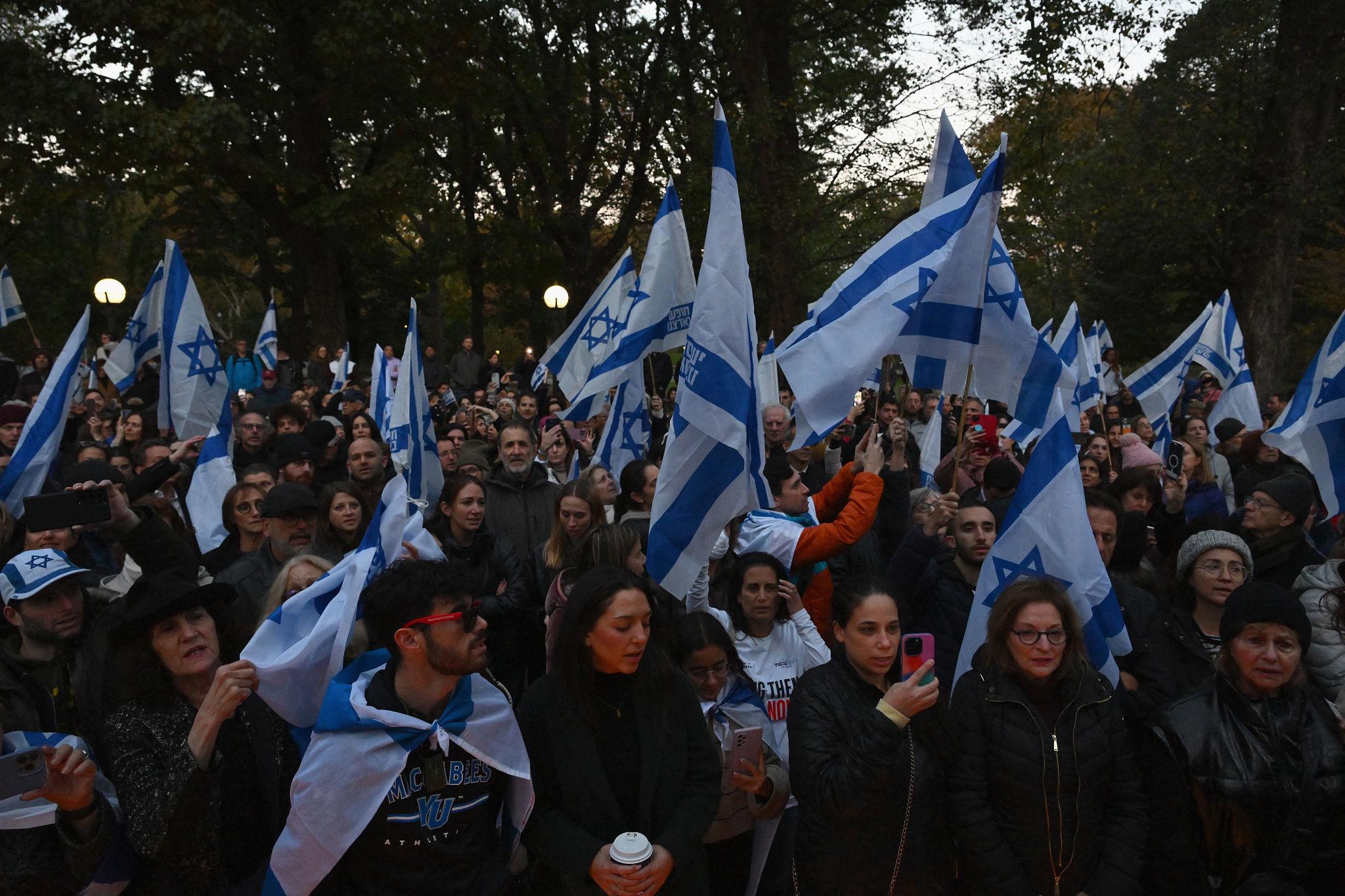
On October 7, 2023, the modern Middle East changed forever.
The brutal Hamas attack on Israel stunned the world with a level of violence that shattered assumptions about deterrence, diplomacy, and the fragile possibility of peace. More than 1,200 Israelis were killed in the massacre, including civilians, families, concertgoers, elderly citizens, and children. Hundreds more were taken hostage in Gaza. The images were horrifying. The implications were seismic.
For many Israelis, October 7 became their generation’s equivalent of September 11. It was not merely an attack. It was a psychological rupture.
And from that moment forward, the war between Hamas and the Israel Defense Forces, better known as the IDF, ceased being another chapter in a decades-long territorial dispute. It became something far more dangerous: a war fueled by trauma, rage, survival instincts, ideology, and political desperation.
From our perspective at Merged Insight, Hamas committed an atrocity that irreparably damaged the Palestinian cause on the international stage. The attack did not move Palestinians closer to peace, sovereignty, or statehood. It pushed the region into devastation and hardened Israeli attitudes across the political spectrum.
Still, while Hamas bears responsibility for initiating the conflict through terrorism, it is important to distinguish Hamas from every Palestinian civilian. Millions of Palestinians are not Hamas fighters. They are human beings trapped between extremism, regional failures, and the brutal realities of war.
That distinction matters.
The October 7 Attack That Changed Everything
The Hamas attack was one of the deadliest terrorist operations in Israeli history.
Armed militants breached Israeli defenses surrounding Gaza and launched coordinated assaults on military positions, neighborhoods, and a music festival. Civilians were murdered in their homes. Others were kidnapped. Videos spread rapidly online, horrifying audiences around the world.
For years, Israeli intelligence and military systems had cultivated an image of near invincibility. Israel possessed advanced surveillance capabilities, missile defense systems, and one of the most sophisticated intelligence infrastructures on Earth. Yet Hamas exposed catastrophic vulnerabilities.
The Israeli public responded with fury.
Prime Minister Benjamin Netanyahu, already deeply polarizing before the attack due to internal political controversies and judicial reform disputes, suddenly found himself leading a nation consumed by grief and anger. Calls for restraint evaporated almost overnight.
Israel’s military response was immediate and overwhelming.
Airstrikes hammered Gaza. The infrastructure collapsed. Entire neighborhoods became battle zones. The IDF mobilized ground forces and declared an objective that would dominate Israeli policy for months afterward: the destruction of Hamas.
Hamas and the Collapse of International Sympathy
Before October 7, the Palestinian cause still retained broad international sympathy in many parts of the world.
Debates surrounding settlements, blockades, humanitarian conditions, and Palestinian statehood often centered on whether Palestinians were being denied political dignity and self-determination. Numerous governments and activists framed Palestinians primarily through the lens of occupation and humanitarian struggle.
Then Hamas launched its attack.
The massacre fundamentally altered global perceptions.
Many observers who had previously advocated aggressively for Palestinian sovereignty found themselves struggling to defend or contextualize the actions of Hamas. The sheer brutality of the attack overwhelmed diplomatic nuance.
This is where Hamas may have catastrophically damaged Palestinian political aspirations.
The organization claimed it was resisting occupation. Yet the result of the attack was the exact opposite of liberation. Gaza suffered catastrophic destruction. Regional tensions exploded. Israeli society shifted further toward security-driven politics. Trust between Israelis and Palestinians collapsed even more severely.
Hamas may have believed the attack would ignite a regional uprising against Israel. Instead, it triggered one of the most devastating military responses in modern Middle Eastern history.
Benjamin Netanyahu’s Political Reckoning
Prime Minister Benjamin Netanyahu entered the war already weakened politically.
Mass protests against his government had engulfed Israel for months before October 7. Critics accused Netanyahu of undermining democratic institutions, prioritizing political survival, and empowering hardline factions.
Then the Hamas attack happened under his watch.
The failure to anticipate or prevent the massacre instantly became one of the gravest intelligence and security failures in Israeli history. Questions emerged immediately.
How did Hamas organize such a complex attack without detection?
Why were Israeli border defenses breached so quickly?
Why did intelligence systems fail?
These questions continue to haunt Netanyahu politically.
Yet wars often consolidate leadership temporarily, especially during moments of national trauma. Netanyahu positioned himself as the wartime leader capable of delivering decisive retaliation.
His government framed the conflict in existential terms.
The message was clear: Hamas could never be allowed to threaten Israel again.
This framing received substantial support from many Israelis still traumatized by the massacre.
At the same time, critics warned that Netanyahu’s long-term strategy for Gaza had failed years earlier. Some argued that Israeli governments underestimated Hamas while weakening moderate Palestinian political alternatives.
The result was a combustible environment that eventually erupted into catastrophe.
Gaza and the Humanitarian Catastrophe
The war’s devastation inside Gaza has been immense.
Civilian casualties, destroyed infrastructure, shortages of food and medicine, and mass displacement created one of the worst humanitarian crises in the region in decades.
Hospitals struggled to function. Refugee camps became combat zones. Families fled repeatedly as military operations expanded.
These realities generated intense international criticism of Israel’s military campaign.
Supporters of Israel argued that Hamas embedded itself within civilian areas, making urban warfare extraordinarily difficult. Critics countered that the scale of destruction and civilian suffering demanded greater restraint.
The moral complexity of the war became impossible to ignore.
Hamas committed terrorism against civilians.
At the same time, Palestinian civilians endured catastrophic consequences from the resulting war.
Both realities exist simultaneously.
Any serious analysis must acknowledge them together rather than selectively ignoring one side’s suffering.
Why the Two-State Solution Looks More Fragile Than Ever
For decades, diplomats promoted the idea of a two-state solution: Israel and Palestine existing side by side as sovereign states.
After October 7, that vision appears more fragile than ever.
Many Israelis now view Palestinian statehood through an intensified security lens. The fear is straightforward.
If Hamas could launch such an attack from Gaza after Israel withdrew settlements from the territory in 2005, what guarantees exist that a future Palestinian state would not become another launching ground for extremism?
This fear has dramatically reshaped Israeli political discourse.
Meanwhile, Palestinians increasingly distrust Israeli intentions after witnessing the scale of destruction in Gaza.
The political middle ground has weakened.
Extremists on both sides gained momentum while moderates struggled to maintain credibility.
The tragedy is that ordinary civilians often pay the highest price when extremism dominates political life.
Iran, Hezbollah, and Regional Tensions
The conflict also exposed the broader regional dimensions of the war.
Hamas does not operate in isolation.
Iran has long supported armed groups hostile to Israel, including Hamas and Hezbollah. As the war intensified, fears of a broader regional conflict grew rapidly.
Hezbollah forces in Lebanon exchanged fire with Israeli forces near the northern border. Regional militias aligned with Iran increased rhetoric against Israel and the United States.
The possibility of escalation frightened global markets and governments alike.
The Middle East remains one of the world’s most strategically sensitive regions. Any major regional war involving Israel, Iran, Lebanon, or American forces could destabilize energy markets and international security frameworks.
This is partly why global leaders repeatedly attempted to prevent wider escalation while simultaneously addressing the immediate conflict in Gaza.
The Information War
Another defining characteristic of this conflict has been the battle over narratives.
Social media became a digital battlefield.
Graphic footage, propaganda, misinformation, emotional appeals, and ideological campaigns flooded platforms daily. Public opinion polarized rapidly.
Some voices attempted to justify Hamas by framing the attack solely as resistance.
Others dismissed all Palestinian suffering by reducing the entire population to terrorists.
Both approaches failed morally and intellectually.
Hamas is a militant organization responsible for terrorism.
Palestinian civilians are not collectively responsible for every action committed by Hamas.
Likewise, criticism of Israeli military policy does not automatically equate to hatred toward Jewish people or support for terrorism.
The online environment, however, often rewards outrage rather than nuance.
As a result, conversations surrounding the war became increasingly toxic and emotionally charged.
The Crisis of Leadership Across the Region
One of the most revealing aspects of the war has been the apparent failure of regional leadership.
Arab governments issued condemnations and diplomatic statements, yet few demonstrated a realistic path toward long-term peace.
Western governments struggled to balance support for Israel’s right to self-defense with growing concern over humanitarian conditions in Gaza.
International institutions appeared limited in their ability to stop the bloodshed.
Meanwhile, ordinary civilians continued suffering.
This leadership vacuum is part of why the conflict feels so intractable.
Too many political actors benefit from perpetual outrage.
Hardliners gain support during crises.
Moderates lose influence.
And civilians remain trapped in cycles of violence that stretch across generations.
Has Palestine Lost?
From a geopolitical standpoint, the Palestinian movement suffered severe damage after October 7.
That is difficult to deny.
The attack empowered Israeli hardliners, intensified global security concerns, and shifted much international attention toward the threat posed by Hamas rather than the broader Palestinian political cause.
Yet saying Palestinians as a people no longer deserve land or national aspirations crosses into dangerous territory.
Nations and civilian populations do not collectively lose their humanity or rights because of the actions of extremists.
History repeatedly demonstrates the danger of collective punishment and absolutist thinking.
At the same time, Hamas undeniably inflicted enormous damage upon the Palestinian cause.
If the objective was liberation, the results have been catastrophic.
Gaza’s destruction, the deaths of civilians, the regional instability, and the collapse of trust have pushed peace even further away.
The Palestinian national movement now faces a profound question:
Can it separate itself from violent extremism strongly enough to rebuild international credibility?
Without that separation, meaningful diplomacy becomes extraordinarily difficult.
Israel’s Future After the War
Israel also faces difficult questions moving forward.
Military victories alone rarely resolve ideological conflicts permanently.
Even if Hamas is severely weakened militarily, the broader political and humanitarian issues surrounding Gaza and Palestinian governance remain unresolved.
What happens after the war?
Who governs Gaza?
How does Israel maintain long-term security without becoming trapped indefinitely in endless military operations?
Can moderate Palestinian leadership re-emerge?
Can regional powers contribute to stabilization rather than escalation?
These questions remain unresolved.
Israel achieved significant military objectives throughout the conflict, but security challenges persist.
The trauma of October 7 will likely shape Israeli politics for decades.
National security concerns will dominate future debates.
Trust in peace processes has eroded profoundly.
And Netanyahu’s political legacy will forever be tied to both the failures preceding the attack and the ferocity of the response afterward.
A Region Forever Changed
There are moments in history that permanently alter political realities.
October 7 was one of those moments.
The Hamas attack and the resulting war between Hamas and the IDF transformed regional politics, shattered assumptions, and deepened wounds that may take generations to heal.
The conflict exposed the fragility of peace frameworks, the danger of extremism, and the devastating human cost of modern urban warfare.
At Merged Insight, we believe Hamas committed an atrocity that severely damaged the Palestinian political cause and ignited a conflict whose consequences continue to reverberate across the world.
At the same time, civilians on all sides deserve recognition as human beings rather than abstractions within ideological battles.
The temptation during war is always to abandon nuance entirely.
But nuance matters precisely because war destroys it.
Israel emerged from October 7 determined never to experience such vulnerability again.
Palestinians emerged from the war facing extraordinary devastation and political uncertainty.
The international community faces its own uncomfortable reality: slogans alone cannot solve conflicts rooted in history, trauma, security fears, nationalism, religion, and generational distrust.
What comes next for Gaza, Israel, and the broader Middle East remains uncertain.
But one reality is undeniable.
Nothing about this conflict will ever feel the same again.
And whatever future eventually emerges from the ashes of this war, it will be shaped forever by the events of October 7 and the devastating military campaign that followed.
A Merged Insight Exclusive.



Leave a Reply