
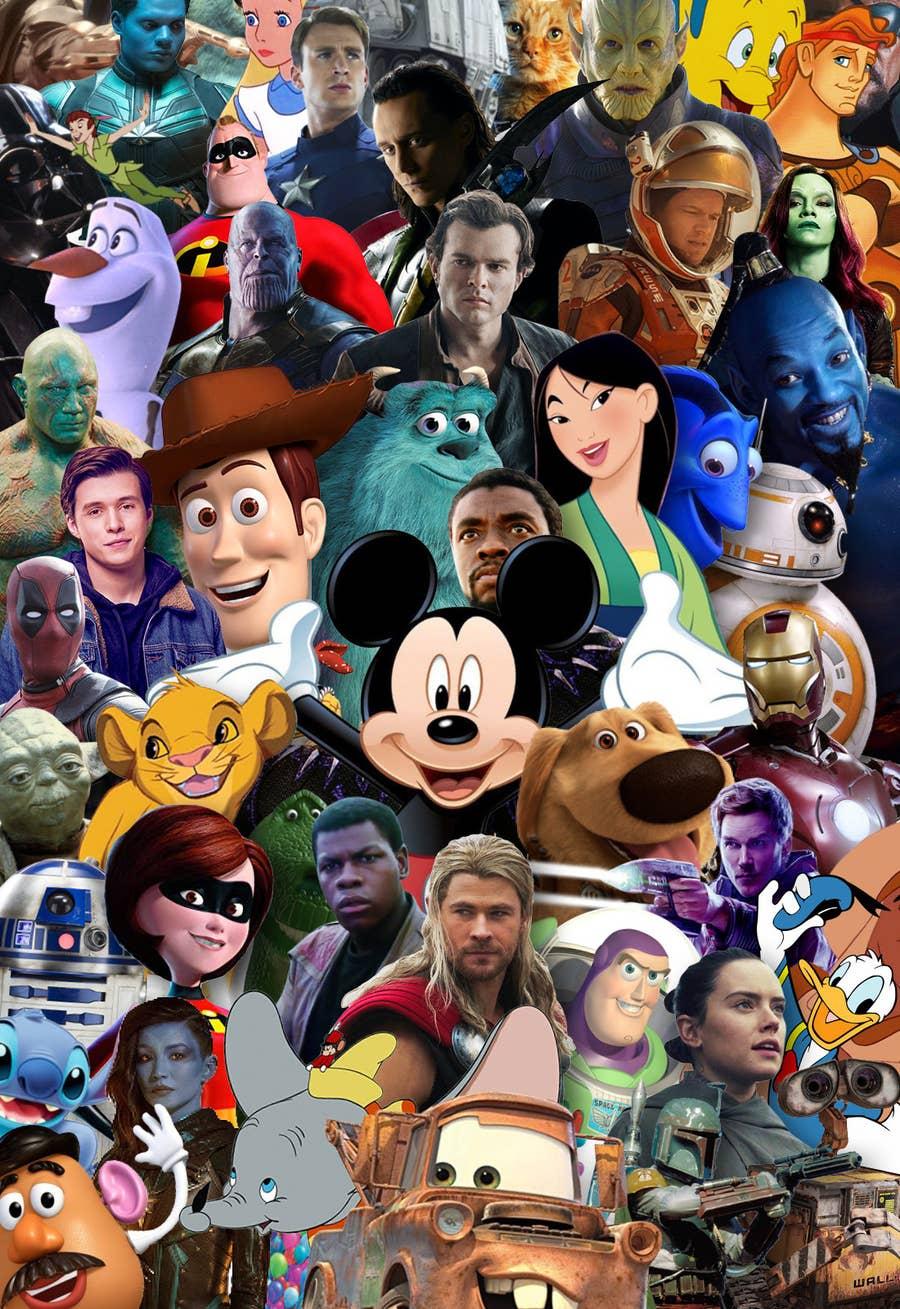
There is perhaps no silhouette more globally recognized than the three interlocking circles of Mickey Mouse’s head, nor a structure as deeply embedded in the modern imagination as the Cinderella Castle. The Walt Disney Company is not merely a multinational mass media and entertainment conglomerate; it is the preeminent architect of modern mythology. Over the past century, Disney has evolved from a scrappy animation studio in a Los Angeles garage into an omnipresent cultural monolith that owns a staggering percentage of the stories we tell ourselves. Through its acquisitions of Pixar, Marvel, Lucasfilm, and 20th Century Fox, Disney has secured a near-monopoly on global childhoods and adult nostalgia alike.
To dissect the Disney empire is to dissect the American psyche. Its influence extends far beyond the box office, seeping into the ways society views gender, race, commerce, and history. Beneath the manufactured pixie dust and the carefully curated image of family-friendly innocence lies a complex, often troubling legacy. To truly understand Disney is to grapple with its immense cultural power, its commodification of girlhood, its dark history of racial stereotyping, and its founder’s deeply controversial political associations.
The Architect of American Culture
Disney’s influence on American culture cannot be overstated; the company did not just reflect the American Dream, it helped design it. In the post-World War II era, Walt Disney capitalized on the booming middle class and the advent of television to create a cohesive, branded lifestyle. When Disneyland opened in 1955, it was a physical manifestation of an idealized, sanitized America—a place where the messiness of history was replaced by the polished nostalgia of Main Street, U.S.A., and the techno-utopian promises of Tomorrowland.
Disney practically invented modern corporate synergy. A television show promoted a movie, which promoted a theme park ride, which sold a toy, which played a soundtrack. This closed-loop ecosystem trained generations of consumers to conflate brand loyalty with personal happiness. The Disney ethos posits that magic is real, but it must be purchased.
Furthermore, Disney movies established the moral architecture for millions of children. The clear delineations between good and evil, the promise that dreams come true for the pure of heart, and the guarantee of a happily-ever-after have deeply influenced American emotional expectations. This framework is comforting, but it is also inherently conservative, promoting a worldview where systemic issues are solved not by collective action, but by individual virtue or royal decree.
The Princess Illusion and Its Toll
Perhaps the most potent and debated weapon in Disney’s cultural arsenal is the “Disney Princess.” Since Snow White and the Seven Dwarfs debuted in 1937, Disney has cultivated an archetype that has profoundly shaped the self-image, aspirations, and behavioral expectations of generations of young girls.
For decades, the classic Disney Princess was defined by her physical beauty, her passivity, and her capacity for suffering. Characters like Snow White, Cinderella, and Aurora (Sleeping Beauty) were victims of circumstance who waited patiently—often while doing domestic labor or literal sleeping—for a handsome prince to rescue them and validate their worth. The underlying message was clear: a woman’s primary assets are her youthful beauty and her submissive sweetness, and her ultimate reward is romantic salvation.
The psychological toll of this “princess illusion” on young girls has been the subject of extensive academic study. Research indicates that heavy engagement with princess culture can lead to the internalization of rigid gender stereotypes. It promotes an unrealistic standard of beauty—waistlines that defy human anatomy, flawless skin, and delicate features—that contributes to body image issues and eating disorders as girls mature. The narrative structure also subtly reinforces the idea that women are the prizes in men’s stories, stripping them of their own agency.
While Disney has made concerted efforts to modernize this archetype in recent years—introducing characters like Mulan, who fights in a war; Elsa, who explicitly rejects the need for a man; and Moana, a leader who saves her own people—the underlying commercial mechanism remains. “Princess” is still a multi-billion-dollar lifestyle brand. Even as the narratives become more feminist on the surface, the merchandising still heavily emphasizes glittering gowns, tiaras, and beauty products, ensuring that the commodification of girlhood remains a highly profitable enterprise.
Shadows in the Ink: Historical Racism
The gleaming facade of the Disney empire is also stained by a history of deeply offensive racial caricatures, particularly in its portrayal of Black people. For decades, Disney relied on the casual racism of its era to generate cheap laughs, cementing harmful stereotypes in the minds of impressionable audiences.
The most glaring example is the 1946 live-action/animated hybrid film Song of the South. Set on a post-Civil War plantation, the film presents an idyllic, sanitized vision of the American South where the formerly enslaved Uncle Remus happily serves his white employers and tells folklore to their children. The film was widely condemned even at the time of its release for perpetuating the “Lost Cause” myth and romanticizing a period of violent racial subjugation. It painted Black people as subservient, perpetually cheerful, and intellectually child-like. Disney has since locked the film in its vault, refusing to release it on its streaming platforms, but the damage to its cultural footprint remains.
Song of the South is not an isolated incident. In 1941’s Dumbo, the lead crow—a character styled as an offensive minstrel show caricature—is literally named “Jim Crow,” a nod to the segregationist laws of the time. The original release of the 1940 film Fantasia featured a Black centaurette named Sunflower, who was depicted with exaggerated, racist facial features and was shown subserviently polishing the hooves of the white, blonde centaurettes. (Disney quietly edited her out of the film in the late 1960s).
While Disney has recently implemented content warnings on its streaming service, acknowledging “negative depictions and/or mistreatment of people or cultures,” these historical portrayals were not harmless products of their time; they actively contributed to the marginalization of Black Americans by painting them in a bad light, stripping them of their humanity, and reducing them to punchlines in the dominant cultural narrative.
The Darkest Chapter: Flirting with Fascism
Beyond the content of the films, the legacy of Walt Disney, the man, is shadowed by persistent allegations regarding his political sympathies, most notably the claim that he aided and abetted Nazis. While labeling Disney a full-fledged Nazi is a historical oversimplification, his actions during the late 1930s demonstrate a chilling tolerance for fascist figures and a disturbing alignment with anti-Semitic circles in Hollywood.
The most damning piece of evidence in this regard is Walt Disney’s decision to host Leni Riefenstahl, the chief filmmaker and propagandist for Adolf Hitler’s Third Reich, in December 1938. Riefenstahl had come to the United States to promote her film, Olympia. Her arrival coincided directly with the horrific events of Kristallnacht, a violent pogrom against Jews in Nazi Germany. In response, the vast majority of Hollywood studio heads—many of whom were Jewish—rightfully boycotted Riefenstahl, refusing to meet with her or screen her film.
Walt Disney was the glaring exception. He welcomed Riefenstahl to his studios, gave her a comprehensive tour, and spent time discussing animation and film techniques with her. By offering his platform and hospitality to Hitler’s most prominent cinematic voice, Disney provided her with a veneer of legitimacy when the rest of the industry had shut its doors. While he may not have shipped arms to the Third Reich, offering safe harbor and professional respect to a crucial architect of Nazi propaganda constitutes a profound moral failure and a form of ideological abetting.
Furthermore, Disney was a founding member and Vice President of the Motion Picture Alliance for the Preservation of American Ideals (MPA), a fiercely anti-communist organization that was notorious for its deeply ingrained anti-Semitism. The group actively sought to purge Hollywood of left-leaning and Jewish influences under the guise of patriotism, directly leading to the infamous Hollywood Blacklist. Disney’s willing association with prominent anti-Semites and his ruthless actions against unionizing animators in 1941 paint a picture of a man whose pursuit of control and conservative ideals frequently blurred the lines of acceptable political behavior.
It is a paradox of history that a few years after hosting Riefenstahl, the US government effectively drafted the Disney studios to produce massive amounts of anti-Nazi propaganda during World War II, such as the famous Donald Duck short Der Fuehrer’s Face. This pivot suggests that Disney was driven more by intense corporate pragmatism and American nationalism than by committed fascist ideology. However, his willingness to entertain the architects of the Holocaust before the winds of war forced his hand remains an indelible stain on his legacy.
Conclusion
The Walt Disney Company is a testament to the power of storytelling. It has built an empire that provides genuine joy, artistic innovation, and shared cultural touchstones for billions of people. Yet, an honest dissection of this empire reveals the high cost of that magic.
Disney’s influence on American culture has shaped our physical landscapes and our emotional vocabularies. Its cultivation of the princess illusion has subtly dictated the boundaries of girlhood, prioritizing beauty and passivity for generations before finally attempting a clumsy pivot toward empowerment. Its history is littered with racist caricatures that painted Black people and other minorities in deeply harmful lights, reinforcing the prejudices of the white majority. And at its very foundation lies the complicated, deeply flawed legacy of Walt Disney himself—a man whose willingness to entertain Nazi propagandists serves as a grim reminder that even the creators of our most beloved dreams can harbor dark sympathies.
To engage with Disney today is to engage with America itself: it is a brilliant, monopolistic, deeply flawed entity that requires us to look critically at the magic we consume, and to question who is holding the wand.
A Merged Insight Exclusive.



Leave a Reply