
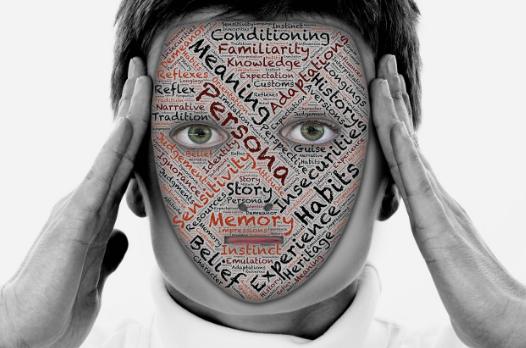
In 1959, a sociologist named Erving Goffman made a claim that rubbed a lot of people the wrong way. He said human beings are always performing, that is, we manage how we appear, adjust our behavior depending on who is watching, and curate the version of ourselves we put on display. Back then, it felt like an overreach because it didn’t sit well with so many people. Today, it feels like he saw the internet coming, and with the advent of social media, let’s just say things are getting bad.
Believe me, that statement was more than a prophecy, because what social media has done is not to introduce performance into human life. It has simply removed the option to stop performing.
There Used to Be a Backstage
But now, there’s no more…
Goffman’s original theory had an important detail that people often overlook. Yes, he said life is a performance, but he also said performers get a backstage pass. A private space. Somewhere, you could drop the act, take off the mask, and just exist without an audience watching.
That backstage is disappearing today.
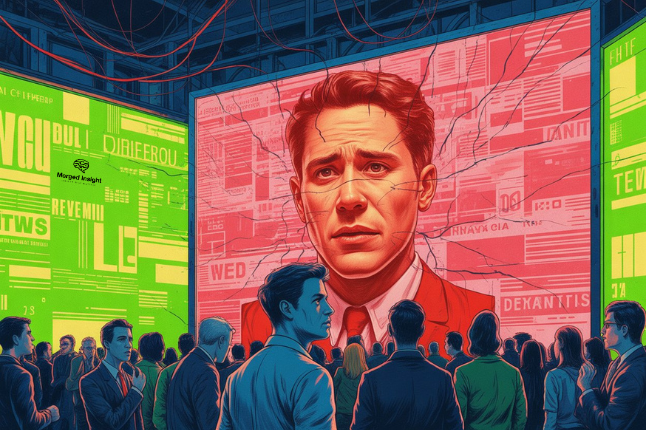
The phone in your pocket is simultaneously a camera, a broadcast device, and a live audience on standby. An entire generation has grown up knowing that any moment could be documented, shared, and judged. There is no real offstage anymore. The archive never closes; it stays exposed for good and bad reasons altogether.
When “Real” Became a Brand
This is where it gets genuinely strange. The same platforms eroding authenticity have turned authenticity into their most profitable product. Everyone wants to be seen as real. And so “real” gets packaged, rehearsed, and sold back to us.
The unfiltered confession gets drafted three times before posting. The candid photo was taken twelve times. The “I woke up like this” look takes forty minutes.
Almost everyone seems to be fine-tuning one thing or the other before putting themselves out there.
Authenticity in the attention economy is not a state of being; it is a performance of a state of being. And we consume it willingly, because it is the closest thing available.
While we are not about blaming individuals for being fake, it is about recognizing what these platforms reward. The point is this: if vulnerability drives engagement, vulnerability becomes the content strategy. When relatability grows your following, relatability gets manufactured. Nobody is necessarily lying.
Everyone is just adapting. But when an entire culture adapts this way, something quietly disappears, the version of yourself that exists without an audience. The opinions you would never post. The feelings you would never caption.
What the Research Actually Says
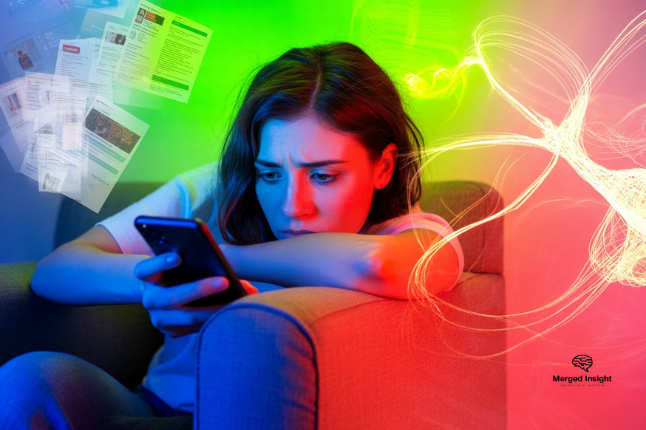
The Journal of Social and Clinical Psychology found a consistent link between passive social media use and higher rates of loneliness, depression, and low self-worth. None of that is surprising when you think about the mechanics. A platform that serves you an endless stream of other people’s highlight reels will, over time, make your ordinary life feel like a disappointment by comparison.
But the deeper loss is harder to measure. It is the private interior life, the thoughts that go unshared, the experiences that exist only for you, the self that never needed an audience to feel real. Those are not small things. They are the exact conditions under which genuine identity, real creativity, and honest human connection have always been built. The uncomfortable truth at the center of all this is that Silicon Valley built tools for human connection and produced, at scale, a particular kind of loneliness. One that looks like a community. One that speaks the language of sharing. But one that has quietly hollowed out the one space no algorithm can reach, which is – the private self.


Leave a Reply