
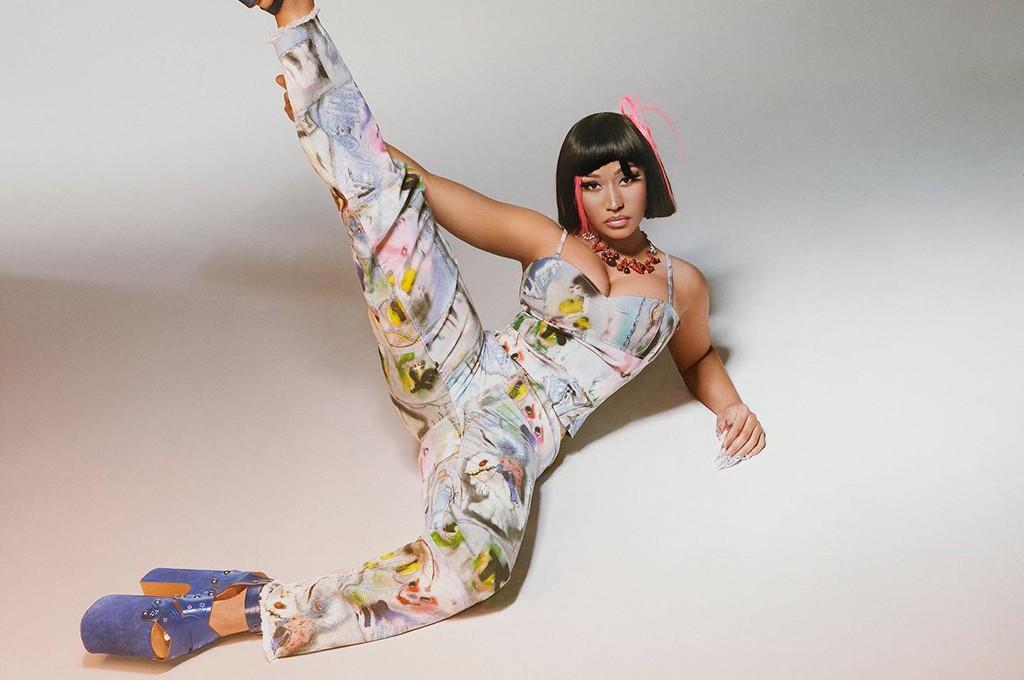
For more than six decades, the Grammy Awards have billed themselves as music’s highest and most prestigious honor. Or so the narrative goes. Year after year, the Recording Academy asks viewers to believe that their voting body represents an objective measure of creative excellence. Yet, there is a glaring omission that threatens their credibility. That glaring omission goes by the name of Nicki Minaj.
To date, Onika Tanya Maraj-Petty, known globally as Nicki Minaj, holds exactly zero Grammy Awards. For over a decade and a half, Minaj has dominated the global charts, shattered glass ceilings, and single-handedly resurrected female rap from a prolonged commercial drought. She has amassed ten Grammy nominations over her sprawling career, yet every single time, she has walked away empty-handed. Critics often peddle the narrative that she is undeserving, claiming her music lacks prestige or that her image is too controversial. But peeling back the layers of this tired narrative reveals a far more insidious truth: the Recording Academy’s historical disconnect from hip-hop culture, its systemic bias against outspoken Black women, and its profound inability to quantify genre-defying brilliance.
The Undeniable Mathematics of a Monarch
To understand the sheer absurdity of Nicki Minaj’s Grammy shutout, one must first look at the undeniable, monumental scale of her impact. When Minaj burst onto the mainstream scene with her debut album, Pink Friday, in 2010, she did not just enter the music industry; she fundamentally altered its gravitational pull. At a time when female rappers were virtually absent from the pop stratosphere, she broke the doors wide open. She became the first female solo artist to have seven singles simultaneously charting on the Billboard Hot 100.
Her discography is a masterclass in longevity and reinvention. From the seismic cultural earthquake of “Super Bass” to the rap-purist bravado of “Chun-Li,” to the record-breaking heights of her recent Pink Friday 2, Minaj has consistently proven that she is not a fleeting trend. She is the blueprint. Countless artists who currently dominate the charts and collect Grammy hardware are direct descendants of her artistic DNA. They mimic her vocal inflections, her aesthetic choices, and her genre-blurring business model. Yet, the architect of the modern female rap renaissance remains unrewarded by the very institution that enthusiastically rewards her progeny. The math simply does not add up.
Dismantling the “Undeserving” Myth
The most pervasive and insulting narrative surrounding Minaj’s lack of Grammys is the subtle implication that her art is somehow devoid of substance. Critics of her legacy often point to her pop-leaning anthems or her highly animated, character-driven performances as evidence that she is a novelty act rather than a serious musician.
Nicki Minaj is a ferocious lyricist. She writes her own raps—a credential that was historically required for respect in hip-hop but is increasingly overlooked in the modern era. Her legendary verse on Kanye West’s “Monster” is widely regarded as one of the greatest rap features of the 21st century. She effortlessly outperformed some of the most revered male titans in the industry on their own track, proving her technical prowess was unmatched. Yet, when the time comes to evaluate her body of work for “Best Rap Album” or “Best Rap Song,” the goalposts miraculously shift. Her versatility becomes her biggest liability. The myth that she is undeserving is a convenient smokescreen designed to mask the Academy’s failure to evolve with the very music it claims to celebrate.
The 2012 Snub and the Shifting Goalposts
If there is a singular moment that perfectly encapsulates the Grammys’ staggering incompetence regarding Nicki Minaj, it is the 2012 Grammy Awards. That year, Minaj was nominated for “Best New Artist.” Instead, the award went to the indie-folk band Bon Iver. While Bon Iver is certainly talented, the choice highlighted a recurring theme in the Recording Academy’s voting patterns: the persistent favoring of traditional, white, alternative artistry over revolutionary Black pop and hip-hop culture.
This was not an isolated incident. Throughout her career, Minaj has found herself competing against an ever-shifting set of standards. When she submits a rap masterpiece, it is often pitted against universally acclaimed critical darlings like Kendrick Lamar or Kanye West—a highly convenient pairing that allows voters to acknowledge hip-hop’s prestige without having to validate a female rapper whose brand is built on unapologetic, flamboyant sexuality and bravado. Conversely, when she leans into her pop sensibilities, she is dismissed as too commercial. The Academy demands authenticity from its rap nominees but frequently recoils when that authenticity does not look, sound, or behave in a manner that aligns with their conservative, sanitized sensibilities.
The Categorization Hypocrisy: The “Super Freaky Girl” Fiasco
The systemic sabotage of Minaj’s Grammy prospects became glaringly obvious in the lead-up to the 2023 ceremony. Minaj submitted her massive, record-breaking number-one hit, “Super Freaky Girl,” for consideration in the rap categories. The song, built around a sample of Rick James’s “Super Freak,” features Minaj spitting rapid-fire, quintessential rap verses. However, the Recording Academy controversially overruled her submission, moving the song out of the rap categories and into the pop field.
By forcing a rap song into the pop categories, the Academy pitted Minaj against a vastly different demographic of voters and competitors, drastically reducing her chances of a win. The hypocrisy of this move was staggering, especially considering that other similarly constructed, sample-heavy rap songs were allowed to remain in the rap categories during the exact same voting cycle. Minaj rightly called out this double standard, pointing out the absurdity of her hip-hop track being labeled pop while peers enjoyed accurate categorization. This incident laid bare the arbitrary, subjective, and often biased nature of the Academy’s internal committees.
Respectability Politics and the Academy’s Disconnect
To fully understand why Nicki Minaj has never won a Grammy, one must examine the role of respectability politics within the Recording Academy. The voting body has historically consisted of an older, whiter, and more conservative demographic. Nicki Minaj has never been an artist who panders to respectability. She is loud, disruptive, overtly sexual, and fiercely protective of her brand.
Her infamous 2012 Grammy performance of “Roman’s Holiday,” which featured a theatrical exorcism on stage, was widely polarizing and reportedly alienated conservative Academy members. The Grammys have long struggled to reconcile their desire for the ratings that hip-hop superstars bring with their reluctance to actually reward those artists in major categories. They demand that artists like Minaj tone themselves down, play industry politics, and shrink their personalities to fit a mold of “prestige” that was never designed for them in the first place.
The Legacy Beyond the Gramophone
Ultimately, the question is not whether Nicki Minaj needs a Grammy to validate her legacy. She unequivocally does not. She possesses a diamond-certified single, an unassailable catalog of hits, and fiercely loyal fans who cement her cultural relevance. She is a pioneer who single-handedly carried a genre on her back for a decade and built the infrastructure that today’s leading women in rap utilize daily.
The real question is what the Recording Academy’s continued exclusion of Nicki Minaj says about the institution itself. An award show that fails to recognize one of the most defining, influential, and talented artists of a generation is an award show that is rapidly losing its grip on reality. By consistently ignoring Minaj, the Grammys are not diminishing her impact; they are actively diminishing their own relevance. They are loudly signaling to the world that their criteria for excellence are fundamentally flawed, biased, and wildly out of touch with the actual pulse of modern music.
Nicki Minaj has already won the war of cultural impact. She has etched her name into the bedrock of music history, Grammys or no Grammys. The explosive truth is that the Recording Academy’s refusal to award her is no longer a reflection of her perceived shortcomings but a damning indictment of their own obsolescence. The narrative that she is undeserving has been entirely shattered; it is the Grammy Awards that must now prove they are deserving of her.



Leave a Reply