

The game of professional football has always existed on a razor’s edge, balancing the awe-inspiring heights of human athleticism with the terrifying reality of physical destruction. We tune in on Sundays, Mondays, and Thursdays to witness modern gladiators perform feats of superhuman strength, agility, and tactical brilliance. Yet, beneath the polished broadcasts and the roaring stadiums, a darker, more insidious reality persists—one where the safety of the players is often subjugated to the spectacle of the product.
This precarious balance was violently thrust into the spotlight not long ago, when Philadelphia Eagles quarterback Jalen Hurts took a grueling, indefensible hit to the back while sitting out of bounds during a crucial game. It was a collision that transcended the standard violence of the sport. It was a hit that, given the angle and the vulnerability of a defenseless player, carried the horrific potential for paralysis. In that agonizing moment, the stadium held its collective breath, and the grim specter of catastrophic injury loomed over the gridiron. Yet, the broader reaction—from the league’s officiating crews to the sprawling media empires that cover the sport—was chillingly muted.
This single, harrowing incident serves as a microcosm for a much larger, systemic crisis within the National Football League and the sports media apparatus that sustains it. It demands a rigorous examination of the ethics of today’s game, the undeniable biases perpetuated by media conglomerates like ESPN and its parent company, Disney, and the fundamental changes required to protect the athletes who put their lives on the line for our entertainment.
The Ethical Paradox of the Modern NFL
To understand the ethical quagmire of the modern NFL, one must first confront the league’s inherent contradictions. For over a decade, the NFL has waged a highly publicized campaign to prioritize player safety. Rule changes regarding helmet-to-helmet contact, the implementation of independent concussion spotters, and stricter penalties for roughing the passer have all been championed as evidence of a league that cares about its workforce.
However, the reality on the turf often contradicts the rhetoric emanating from the league office in New York. The hit on Jalen Hurts exposes the glaring loopholes in this supposed safety net. When a player has clearly conceded the play, stepping out of bounds to avoid unnecessary contact, the social contract of the sport dictates that he should be safe. A hit to the back of a defenseless player out of bounds is not a “football play”; it is an act of reckless endangerment.
The ethical failure lies not just with the offending player, but with an officiating system and a league culture that often treats quarterbacks of a certain archetype differently. Mobile quarterbacks, particularly those who utilize their legs as a primary weapon, are routinely subjected to a different standard of protection than their traditional, pocket-passing counterparts. The unwritten, deeply flawed logic suggests that because these athletes are built like running backs and embrace the physical aspects of the run game, they somehow forfeit their right to the protections afforded to other signal-callers.
This is a moral failing of the highest order. The human spine does not care if a quarterback threw for 300 yards from the pocket or scrambled for 50. A targeted, late hit to the back carries the same devastating neurological and spinal risks regardless of the player’s playing style. By implicitly allowing defensive players an extra split-second of leeway when pursuing mobile quarterbacks like Hurts, the NFL is gambling with human lives. The ethics of the game are completely compromised when the application of safety rules is subjective and conditional.
The league generates billions of dollars in revenue precisely because of the extraordinary talents of players like Jalen Hurts. To profit immensely from their physical sacrifices while failing to provide absolute, uncompromising protection when they are in vulnerable, out-of-bounds positions is the textbook definition of exploitation.
The Disney-fication of the Gridiron and Broadcast Monopolies
If the NFL is the manufacturer of this deeply flawed product, the sports media conglomerates are its primary distributors and, far too often, its most compliant apologists. To dissect the media’s role in this ecosystem, one must look directly at the monolith of sports broadcasting: ESPN, operating under the massive corporate umbrella of The Walt Disney Company.
The relationship between the NFL and ESPN is not one of independent journalism and its subject; it is a symbiotic, multi-billion-dollar partnership. ESPN pays the NFL exorbitant sums for broadcast rights, meaning the network has a vested financial interest in the continued popularity and unblemished image of the league. This conflict of interest fundamentally compromises the integrity of the coverage.
When a horrific, potentially life-altering hit occurs—like the one absorbed by Jalen Hurts—the immediate reaction from the broadcast booth often sets the tone for the national narrative. Instead of righteous indignation at a dangerous and illegal act, viewers are frequently fed sanitized corporate speak. Broadcasters, hyper-aware of their network’s partnership with the league, tend to soften the edges of the violence. They describe reckless hits as “aggressive football,” “playing to the whistle,” or simply an “unfortunate collision.”
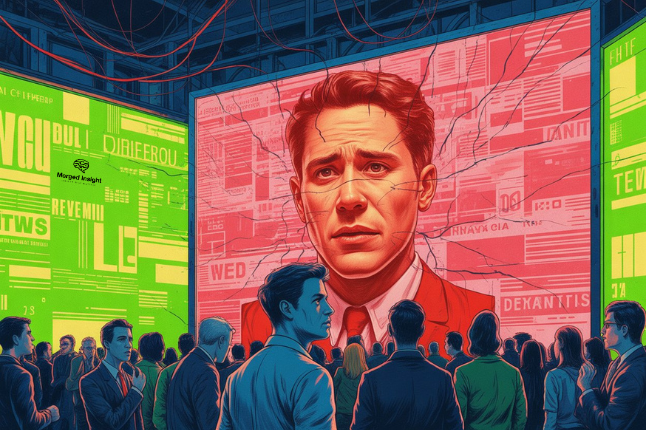
This is the “Disney-fication” of the gridiron. The raw, brutal reality of the sport is smoothed over, packaged into easily digestible, family-friendly entertainment. Disney’s overarching corporate ethos relies on presenting a polished, magical, and ultimately safe product. Acknowledging that the NFL’s current officiating paradigms could leave a young star paralyzed on national television shatters that illusion. Therefore, the media machine actively suppresses the outrage that should naturally follow such egregious safety violations.
This sanitization prevents the public pressure necessary to force the NFL into meaningful reform. If the networks broadcasting the games refuse to hold the league’s feet to the fire regarding player safety, the league has absolutely no incentive to change its behavior. The narrative is controlled, the violence is excused, and the revenue continues to flow, all while the players remain in the crosshairs of preventable trauma.
The Media’s Bias Against the Philadelphia Eagles
Within this broader landscape of sanitized coverage and corporate partnerships lies a more specific, localized issue: the pervasive media bias against the Philadelphia Eagles. For decades, national sports media have relied on tired, geographically driven tropes to frame their narratives. The Eagles, and by extension the city of Philadelphia, are routinely cast in a specific, often unflattering light by networks like ESPN.
Philadelphia is a gritty, demanding, and fiercely loyal market. It does not possess the polished Hollywood sheen of Los Angeles, nor does it receive the uncritical, “America’s Team” adulation perpetually bestowed upon the Dallas Cowboys. In the eyes of the national media machine, the Eagles are often positioned as the aggressive, unrefined antagonists of the NFC.
This bias manifests clearly in how the media reacts to on-field incidents. Consider the hypothetical counterfactual: if a flagship, universally protected quarterback—a Patrick Mahomes or an Aaron Rodgers—were to take a brutal, late hit to the back while sitting out of bounds, the media response would be deafening. ESPN would dedicate hours of programming to the outrage, leading shows like First Take and SportsCenter with demands for suspensions, fines, and immediate rule changes. The narrative would center on protecting the face of the league.
However, when Jalen Hurts—the stoic, dynamic leader of the Philadelphia Eagles—takes that same hit, the response is markedly different. The outrage is localized to the Delaware Valley, while the national media moves on with alarming speed. It is treated as a minor footnote rather than a major scandal. This disparity in coverage is not accidental; it is the result of a media apparatus that subtly devalues the safety of players who do not fit their preferred, marketable archetypes, or who play for franchises that the network prefers to frame as the abrasive outsiders.
Furthermore, this bias extends to how the team is covered holistically. Successes are heavily scrutinized and often attributed to systemic advantages rather than individual brilliance, while setbacks are amplified to fit the narrative of an inevitable collapse. By continually framing the Eagles through a lens of skepticism and latent hostility, the media minimizes the legitimate grievances of the team and its players. When the national media refuses to champion the safety of a Philadelphia quarterback with the same fervor it applies to others, it sends a clear, dangerous message to the league and to defensive players: hits on certain jerseys carry less consequence.
The Imperative for Change
The current trajectory of the NFL, propped up by a complicit media apparatus, is unsustainable. The hit on Jalen Hurts must not be relegated to the archives of forgotten plays; it must catalyze a radical paradigm shift in how the game is officiated, governed, and covered. The ethical debt the league owes to its players has come due, and superficial rule tweaks will no longer suffice.
1. Absolute Accountability in Officiating
The NFL must immediately institute a policy of zero tolerance for late, out-of-bounds hits. The gray area must be eliminated. If a player is out of bounds, any forcible contact should result not only in a 15-yard penalty but in automatic ejection from the game and significant, escalating financial fines. The league must remove the subjective judgment of the referee regarding “intent.” Whether the defender “couldn’t stop his momentum” is irrelevant; the onus of control must fall entirely on the defensive player.
Furthermore, the NFL must explicitly instruct its officiating crews that the protections afforded to quarterbacks apply equally to all players, regardless of their mobility or playing style. A quarterback outside the pocket, once he has given himself up or stepped out of bounds, is a defenseless human being. The league must mandate that officials throw the flag and eject the offender every single time, without hesitation. If the NFL truly cares about player safety, it must be willing to alter the outcomes of games through severe penalties to deter life-threatening behavior.
2. Severing the Media’s Conflict of Interest
Change within the sports media landscape is far more complex, as it requires unspooling billions of dollars in corporate synergy. However, networks like ESPN must recognize that their long-term viability depends on the trust of their audience.
There must be a conscious, institutional push to separate journalistic integrity from broadcast partnerships. When a dangerous hit occurs, the network must empower its broadcasters and analysts to unequivocally condemn the action and the officiating, rather than reflexively defending the league’s product. Disney and ESPN must allow their platforms to be spaces for genuine critique. If a hit could potentially paralyze a player, it is the moral obligation of the broadcaster to state that terrifying fact plainly to the millions watching, rather than hiding behind euphemisms.
Moreover, national networks must conduct a thorough internal audit of their geographic and franchise-based biases. The safety and well-being of a Philadelphia Eagle must be treated with the same gravity and journalistic outrage as a player from Dallas, New York, or Kansas City.
3. The Role of the Collective
Finally, the responsibility for change falls to the consumers of the sport. The fans, the independent writers, and platforms dedicated to unfiltered analysis must continue to apply pressure. The era of accepting catastrophic risk as “just part of the game” must end. We must demand that the athletes we revere are treated with basic human decency and afforded the maximum possible protection from preventable trauma.
Conclusion
The game of football is a beautiful, complex, and deeply compelling sport. But its beauty is irrevocably stained when the ethical guardrails fail, leaving players like Jalen Hurts exposed to violent, unpenalized assaults on the margins of the playing field. The grueling hit out of bounds was not merely a missed call; it was a symptom of a diseased system where the NFL prioritizes its violent spectacle and media partners like Disney sanitize the collateral damage.
We can no longer allow the shield of the league or the screen of the broadcaster to obscure the humanity of the players. Real, lasting change requires a complete overhaul of how we officiate the boundaries of the field and how we discuss the violence of the game. Until the NFL and its media enablers are willing to prioritize the spine and the life of the athlete over the bottom line, the ethics of the gridiron will remain deeply, tragically compromised. The clock is ticking, and the next hit could be the one that changes a life forever. It is time to demand better.


Leave a Reply