
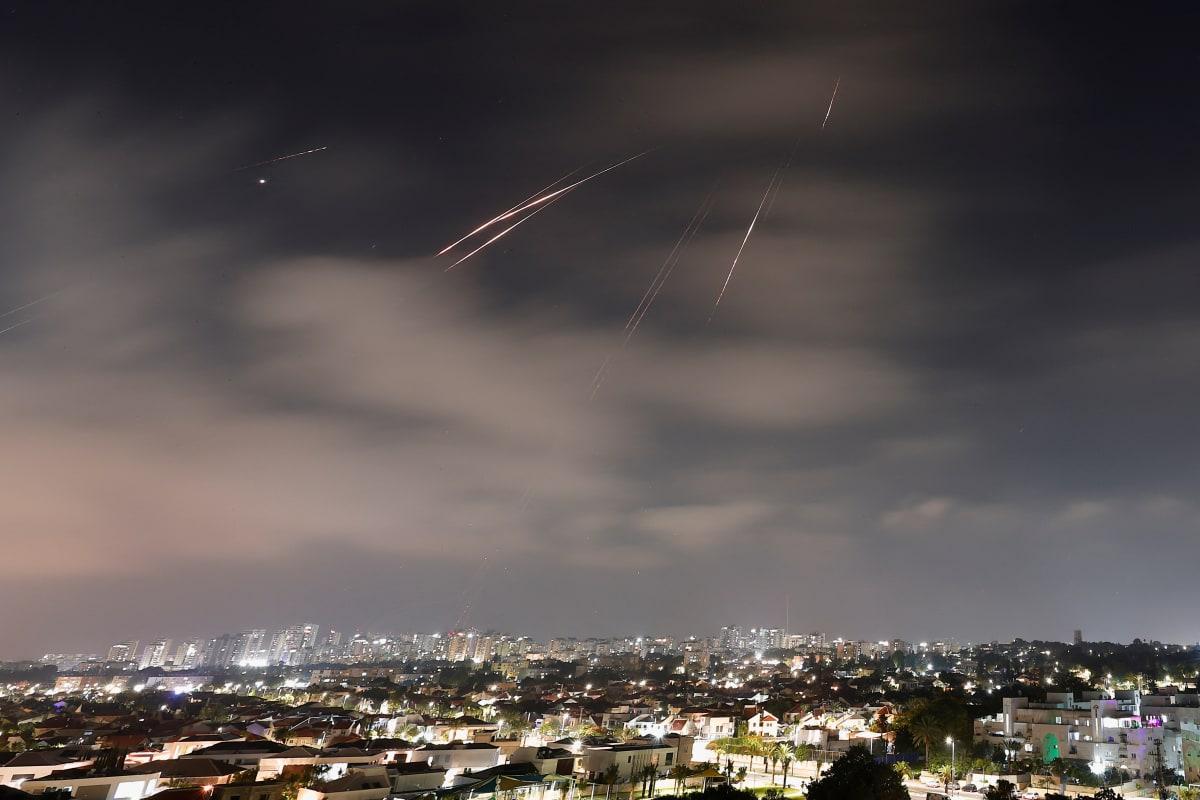
Right now, the United States is entrenched in the largest and most volatile military deployment in the Middle East since the 2003 invasion of Iraq. Since the joint US-Israeli strikes commenced on February 28, 2026, the geopolitical landscape has been violently rewritten. Three US aircraft carrier strike groups are operating in the region. Over 50,000 American troops, including elements of the 82nd and 101st Airborne Divisions, are deployed across regional bases for war. The Strait of Hormuz is choked by a dual naval blockade, global energy markets are in absolute freefall, and the financial toll of the conflict has already surpassed $29 billion, with the Pentagon requesting a staggering $200 billion more.
To understand why the United States is currently locked in a devastating kinetic war with Iran—and to grasp the sheer gravity of the current, fragile Memorandum of Understanding (MOU) negotiations—we have to look backward. The trajectory from a contained, diplomatic standoff to a full-scale theater of war is a masterclass in the diverging philosophies of two very different presidential administrations.
This is the stark contrast between the Obama administration’s Joint Comprehensive Plan of Action (JCPOA) and Donald Trump’s kinetic 2026 Iranian War.
The Architecture of Diplomacy: The Obama-Era JCPOA (2015)
In 2015, after years of grueling multilateral negotiations, the United States, along with the P5+1 (China, France, Russia, the United Kingdom, and Germany), signed the Joint Comprehensive Plan of Action. The JCPOA was not a peace treaty, nor was it a normalization of relations between Washington and Tehran. It was a highly surgical, profoundly technical arms control agreement designed to achieve one singular objective: block Iran’s pathways to a nuclear weapon.
The mechanics of the deal were rooted in physics and cold calculation, not trust. Under the JCPOA, Iran was forced to slash its stockpile of enriched uranium by 98%, capping it at 300 kilograms. It was legally bound to restrict uranium enrichment to 3.67%—a level suitable for civilian nuclear power but vastly below the 90% threshold required for weapons-grade fissile material. Furthermore, Iran was required to dismantle two-thirds of its installed centrifuges, reducing the number from roughly 19,000 to just over 5,000 of its oldest, least efficient models.
Crucially, the agreement subjected Iran’s nuclear infrastructure to the most intrusive, comprehensive verification regime in the history of the International Atomic Energy Agency (IAEA). Inspectors had 24/7 access to declared nuclear sites like Natanz and Fordow, as well as the authority to demand access to undeclared sites if suspicious activity was detected.
The 2015 signing of the JCPOA. Source: Britannica
In exchange for these massive concessions, the US, the EU, and the UN agreed to lift nuclear-related economic sanctions, unfreezing billions in Iranian assets and allowing Tehran to re-enter the global oil market.
The Obama administration’s philosophy was clear: the Iranian regime was a malignant actor in the Middle East, funding proxy militias in Lebanon, Syria, and Yemen. However, a nuclear-armed Iran would be an existential threat that would render all other regional issues exponentially more dangerous. By removing the nuclear variable from the equation, the US preserved regional stability without committing a single infantryman or firing a single artillery shell. It was an exercise in pure containment.
The Unraveling: The Pivot to “Maximum Pressure”
The diplomatic framework held until May 2018, when President Donald Trump unilaterally withdrew the United States from the JCPOA, despite the IAEA repeatedly certifying that Iran was complying with the agreement’s strict parameters. The rationale behind the withdrawal was that the JCPOA was a “flawed deal” because it did not address Iran’s ballistic missile program, its support for regional terrorist networks, or the “sunset clauses” that would eventually lift the uranium enrichment caps.
In place of the JCPOA, the Trump administration instituted a campaign of “maximum pressure.” The US reinstated crippling secondary sanctions, targeting any foreign entity that dared to purchase Iranian oil or conduct transactions with Iran’s central bank. The objective was to bring the Iranian economy to its knees, theoretically forcing Tehran back to the negotiating table to sign a much broader, more restrictive treaty.
The economic devastation in Iran was profound. The rial plummeted, inflation skyrocketed, and a severe financial crisis gripped the nation. However, the political outcome was the exact opposite of what the maximum pressure campaign intended. Rather than capitulating, the Iranian regime dug in.
Iran responded to the economic siege with a calibrated campaign of regional sabotage and nuclear escalation. They began to slowly, methodically breach the limits of the JCPOA. They increased their stockpile of enriched uranium, installed advanced centrifuges, and eventually began enriching uranium to 60% purity—a technical hair’s breadth away from weapons-grade material.
Simultaneously, the shadow war in the Middle East escalated. Iranian proxies harassed US forces in Iraq and Syria, Iranian fast-attack craft menaced shipping in the Persian Gulf, and the US responded with targeted assassinations, most notably the drone strike that killed IRGC Quds Force Commander Qasem Soleimani in 2020. The diplomatic guardrails were gone, replaced by a dangerous, cyclical game of tit-for-tat escalation that set the stage for the catastrophic events of 2026.
The Breaking Point: The Road to the 2026 War
The slow burn of maximum pressure finally ignited into a raging inferno in early 2026. In January, the Iranian regime faced the largest domestic protests since the 1979 revolution. The state’s response was brutal, with security forces carrying out a massive crackdown that resulted in the deaths of thousands of civilians.
Amidst this internal chaos, US intelligence agencies reported in February 2026 that Iran, feeling deeply vulnerable, had covertly restarted its nuclear weapons program. Furthermore, intelligence indicated that Iran was actively plotting surprise drone attacks against the US homeland and allied targets in the region.
The diplomatic window slammed shut. The US initiated the largest military buildup in the region in over two decades. The sheer logistical magnitude of this deployment cannot be overstated. Moving elements of the 82nd Airborne, the 10th Mountain Division, and multiple Carrier Strike Groups across the globe requires an unparalleled projection of power. By late February, the theater was primed.
Trump’s Iranian War: The Kinetic Reality
On February 28, 2026, the cold standoff turned violently hot. The United States and Israel launched a massive, coordinated series of preemptive strikes across Iran. The targets included critical military infrastructure, government command centers, and suspected nuclear sites. Most shockingly, the strikes successfully targeted and assassinated several high-ranking Iranian officials, including Supreme Leader Ali Khamenei and Ali Larijani, a key diplomatic figure.
This marked the official beginning of the 2026 Iran War.
When diplomacy fails and the geopolitical posturing ends, the burden falls entirely on the tactical warfighter. There is a cold, unforgiving mathematics to a large-scale kinetic bombardment. Once the coordinates are verified, the firing solutions are calculated, and the lanyard is pulled, the destruction is absolute and irreversible. A 155mm high-explosive artillery shell or a Tomahawk cruise missile does not negotiate; it simply obliterates the target area.
The military toll of the 2026 conflict has been staggering. According to US and Israeli assessments, over 190 Iranian ballistic missile launchers and 155 naval vessels have been destroyed. Upwards of 6,000 Iranian military personnel and nearly 2,000 Hezbollah fighters have been killed. Conversely, the US and its regional allies have suffered significant casualties and material losses, with over a dozen critical radar and satellite defense systems destroyed or damaged by Iranian retaliatory strikes.
Iran’s response was not limited to direct military engagement. In a desperate bid to leverage global economic pain, Tehran closed the Strait of Hormuz—the vital maritime chokepoint through which approximately 20% of the world’s global oil consumption passes.
The Strait of Hormuz: The global economic chokepoint. Source: Britannica
The closure of the strait triggered the largest supply disruption in the history of the global oil market. The economic shockwave has battered global financial markets, crippled the shipping industry, and forced everyday consumers to bear the brunt of skyrocketing energy costs. The dual naval blockade—with the US Navy attempting to lock down Iranian ports while Iran mines and blockades the broader Persian Gulf—has turned the waters off the Arabian Peninsula into a high-stakes combat zone.
The Current Stalemate: Ceasefires and “Self-Defense”
As of late May 2026, the region exists in a state of violent limbo. Following the devastation of March, a temporary ceasefire was implemented on April 7, though it has been violated repeatedly. Just yesterday, the US Central Command reported conducting “self-defense strikes” against Iranian missile sites and fast-attack boats attempting to lay mines in the Strait of Hormuz.
Diplomats are currently scrambling in Qatar and Pakistan to finalize a Memorandum of Understanding (MOU) to end the war. The negotiations are agonizingly complex. The draft MOU reportedly hinges on Iran reopening the Strait of Hormuz and the US unfreezing billions in Iranian assets held abroad. However, the core issue—Iran’s nuclear capability—remains terrifyingly unresolved. Iranian negotiators have reportedly agreed verbally to suspend enrichment and export their 400-kilogram stockpile of 60% enriched uranium, but the actual nuclear provisions are being deferred to a future, permanent accord.
We are currently negotiating under fire, trying to rebuild the very containment framework that was intentionally dismantled eight years ago, but this time at the cost of thousands of lives and billions of dollars.
The Strategic Contrast: Containment vs. Coercion
When we contrast the Obama-era JCPOA with Trump’s 2026 Iranian War, we are looking at two fundamentally opposed theories of international relations.
The JCPOA was a product of pragmatism. It acknowledged that the US could not solve every problem with Iran simultaneously. By isolating the nuclear issue and addressing it through stringent, verifiable diplomacy, the Obama administration secured a crucial layer of global security. It was not a perfect deal, but it was a functional, non-violent containment strategy. It kept the uranium stockpile low, the centrifuges offline, and the guns silent.
The maximum pressure campaign, culminating in the 2026 war, was a product of coercion. The theory was that overwhelming economic and military force could compel a hostile regime to completely surrender its strategic assets and alter its fundamental behavior.
The reality on the ground has proven otherwise.
The pivot from diplomatic containment to kinetic warfare has not yielded a safer Middle East. Instead, it has triggered a massive regional conflict, destabilized the global economy, and paradoxically pushed Iran closer to the nuclear threshold than it was a decade ago.
When you strip away the political rhetoric, the contrast is stark. Diplomacy involves long nights at negotiating tables, technical concessions, and the frustrating reality of compromise. War involves the deployment of airborne divisions, the deafening roar of defensive anti-air batteries, the chaotic logistics of casualty evacuation, and the grim reality of flag-draped transfer cases returning to Dover Air Force Base.
The JCPOA managed an adversary through verification and oversight. The 2026 conflict is attempting to manage an adversary through brute force and destruction. As the diplomats in Islamabad and Doha desperately try to forge an MOU to stop the bleeding, the world is learning a very painful lesson about the true cost of abandoning a functional diplomatic framework.
We are in Iran because the guardrails of containment were removed, and the resulting vacuum was filled, inevitably, by the artillery.
A Merged Insight Exclusive.



Leave a Reply