
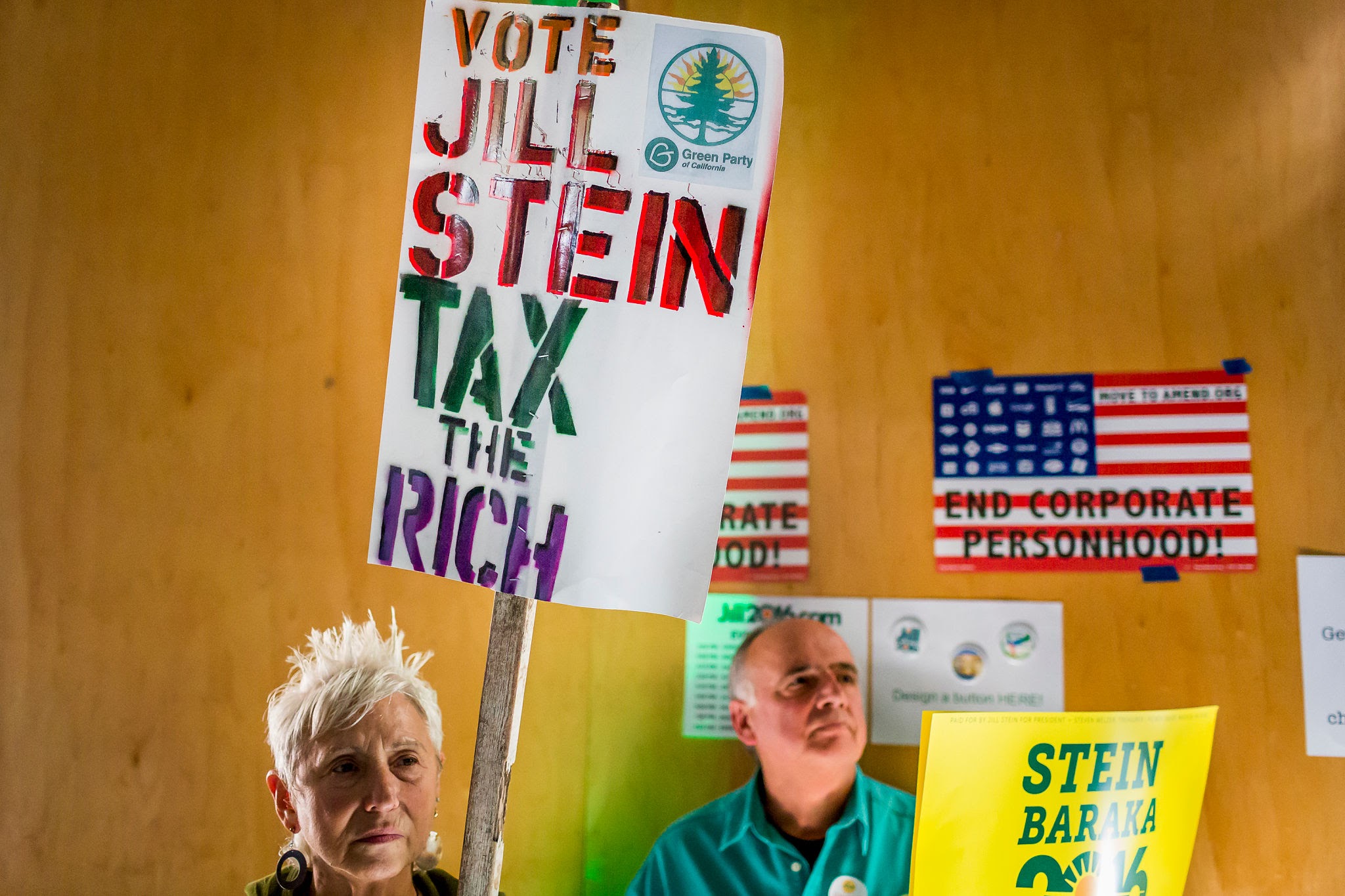
May 2026 — The American political landscape is fractured. With the nation navigating the turbulence of a second Trump administration and the Democratic Party paralyzed by internal ideological warfare following their 2024 defeat, the progressive electorate is largely politically homeless. For the Green Party of the United States (GPUS), this moment represents the most significant structural opening since Ralph Nader’s historic 2000 campaign.
However, political openings do not automatically translate into political power. For decades, the Green Party has been trapped in a vicious cycle: pouring millions into quadrennial presidential campaigns to secure ballot access, only to face intense spoiler narratives and walk away with low single-digit vote shares. To transition from a marginalized protest vehicle into a genuine governing force, the GPUS requires a ruthless, pragmatic, and highly disciplined paradigm shift.
This Merged Insight exclusive battle strategy outlines a comprehensive, five-pillar roadmap for the Green Party to build sustainable power leading into the 2026 midterms, the 2028 presidential cycle, and beyond.
The 2026 Reality Check: Abandoning the Presidential Trap
The hardest truth the Green Party must internalize is that the U.S. presidency is currently out of reach, and organizing the party’s entire apparatus around it is a strategic error. The electoral college, first-past-the-post voting, and draconian ballot access laws heavily insulate the two-party duopoly.
When the Green Party focuses 90% of its resources on its presidential ticket, it subjects itself to the “spoiler” attack from Democrats, alienating the exact voters it needs to court. Presidential campaigns should no longer be viewed as the ultimate goal; they must be explicitly downgraded to tactical operations. Their sole purposes should be:
- Maintaining 50-state ballot access for down-ballot candidates.
- Acting as a national megaphone to drive media attention to local Green races.
- Serving as a data-collection mechanism to identify sympathetic voters.
Real power in the United States does not trickle down; it bubbles up. The overarching strategy for the next decade must be a pivot toward radical localism.
Strategic Pillar I: The Municipal Insurgency
The most viable path to shattering the two-party system is to stop fighting the duopoly where it is strongest (federal elections) and start fighting it where it is weakest, underfunded, and uncontested: local government.
Across the United States, thousands of city council, mayoral, county commission, and school board seats go entirely unopposed or feature uninspiring centrist incumbents. Furthermore, many municipal elections are technically non-partisan, stripping the “D” and “R” labels off the ballot and forcing voters to evaluate candidates on policy rather than tribal affiliation.
The “Sewer Socialism” Revival
The Green Party must adopt the tactical playbook of the early 20th-century Socialist Party in Milwaukee, whose leaders won mayoralties and city councils by focusing relentlessly on tangible public goods: clean water, public transit, public parks, and fair labor practices—derisively but proudly dubbed “Sewer Socialism.”
- Hyper-Targeting: The national steering committee must identify 50 to 100 highly vulnerable municipal districts—specifically in deep-blue cities where Republicans are non-factors and working-class voters feel abandoned by corporate Democrats.
- Quality of Life Ecosocialism: Green candidates must translate the lofty goals of the Green New Deal into immediate local action. Do not campaign on global emissions treaties; campaign on publicly owned municipal broadband, expanding free public transit routes, rent control, aggressive pothole repair, and stopping local utility rate hikes.
- The Pipeline to Power: Winning 200 city council seats and a dozen mid-sized mayoralties by 2028 creates a deep bench of experienced, tested Green politicians who have proven they can govern. This is how the party builds the credibility required to eventually run for Congress.
Strategic Pillar II: The Electoral Reform Offensive
The United States’ electoral architecture is explicitly designed to crush third parties. The Green Party cannot simply out-organize math. Therefore, changing the rules of the game must become a central pillar of the party’s operational strategy.
Ranked-Choice Voting (RCV) as an Existential Mandate
Ranked-Choice Voting (RCV) eliminates the “spoiler effect” and allows voters to select a Green candidate as their first choice without fear of inadvertently helping a right-wing candidate win. Where RCV is implemented, third-party vote shares naturally increase.
- Strategic Coalitions: The GPUS must form aggressive, single-issue tactical alliances with non-partisan reform groups like FairVote, as well as Libertarians and Forward Party members, to fund and pass RCV ballot initiatives at the state and municipal levels.
- Litigation as a Weapon: The Green Party must build a permanent, well-funded legal defense fund dedicated entirely to suing state governments over restrictive ballot access laws. The party currently spends exorbitant amounts paying petitioners to collect signatures. By consistently challenging signature requirements in federal court under the First and Fourteenth Amendments, the party can lower the drawbridge for itself and others.
- Proportional Representation: While RCV is the immediate goal, the long-term objective must be a transition to proportional representation for state legislatures. The Greens must make democratizing the vote a core tenet of their daily messaging, framing the Democratic and Republican parties not just as ideological opponents, but as a monopolistic cartel actively suppressing voter choice.
Strategic Pillar III: The Labor-Ecosocialist Fusion
Historically, the Green Party has struggled to shake the perception that it is a boutique party for middle-class environmentalists and academics. To win mass power, it must become the undisputed political arm of the multiracial working class. The current economic climate—defined by inflation, soaring housing costs, and stagnant wages—is ripe for a populist left economic message.
Bridging the Red-Green Divide
The false dichotomy between “jobs” and the “environment” has long been a weapon used by the right to separate industrial labor from environmentalists. The GPUS must aggressively fuse these elements into a cohesive Ecosocialist platform.
- Labor Militancy: Green candidates must be a permanent fixture on picket lines. The party should actively recruit union organizers, strike leaders, and disillusioned labor activists to run for office. When the Democratic Party forces striking rail workers or autoworkers back to work, the Green Party must be there offering a genuine political alternative.
- The Ecosocialist Economic Bill of Rights: The party must hammer home a simplified, highly resonant economic platform:
- Universal single-payer healthcare (Medicare for All).
- A federal jobs guarantee linked to a massive buildout of green infrastructure (the original Green New Deal).
- National rent control and social housing development.
- The abolition of medical and student debt.
- Anti-Imperialism as an Economic Issue: The Green Party is the only major national party that consistently opposes the military-industrial complex. In 2026, the party must explicitly tie the bloated defense budget to domestic austerity. The messaging must be sharp: “We cannot afford housing, healthcare, or clean water because the duopoly is spending a trillion dollars a year on endless wars and military contractors.”
Strategic Pillar IV: The Generational Realignment
Demographics are providing the Green Party with an unprecedented opportunity. Millennials and Generation Z are facing a uniquely bleak economic and ecological future. They are highly skeptical of capitalism, deeply anxious about the climate crisis, and increasingly alienated by the two-party system.
Capturing the Youth Vanguard
Younger voters do not have the decades of ingrained partisan loyalty that bind older voters to the Democratic Party. The GPUS must aggressively court this demographic not just as voters, but as the core organizational engine of the party.
- Campus Radicalization: The Green Party must establish robust chapters on high school and college campuses, specifically targeting students involved in climate strikes, Palestine solidarity encampments, and labor organizing. These students are highly organized and highly motivated, but entirely lacking a political party that represents their interests.
- Digital Guerrilla Warfare: The party’s communication strategy must undergo a massive modernization. The era of lengthy press releases and static websites is over. The GPUS must build a vast network of decentralized content creators across TikTok, YouTube, and Instagram. The party needs sharp, highly produced, short-form video content that breaks down economic concepts, exposes duopoly corruption, and promotes local Green candidates with an aggressive, populist edge.
- Lowering the Voting Age: The party should aggressively champion lowering the voting age to 16 in municipal elections. Young people are already facing the brunt of climate change and economic inequality; giving them a voice locally not only expands the Green base but also creates lifelong civic habits.
Strategic Pillar V: Institutional Professionalization
A strategy is only as effective as the institution executing it. Currently, the GPUS operates too often as a loose, underfunded confederation of state parties that goes dormant between presidential cycles. To become a permanent threat to the establishment, the party infrastructure must be professionalized, centralized where necessary, and rigorously disciplined.
Transitioning to a Mass-Membership Model
The traditional American party model relies on passive voters and wealthy donors. The Green Party cannot compete in this arena. It must transition to a European-style mass-membership model.
- Dues-Paying Members: The party must implement a clear, tiered, dues-paying membership structure. True political independence requires financial independence. A base of 500,000 members paying $5 to $10 a month provides a reliable, self-sustaining war chest that is entirely immune to corporate pressure.
- The Permanent Campaign: The GPUS must abandon the “pop-up” campaign model. State parties must maintain year-round operations, focused on community service, mutual aid, and continuous voter registration. By engaging in mutual aid (e.g., food distribution, disaster relief, tenant organizing) under the Green banner, the party proves its utility to the community outside of election season.
- Ruthless Candidate Vetting: To protect its brand, the national and state parties must enforce stricter candidate vetting. Every candidate running with the Green label must adhere to core Ecosocialist principles and possess the political acumen to run a serious, competitive race. The party can no longer afford to lend its ballot line to unserious vanity campaigns that damage its credibility.
- Data Sovereignty: The Green Party must invest heavily in proprietary voter data infrastructure. Relying on outdated voter rolls or third-party vendors leaves the party vulnerable. Developing a sophisticated, national open-source voter CRM (Customer Relationship Management) system will allow local candidates to identify and micro-target sympathetic independent and disillusioned progressive voters with surgical precision.
Conclusion: The Path Forward
The two-party system in the United States is not a law of nature; it is a fragile, artificially maintained duopoly that is currently experiencing a profound crisis of legitimacy. The American public is desperate for an alternative that offers moral clarity, economic justice, and ecological sanity.
The Green Party has the platform to meet this moment, but the platform is not enough. By abandoning the vanity of presidential focus, launching a ruthless municipal insurgency, forcing systemic electoral reform, fusing labor with ecosocialism, and building a professional, dues-paying machine, the Green Party can fundamentally rewrite the American political order.
The 2026 midterms are the testing ground. If the GPUS can internalize this discipline, it will cease to be a mere pressure group and will emerge as the vanguard of a new American left. The survival of both the working class and the biosphere may very well depend on it.
A Merged Insight Exclusive.



Leave a Reply